Posted in Bees, Nature, Writing

The Seduction of Color

Dandelion. Photo courtesy of Wikipedia.

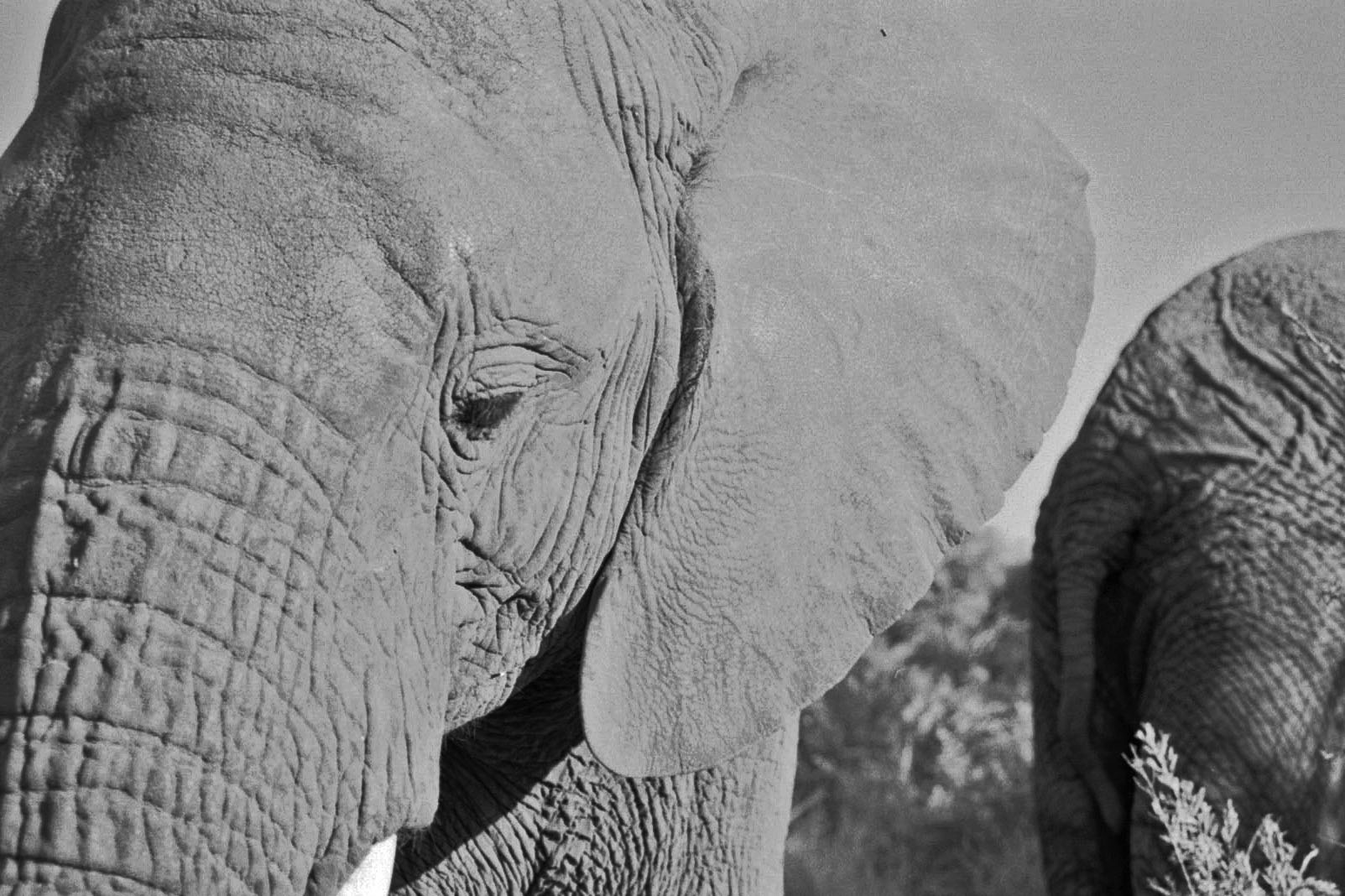
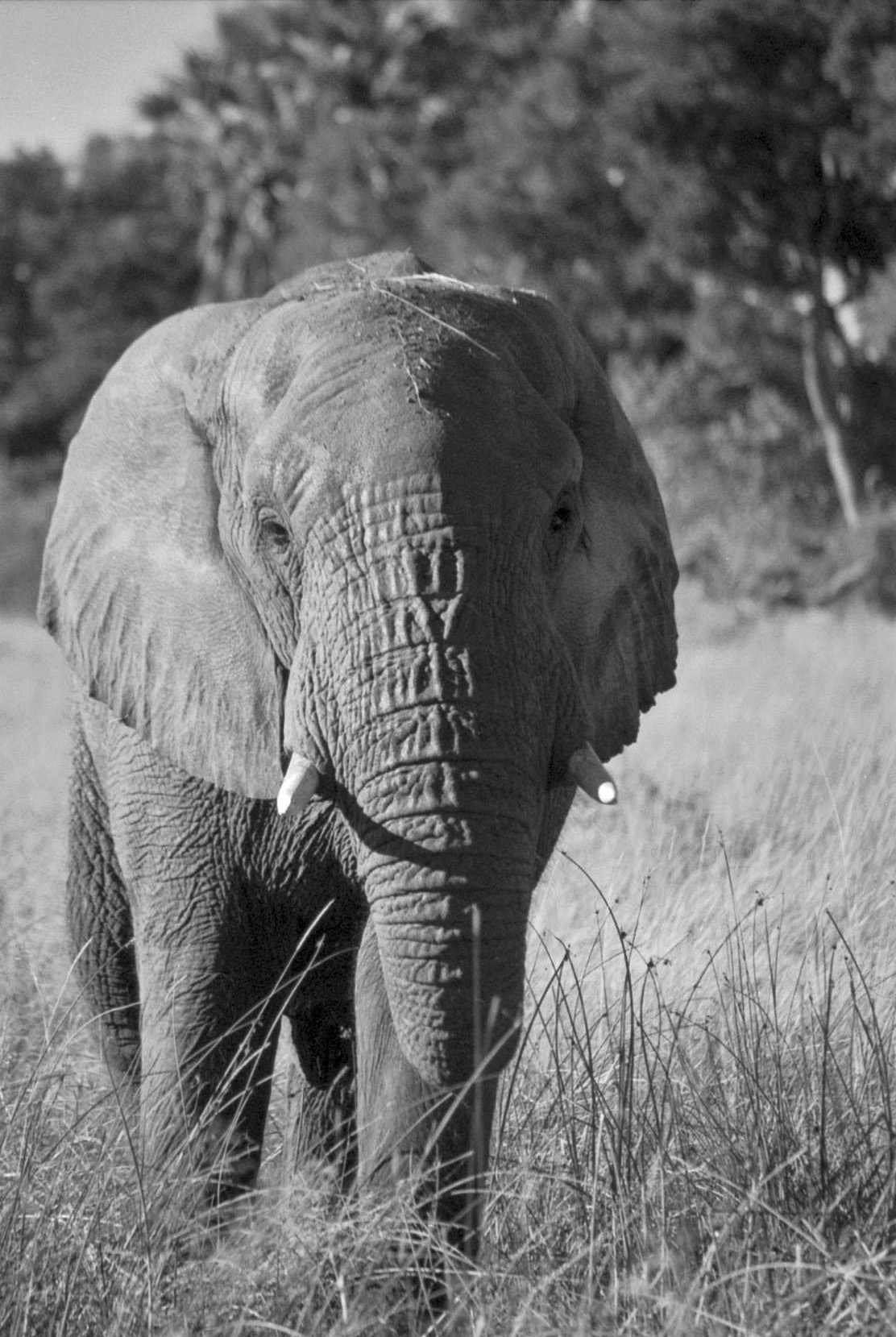
Every color I see is really a color rejected.  Elephants are gray because gray is the color of the wavelengths of light reflected from the surface of their skins.  Blue jays are blue and daffodils are yellow for the same reason.  It’s possible for our eyes to gorge on a thousand or more different color combinations – tints of turquoise, hues of hyacinth, shades of sapphire.  For proof, simply go to the nearest paint store.

 But the colors I see are not the colors seen by elephants or by snakes or by insects or by cats and dogs.  Many scientists after many experiments believe that cats and dogs do not see colors well, but that birds do, and that the colors of their feathers have a lot to do with either camouflage or sexy come-ons.  They must be right.  Otherwise we would endure male dogs with tails like peacocks and female cats with hind ends as red and swollen as baboons.

The colors I see, and the subtle natural variations of them, were of considerable advantage to my ancestors, foraging primates swinging down from the trees into the lion-colored grass.  Colors indicated ripe fruit and patterns — the difference between zebras and leopards.

To honeybees, the world as I see it moves like molasses.  Each eye of the honeybee contains nearly 7000 lenses — 7000 pinpoint openings for light, giving it composite images shaped somewhat like snow globes.  Homing in on flowers at 300 images per second, (vs. 60 per second for humans) bees zoom about in fast-forward, so they can make all those in-flight adjustments to the slightest change of wind, grasp all those swollen bodies of pollen. 

Like us, honeybees have three photoreceptors in their eyes.  Where we see blue, green, and red, bees perceive blue, green and ultraviolet, combined into colors entirely different from those we see.  Ultraviolet patterns on flowers are invisible to us, but to bees those patterns announce seductive landing zones.  

It’s been long speculated that creatures with compound eyes see far less efficiently than we do.  But seeing is in the eye of the beholder, in the language of colors available to read.  Where I might not even notice a certain flower a besotted bee ogles an orgy of ultraviolet ravishment, an irresistible, come-hither promise of pollen and nectar. 

I want the language of bees in my head, to see the world differently when I write.  I want my words to unfold like time-lapsed flowers, petal pushing against petal, blooming in foreign color combinations, perennial, glorious, sexy, irresistible.  I want you to stick your nose inside my flowers, waggling and buzzing.  I want you to come away pollinated.
Posted in Family, Nature, Writing

Fighting for Freedom: an Immigrant’s Story

In 1775, my great-great-great-great-great-great-great-great grandfather came to America from France to help the colonists fight for independence from the British. He was 24 years old. Born in Marseilles to Lady Anne de la Lascour and Admiral Antoine Garoutte, Michel Antoine Garoutte was also born into the nobility of Provence in France, ruled at that time by Louis IV. He was educated to be a Catholic priest until the age of 15 when his older brother died in battle. Michel left the seminary and went to Military School and Officers School, the same schools as his friend, Lafayette.

Both Michel and Lafayette became convinced that the American settlers’ fight for liberty was a just cause. That it was better to have rules of law fashioned for the majority of citizens rather than laws made by edict, made by just one man. Michel was not looking for a new start on life; he was not looking to farm his own land; he was not fleeing persecution – he was fighting for a new concept of governance: democracy over monarchy.

Michel outfitted two ships at his own expense and sailed to the New York Colony. Even though he was from wealth and nobility, he became a pirate and a privateer, overtaking British vessels, seizing ammunition, artillery, and other goods to supply General George Washington’s army at Valley Forge through Little Egg Harbor, which privateers used as a home base.

At the Battle of Chestnut Neck near Little Egg Harbor in 1778, the British burned Michel’s boats and destroyed other supplies before they withdrew under threat of superior patriot forces arriving.

His named now Anglicized to Michael Garoutte, he served on the brig-of-war Enterprise and sloop-of-war Racehorse.

Shortly after the Battle of Chestnut Neck, he went ashore to help a friend hiding in an Inn that aided revolutionaries. Ambushed and bayoneted, he was left for dead. The innkeeper John Smith, a Quaker, found him and brought Michael to his inn, where he was tended to by the innkeeper’s daughter, Sophia. They married in 1778. He was 28. She was 19. They had 14 children together.

After the Revolutionary War Michael and Sophia started a tavern: the La Fayette Tavern in Pleasant Mills, New Jersey. La Fayette visited the tavern and stayed at its inn on his various trips to the newly-formed United States. Michael died at the age of 79 and is buried in the Pleasant Mills Cemetery in New Jersey. The tavern no longer stands. The gravestones at the cemetery are so eroded that his name can no longer be found.

An immigrant who owned castles and could have lived a life of extreme luxury became a commoner in the country whose founding laws he believed in. He fought for the rights of citizens in his adopted country. He didn’t go from rags to riches; he went from riches to just getting by because he did not believe that one man should rule all others; that citizens had the right to govern themselves. His life was like that of many immigrants — fighting for the country they believe in. And still believe it’s worth fighting for.

Posted in Nature, Writing

Lifelines

https://julian-hoffman.com/2025/06/06/lifelines-a-books-beginnings/

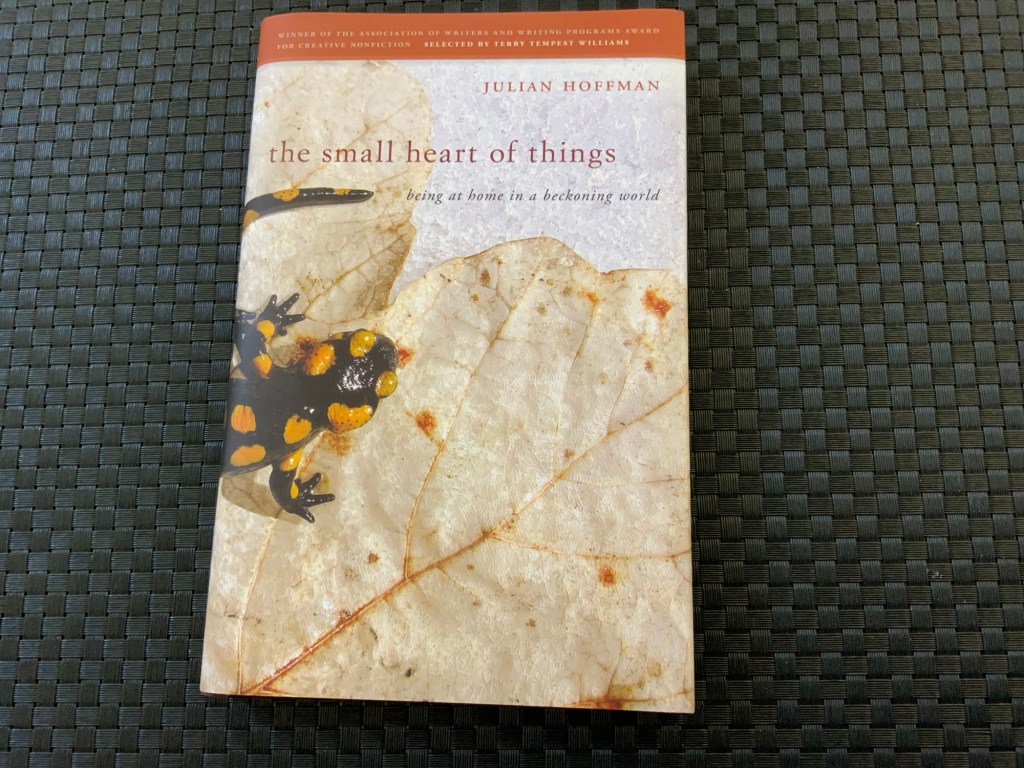
Julian Hoffman’s The Small Heart of Things is a wonderful book about the connections between the many “small things” in our lives that, taken together, create who we are and how we see this amazing world we inhabit. I can’t wait to read his new book, Lifelines. He lives and writes from a place of beauty, history, and wildness: the Prespa Lakes – hemmed by the countries Greece, Albania, and Macedonia. I expect to be amazed once again.

Posted in Writing

National Paper Clip Day

Is today, May 29th! Made of galvanized steel wire (sometimes coated with colored plastic), the paper clip’s design remains unchanged since the 1930s. Three bends create an oval within an oval. Automated paper clip machines spew out hundreds of clips per minute. Paper clips are manufactured in the United States and in Italy.

Before computers, before the Internet, paper clips were indispensable, used in office and individually, when stacks of paper and file cabinets were the normal way of keeping records, along with binding (a permanent method) or stapling (less permanent but difficult to take apart and re-sort).

A writer like me slowly evolved away from the typewriter and paper clip towards computers and backup storage of files. Still, as I moved from place to place, paper clips moved with me in boxes marked “Office Supplies.” I have a small basket of 103 paper clips on my desk. (Yes, I counted.) A writer has to know her facts. In a drawer along with pens and scissors and rulers and screen wipes are four boxes of paper clips, one hundred to a box. Five hundred and three unused paper clips.

That’s not exactly true. When I’m working on a project of printed multiple pages, I use a paper clip. When my writers’ group meets, I paper clip their chapters or scenes and subversively subtract five or nine paper clips from the total I own by sending them home with each author. At that rate, it will take approximately twenty years to get rid of all my paper clips.

I have five paper clips I will never give away. Years ago someone gave me a small package of five paper clips shaped like African animals: a giraffe, a lion, a leopard, a rhino, and of course, an elephant. They don’t function very well as paper clips. Their shapes get in the way of actually holding pages together.

Why don’t I just get rid of them?

Well, because someone, somewhere, had the idea of making paper clips, one by one, in the shape of African animals. Of changing something small and utilitarian into something larger. Of changing the way I look at the everyday things in my life.

Posted in Nature, Writing

Curious? Changes are Coming!

I’ve finally finished my memoir, Larger than Life, Living in the Shadows of Elephants, and I’m sending queries to agents. In the meantime I’ve begun a new project, a fictional account of my ancestors’ experiences on the Oregon Trail, Her Diary, Unwritten. I want to redesign this website to be able to reflect both books, and will be working on that soon. Thanks everyone for following me in the past. See you again soon!

Posted in Nature, Writing

Speculative Creative Nonfiction

Nonfiction is not made up, right? But I wanted to wander off into my imagination while writing this essay and this is the result, just published in Sentience Literary Journal:

Posted in Africa, Elephants, Family, Nature, Nonfiction, Photography, Thembi, Writing

A Tribute to Thembi: Miles per Pound of Trees

On March 13, one of the elephants I who allowed me into her life died unexpectedly of colic and a heart attack.  I’ve written extensively about Thembi and her herd mates.  This is one of the pieces.


Diamond on forehead 2

Thembi, she of the evenly matched ears, long-lashed eyes, and diamond-shaped scar on the bridge of her nose, farts as she walks.  Big, burbling farts.

All the trees, grasses and leaves Thembi eats gather in her 10-gallon stomach, which is pretty much just a holding area.  From her stomach, roughage travels into her small intestine and then on into her large intestine.  Joining the two intestines is a junction called a cecum, where digestion actually takes place.  Her cecum is filled with billions of microbes, just like most mammals, including us.  The microbes break down the cellulose of leaves and trees into soluble carbohydrates Thembi can digest, but the process also gives her enough methane gas to power a car 20 miles each day.

I wonder, as I walk behind her, just how one could harness this gassy natural resource.  I live at the edge of a small town.  Twenty miles would more than cover my daily errands.  I imagine exhaust fumes smelling like fermenting grass.  I imagine driving down highways inhaling the scent of mulched trees.

I wonder, as I walk behind her, why I think of such things.

Percolating along, Thembi lifts her tail and farts again.  It’s a stupendous displacement of air.  In this just-right light, I can actually see this fart.  It looks like heat waves blasting from the back of a jet engine.

One advantage of Thembi’s size is food efficiency, miles per pound of trees.  An elephant eats four to seven percent of its body weight each day – four hundred to six hundred pounds of vegetation.  Mice eat a twenty-five percent of their weight daily and hummingbirds two times their own weight, or two hundred percent.  If hummingbirds ate trees, the forests of the world would already be gone.  Pound for pound, Thembi needs far less food than rodents or birds.  And with her size comes another advantage over smaller creatures – a longer life span.

We humans, with our penchant for measurements, have conjured up a precise formula for figuring out things like longer life spans.  The formula is called quarter-power-scaling.  A cat is about 100 times more massive than a mouse.  To calculate the cat’s age, take the square root of 100, which is ten, and then the square root of 10, which is 3.2.  The lifespan of a mouse is around 800 days, or just over two years.  Multiply 800 by 3.2.  The result is 2,560 days, or seven years, the average lifespan of a cat.

However, if a cat’s metabolic rate was 100 times faster than that of the mouse, all cats everywhere would spontaneously combust into feline fireballs.  Oddly enough, heart rate, the engine that drives the cat to chase the mouse, scales to the same formula, but in the opposite direction, to the minus quarter-power.  The resting heart rate for a mouse is 500 beats per minute.  Divide that by 3.2 and you have the average heart rate for a cat, around 156 beats per minute.

An elephant’s resting heart rate is a placid thirty-five beats per minute and a bit higher, around forty, when excited.  While the jittery mouse lives just over two years,  an elephant lives around sixty-five years, certainly long enough to power my car for the rest of my life.


Posted in Africa, Beauty, Elephants, heart, Nature, Nonfiction, Photography, Uncategorized, Writing

Hearts

Heart shapes can be found in nature, if you’re lucky enough to see one.  There’s a heart on this elephant’s trunk, a ridge of skin that feels like fine shoe leather.  One of his wrinkles pierces the lower third of this heart shape, from left to right, straight as an arrow.  His real heart hangs between his breastbone and ribs, a little to the left, just like mine does.  But instead of having a heart with a single point, an elephant’s heart has two points at its apex – so it’s the wrinkled outline of a human heart that he carries on his trunk.


The human heart is approximately five inches long, three-and-a-half inches wide and shaped like a pulsing cone.  It is the only muscle in my body that acts on its own – my heartbeat doesn’t need any messages from my brain.  The cells in my heart tissue involuntarily constrict, all together, all at once, over and over, a soft perpetual-motion machine.  Rip my heart from my body, chop it into pieces, immerse the pieces in a saline solution, and then give them a small jolt of electricity.  The remnants of my cardiac muscle will contract . . . contract . . .  contract – all on their own, sometimes for hours.

It’s designed to be strong, our hearts.


Posted in Africa, Birds, Elephants, Nature, Photography, Travel, Writing

A World Older Than Ours


grey-lourie-copy
Grey Lourie, photograph by Cheryl Merrill

For long periods of time not one of us with the elephants speaks a single word. Plump, babbling, feather-brained guinea fowl run ahead of us in clumps. Their noggins perch atop impossibly skinny blue necks and look professionally shrunk by headhunters. The spooky laugh of a single hyena crawls in from the distance.

Sweat trickles from under my hat. No matter how many times I gaze ahead, the path remains the same two dusty ruts in the tall, lion-colored grass. Seed heads from dry stalks pop like tiny finger snaps in the heat. Sand fine as cake flower powders my boots, and I gasp as though I have gills.

As we trudge along, I catch a glimpse of a “go-away” bird, a Gray lourie, springing along the branches over my head. He leans down and reproaches us for being foolish enough to be out in the mid-day sun. Go-wheyyyyyyy, go-wan. Go-wheyyyyyyy. The lourie nods his pronounced head crest at us. Go-wheyyy. Wheyyyyy. Go-wan. Go-wheyyyyyy.

Bleached by the sun, the sky is no longer blue.   As we pass near a marshy waterhole, two blacksmith plovers bounce up and down, their call mimicking smithies tapping on metal: Klink!Klink-Klink!

In this season, the soundscape around me is filled with dry cracklings. With crickets who rasp their legs together and listen to each other with ears on their tibias. With the scrape of our footsteps. With the buzz of small flies seeking moisture at the corners of my eyes.

What would it be like to think without words and recognize shapes without names? But I hear these words in my head as I think them.

Later, in the afternoon, we flush a warthog family. One of the piglets stops and looks over his shoulder at me.


piglet
Warthog piglet, photograph by Cheryl Merrill

Posted in Beauty, Nature, Photography, Writing

Beauty

photograph by Cheryl Merrill


When I least expect it, Beauty fells me with a roundhouse right, pummels me with soft fists, dazzles me with her quick feet. Sometimes it’s a glancing blow to the chin; sometimes she doubles me up by a quick swing to the solar plexus.   Right, left, right, left – she’s danced me round and round the ring until I’ve lost my breath. She’s left me in my corner, dazed and gasping. She’s held me in a clinch, face to face, with nothing more to say. To some Beauty is just another heavyweight contender, but in bouts with me she’s always the champ, always the champ.