Posted in Africa, Elephants, Nature, Nonfiction, Photography

The Giant Beside Us

One long hot afternoon at a waterhole in the Savuti area of Botswana:

Only a few yards from our vehicle, a single-cylinder water pump alternately chugs and sputters, drawing water from beneath the sand and sending spurts through a pipe to a square trough.  This artificial waterhole keeps the bachelor elephants close by, waiting for spring rains and the return of female breeding herds.

The steady sound of the pump, chug-sputter, chug-sputter, chug-sputter lull my eyes closed.  They open, close, open half-lidded, close again.

 “Here he comes,” someone whispers and my eyes flick open as a huge bull strolls past.  I pick up my camera.
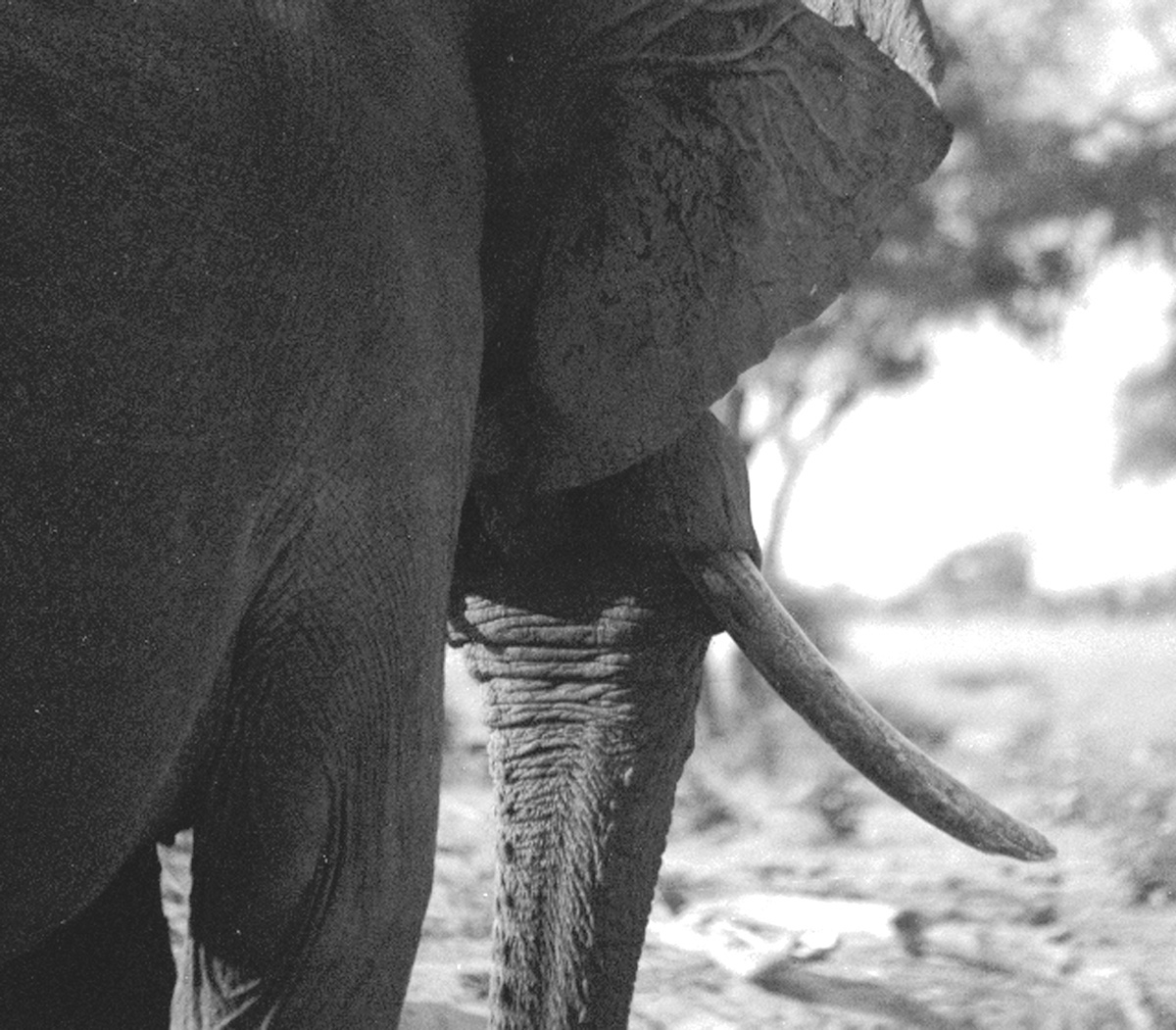
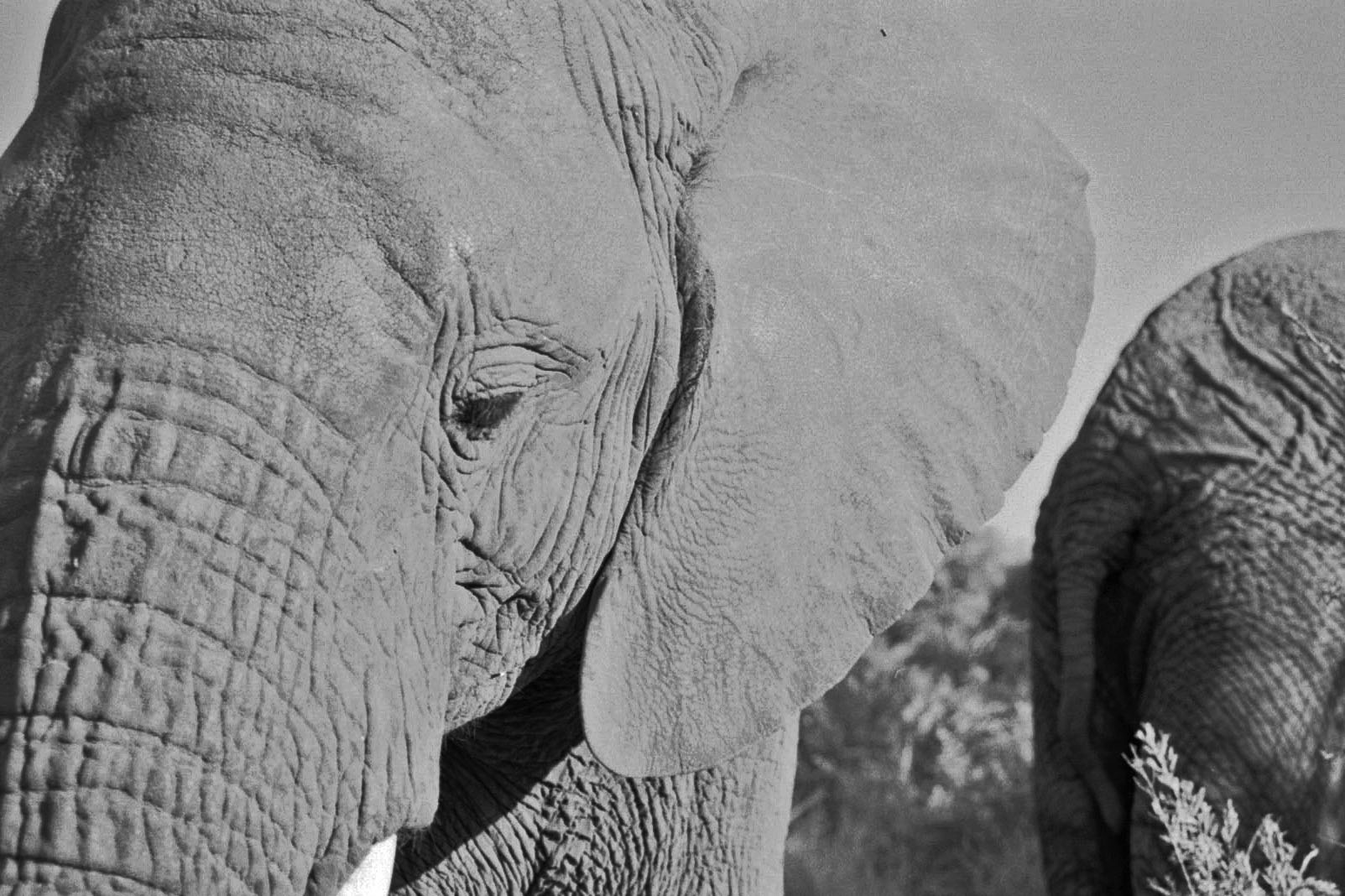
Savuti male b&wI focus on his great head, nodding downward with each step, as he trudges past.  A thirsty pilgrim in a parched land, his trek to water is nearly finished.  He’s headed straight to the trough; the clicking and whirring of our cameras doesn’t alter his gait.

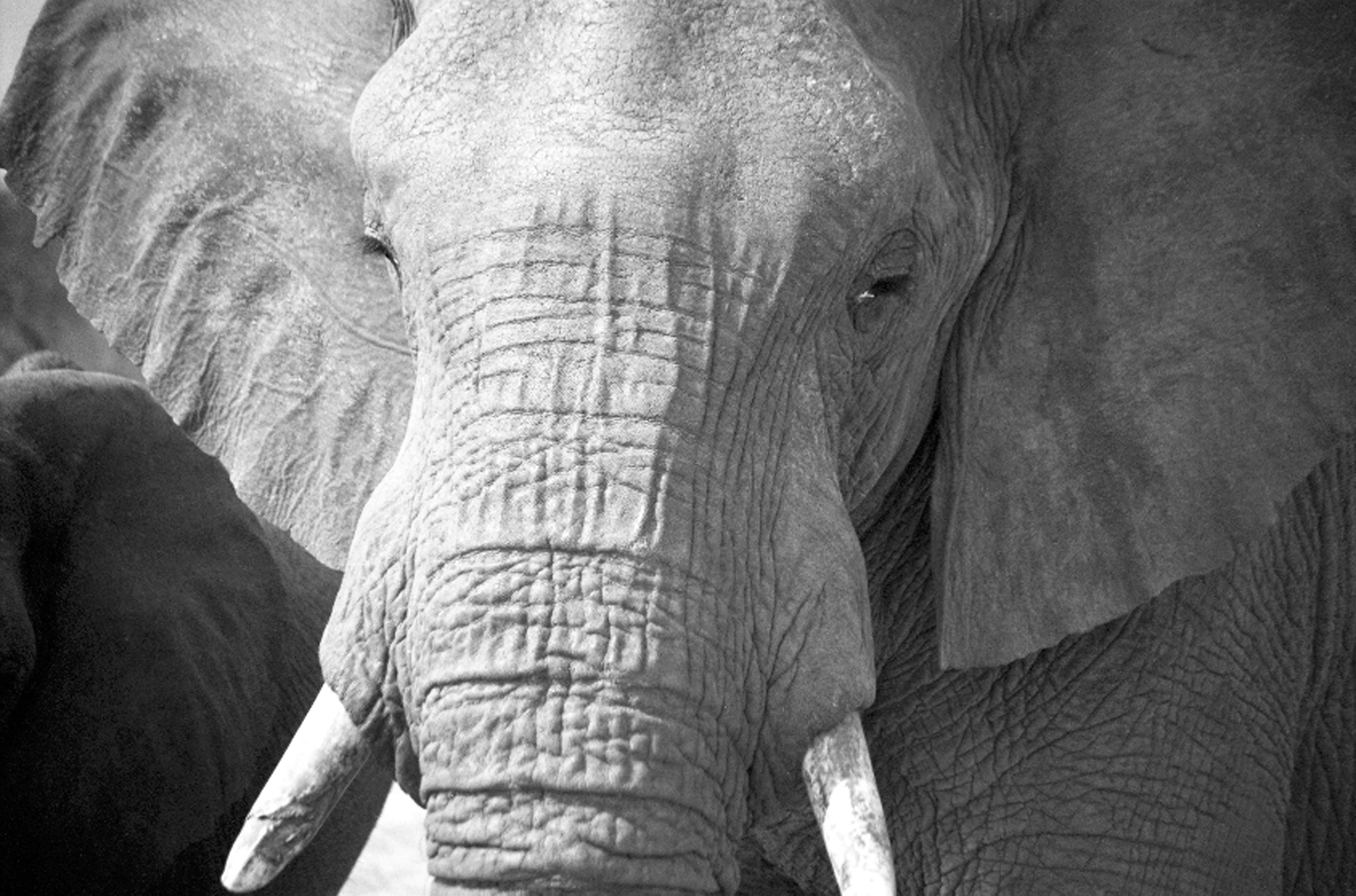
His enormous tusk splays out sideways.  It’s easily four feet long, stained and chipped on the end.  It grows out, rather than down and up – his tusks made him a much wider elephant than he really is.

Mid-drink, he curls his trunk into his mouth; head tilted back, eyes closed.  He makes gargling sounds as he drinks.  Extending his trunk down into the water, he blows bubbles.  Then he curls his trunk again and again to hose several gallons at a time down his throat.  Each swallow contains the taste of dung, samplings from all the animals that used this waterhole – zebra, wildebeest, warthog, ostrich, hyena and the occasional furtive flavor of lion.

I try to imagine the bouquet garni of the water and how its myriad fragrances might seep into the crevices of an elephant’s mind, form pools of scent they recognize, year after year, the liquid memory of Africa.  Perhaps this old bull is memorizing the stories in that trough, paragraphs of taste and smell, twists of plot and character and fate.

Finished drinking, he turns around and heads back to where our vehicle is parked, stopping just twenty feet away.  His skin is the color of seasoned cast iron.  The waterline on his body rises just past his belly.  Spatters of mud stain his ears and back.

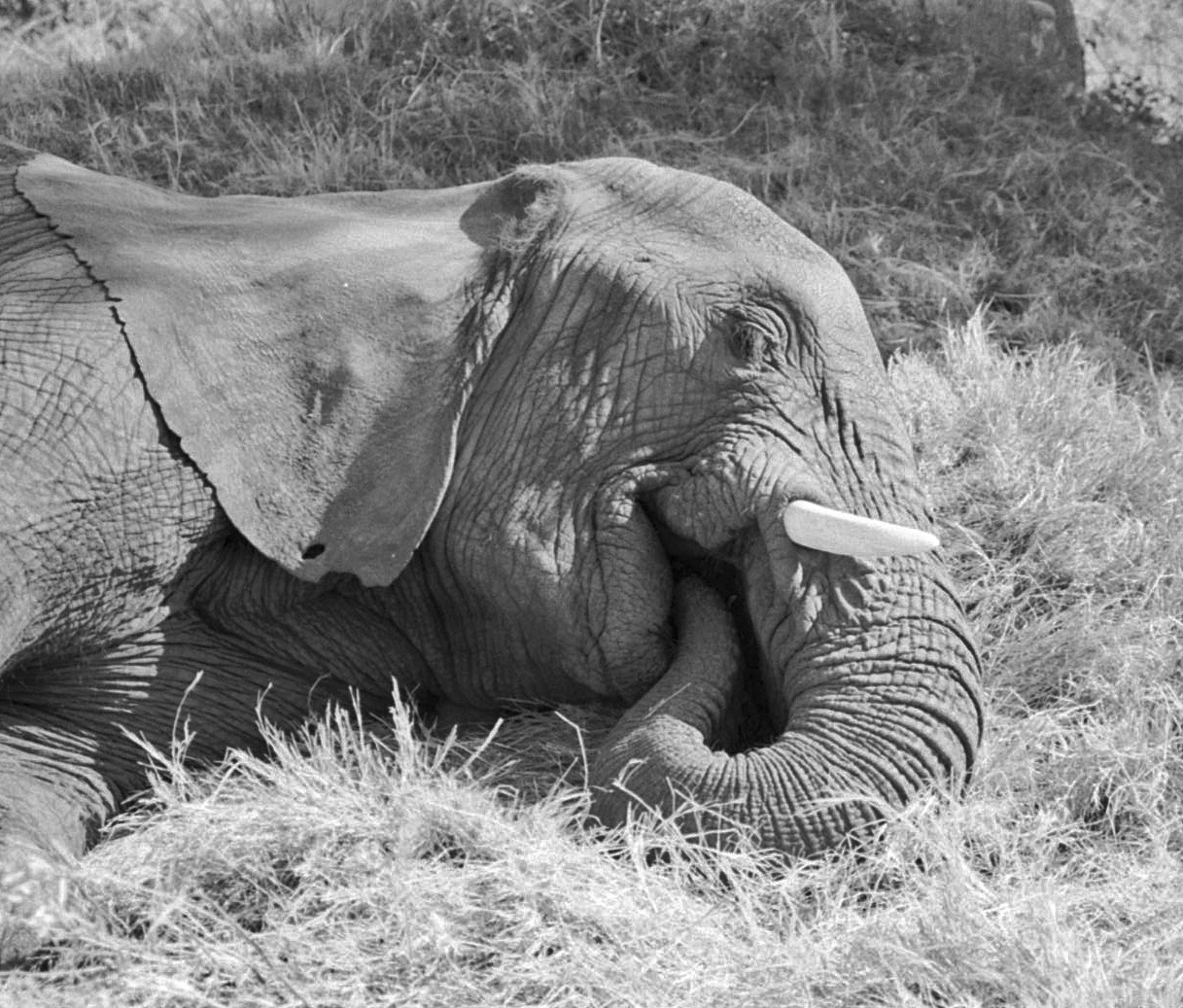
After several long minutes, his eyelids droop and his mouth slackens.  Under the hot sun he falls asleep, lulled perhaps by the narcotic of a long, slow drink.  The tip of his trunk coils like a magic rope on the ground.  He sleeps with his weight on three legs, resting a hind leg, occasionally rocking back on it as if he’s dreaming of his trek.  Drool from the end of his trunk slowly seeps into the sand.
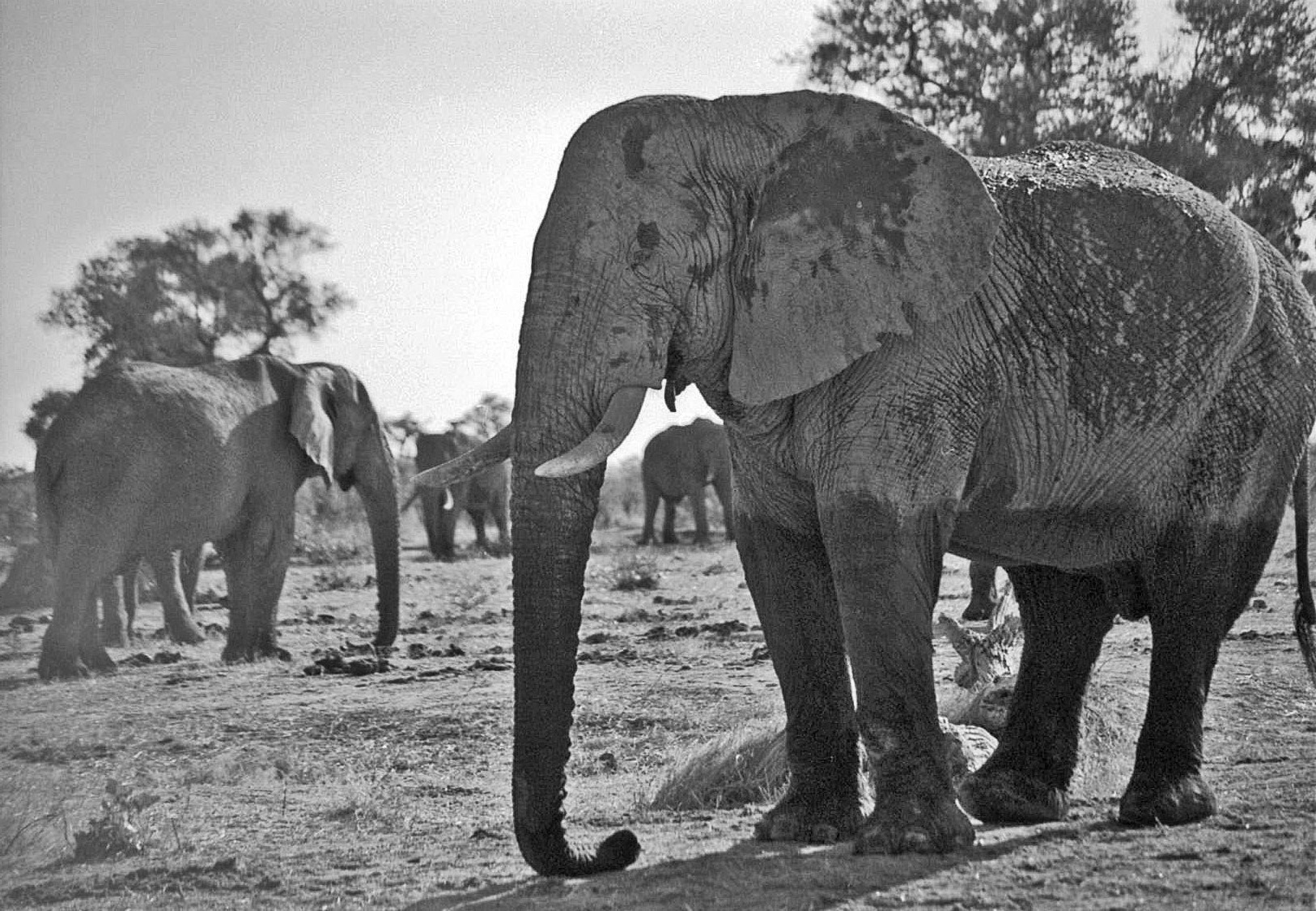
Ellie asleep b&wI match my breathing with his, and drowse, sedated by the sun.

The giant beside us rumbles soft snores in his sleep.  I wonder if he is aware of the humans next to him, nodding their heads, also falling asleep.  Other bachelors shuffle by quietly on their way to and from the waterhole, as if they don’t want to wake us.

Tiny paws of wind skitter across my arms; keep me half-awake.  But for one long moment, I almost entered his dreams.

Posted in Africa, Nature, Photography

Weekly Photo Challenge: Let There be Light

Could not resist re-blogging this for the WordPress Weekly Photo Challenge:

From 93 million miles away, pitched straight at me, vibrating, ululating like an African cry of greeting, light from the sun hurtles towards the earth at 186,282 miles per second and eight minutes later slams into me like a jabbering, long-lost relative trying to make up for lost time.  It babbles everything, all at once, into my eyes.

SunsetOur eyesight is an electro-chemical reaction to a vibrating particle-wave that gushes optical information splash into my brain.  I could shut my eyes to the wonder around me and be diminished.  I could shut my eyes to the atrocities around me and become hardened.

By opening my eyes, I give shape to my perceptions.  By opening my eyes I take responsibility for my vision, for what my eyes teach me.  By opening my eyes I learn that I belong to the world, not that the world belongs to me.

Our eyes are openings into and out of our bodies.  Are my eyes, as some would say, a window to my soul?

There is a cold way of seeing that clips wings and stifles our words into faint echoes.  But there is also a way of seeing where the eye can be like a mouth, swallowing color, taking in the entire world with just one gulp.  Just the sheer fact alone that we see color should provide enough wonder to fill our lives, should stop us in our tracks, should keep our eyes wide open, devouring everything as fast as we can choke it down, leave us slack-jawed, gasping for air.

Somewhere behind my eyes, a world exists that I yearn to inhabit, dreams that might become real if only I could imagine them with my eyes wide open.

Posted in Africa, Elephants, Nature, Nonfiction, Photography, Travel, Writing

Miles per Pound of Trees

Diamond on forehead 2An excerpt from my book in progress:

Thembi, she of the evenly matched ears, long-lashed eyes, and diamond-shaped scar on the bridge of her nose, farts as she walks.  Big, burbling farts.

All the trees, grasses and leaves Thembi eats gather in her 10-gallon stomach, which is pretty much just a holding area.  From her stomach, roughage travels into her small intestine and then on into her large intestine.  Joining the two intestines is a junction called a cecum, where digestion actually takes place.  Her cecum is filled with billions of microbes, just like most mammals, including us.  The microbes break down the cellulose of leaves and trees into soluble carbohydrates Thembi can digest, but the process also gives her enough methane gas to power a car 20 miles each day.

I wonder, as I walk behind her, just how one could harness this gassy natural resource.  I live at the edge of a small town.  Twenty miles would more than cover my daily errands.  I imagine exhaust fumes smelling like fermenting grass.  I imagine driving down highways inhaling the scent of mulched trees.

I wonder, as I walk behind her, why I think of such things.

Percolating along, Thembi lifts her tail and farts again.  It’s a stupendous displacement of air.  In this just-right light, I can actually see this fart.  It looks like heat waves blasting from the back of a jet engine.

One advantage of Thembi’s size is food efficiency, miles per pound of trees.  An elephant eats four to seven percent of its body weight each day – four hundred to six hundred pounds of vegetation.  Mice eat a twenty-five percent of their weight daily and hummingbirds two times their own weight, or two hundred percent.  If hummingbirds ate trees, the forests of the world would already be gone.  Pound for pound, Thembi needs far less food than rodents or birds.  And with her size comes another advantage over smaller creatures – a longer life span.

We humans, with our penchant for measurements, have conjured up a precise formula for figuring out things like longer life spans.  The formula is called quarter-power-scaling.  A cat is about 100 times more massive than a mouse.  To calculate the cat’s age, take the square root of 100, which is ten, and then the square root of 10, which is 3.2.  The lifespan of a mouse is around 800 days, or just over two years.  Multiply 800 by 3.2.  The result is 2,560 days, or seven years, the average lifespan of a cat.

However, if a cat’s metabolic rate was 100 times faster than that of the mouse, all cats everywhere would spontaneously combust into feline fireballs.  Oddly enough, heart rate, the engine that drives the cat to chase the mouse, scales to the same formula, but in the opposite direction, to the minus quarter-power.  The resting heart rate for a mouse is 500 beats per minute.  Divide that by 3.2 and you have the average heart rate for a cat, around 156 beats per minute.

An elephant’s resting heart rate is a placid thirty-five beats per minute and a bit higher, around forty, when excited.  While the jittery mouse lives just over two years,  an elephant lives around sixty-five years, certainly long enough to power my car for the rest of my life.


Posted in Africa, Elephants, Nature, Nonfiction, Photography, Travel, Writing

The Most Useful Appendage Ever Evolved

Since I have a huge cold and can’t think, I’m re-blogging this post from early in 2012.

An excerpt from my book-in-progress:

Morula plucks a branch from one of her favorite snacks, a bush-willow.  She holds the stem in her teeth, wraps her trunk from right to left around the branch, and sheers off leaves, top-to-bottom with a single swipe.  She drops the branch and transfers the leaves from the curl of her trunk into her mouth.

Morula is right-trunked, as I am right-handed, preferring to grab and wrap from the right.  Thembi is also right-trunked, but Jabu’s a lefty.

One of the ways to determine an elephant’s dominant tendencies is to inspect the underside of its trunk for green stains on either the right side or the left.  But before you do this, make sure you know the elephant and, more importantly, the elephant knows you.

Morula peels and discards branch after branch.  Shredded bushes mark her path.  She pauses next to a candle-pod acacia, easily recognizable by its upright seedpods.  It reminds me of a giant leafy candelabrum, holding a hundred or more candles in ruffled tiers.  Sharp curved thorns protect each pod.  Morula strips the acacia of a branch, then puts it in her mouth and eats it, thorns, pods and all.

She sidles close to Doug and curls her trunk against her forehead.

“Those round bumps on her forehead might be an old skin infection,” Doug tells me, “but we really don’t know.”

Morula waves hello

A light breeze feathers the hair in her ears as she stands slightly sideways and nods the tipof her trunk in a tiny Hello. . .   Ribbed muscles cross the underside of her trunk.  Bristles stick out like the legs of a giant centipede.

There is no other living creature on this planet that has a trunk.  If elephants were already extinct, which brave paleontologist would go out on a limb and reconstruct the trunk just from evidence of bony nostrils high on the skull?  Who could imagine a nose dangling close to the ground where scents abound?  A nose with the ability to pick up a single straw, rip a tree out by its roots, bench-press 600 pounds and untie your shoelaces without you ever noticing?

“Stand here,” Doug commands me.

I obey, my back to an elephant lineup.

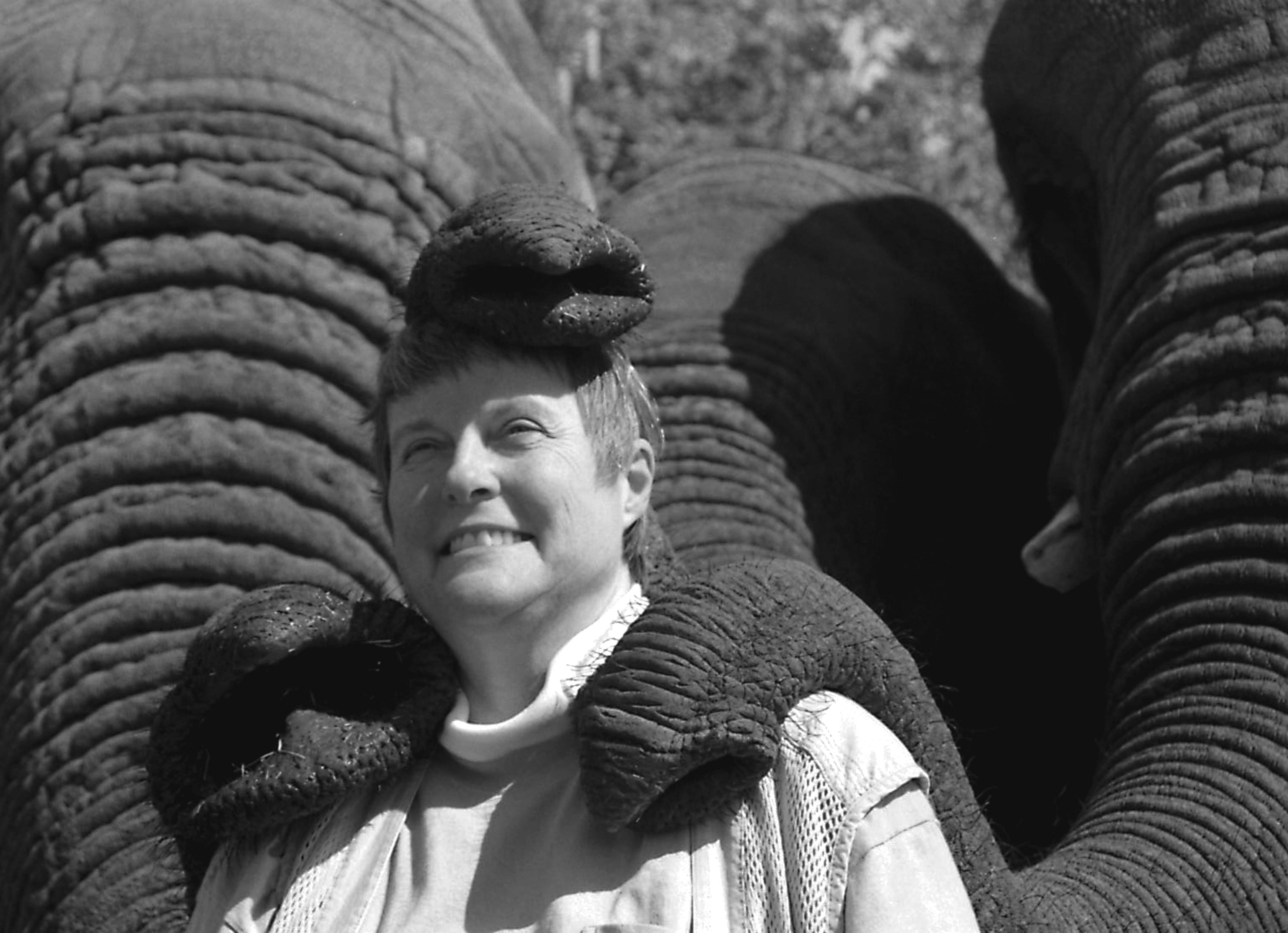
With a little guidance from Doug, Thembi gently places the tip of her trunk on top of my head.  It feels like a big beanbag up there, but one that’s warm, wiggly, drooling and breathing.

As Thembi rubs nose slime into my hair, Doug places Jabu’s trunk tip on my right shoulder and then Morula’s on my left.

Jabu has trouble keeping his trunk balanced on such a narrow ledge.  He constantly fidgets and pokes my cheek with his bristles.  Morula’s trunk drapes over my shoulder like a slack hose with a dripping nozzle.  Her runny nose continuously drains to clear out inhaled dust – the common condition of all elephant trunks.

When I look down and to the left, I have a close-up view of the two “fingers” on her trunk.  Her top finger is more pointed than the one on the bottom.  The shape of it reminds me of a hooded cobra.  But perhaps that’s because I think of Morula’s trunk as thinner and “snakier” than Jabu’s spectacular snout.

Which is getting heavier by the moment.  With the peripheral vision in my right eye, I see two nostrils dotted with grains of moist sand, nostrils more flesh-colored than gray.  Each opening is nearly as wide as the “O” of my mouth.

All three trunk tips, I can attest, are not just sheer weights.  They sniff, snorf, squirm, wiggle, inhale and exhale.  They create an atmosphere of elephant breath around my head.

Doug lowers my camera and pronounces, “Allll-right.”

The weights disappear.  For a few steps I am oddly light, as if walking on the surface of the moon.

Posted in Africa, Elephants, Nature, Nonfiction, Photography, Travel

Toenail Sun

Morula Sucking Trunk

An Excerpt from my Book:

Morula drowses, lying on her side, falling asleep in the sun.  She catches the tip of her trunk in her mouth, as Doug rubs the bottom of her front foot.  Her eyes droop and her mouth slackens with pleasure.

As Doug continues to rub, the tip of her trunk slips from her mouth.  Her eyes nearly close.  She drools a bit.

I kneel down next to her.

Morula’s legs are folded together, bent at the ankle and knee, the same way I fold my wrists and elbows together in sleep.  She’s strangely voluptuous, even Rubenesque, with her rounded belly and nipple peaking out from underneath her right leg.  Her ear drapes like a leather cloak over her shoulder.  From this angle it’s easy to see how her right tusk pierces her upper lip.

People often mistake an elephant’s ankle joint for a knee, since it seems far away from the foot, but the locations of her ankle, knee and shoulder are clear from the way her legs are bent.

Except for their gray color, Morula’s toenails look pretty much the same as mine do, only bigger and thicker.  Human and elephant nails are made of tough, insoluble keratin, a semi-transparent protein that is the major component of hair, hooves, horns and quills.

Morula’s toenails grow at a rate that might be expected from an animal that walks twenty or thirty miles a day.  They are also highly polished from walking through sand.  In captivity, an elephant’s nails must be constantly trimmed, often on a daily basis; otherwise they become infected and ingrown.  And without the opportunity to walk long distances, the pads on the feet of incarcerated elephants thicken and grow hard, and must be frequently pared down.  If they’re not, the displacement of their gait will cause joint problems later on.

I take a photograph of the sun mirrored on Morula’s highly polished nail.


Morula's toenail b&w

Posted in Africa, Elephants, Nature, Photography, Travel, Writing

Windows of the Soul

Jabu's eyeLike us, like all mammals, an elephant’s eye has one large lens, its aperture always open, except for a blink, or in sleep.  Like us, like all mammals, Jabu’s round iris controls the amount of light that enters his pupil.  Like us, the lens of his eye focuses light images on his retinas, where they are converted into chemical and electrical impulses, and conveyed along the optic nerve directly into his brain.

The iris is the only muscle of our bodies not colored a shade of red.  It contains pigment instead.  The density of that pigment colors our eyes from brown to blue, mostly shades of brown for elephants, although a blue-eyed calf was photographed this year in South Africa.

Iris is the Greek word for rainbow.  When light refracts through countless prisms of rain, it produces that arched scatter of reds, greens, blues and violets that we call rainbows.  But what we see is only half the story.  Rainbows are perfect circles cut in two by the horizon.  It’s only possible to see a complete circular rainbow if you are in an aircraft and the sun is high enough behind you.  A round rainbow is named a “glory.”  A halo for the earth.

How did the Greeks know rainbows are round?

Hurtling towards earth at 186,282 miles per second, light from the sun is carried by subatomic particles called photons, which vibrate up and down in perpendicular motion to the direction of the advancing light waves, passing along their energy to the retinas of our eyes.  Photons are both the medium and the message, carrying waves like water carries waves, invisible surf lapping against the islands of my eyes.  The cells in my eyes, in Jabu’s eyes, are precisely one photon wide.

I blink, he blinks, photon by photon we gaze into each other’s souls.

Posted in Nature, Nonfiction, Photography

The Light from Saxophones

Tsessebes afternoon sunThree tsessebees saunter up to their bellies in strong vertical spikes of custard-colored grass.  Their shoulder humps, sea-horse faces and gleaming russet coats rise and fall, rise and fall, from left to right, like a musical score on parchment.

The light in this photograph belongs to lingering saxophones.  Long, rich, golden notes catch and roll on the backs of impalas, snag in the teeth of lions and smolder in the burnt umber eyes of eagles.  The grasses, the trees, the tsessebees, all are coated in honey as the sun bends at the waist and pours out the last light of day in a long slow moan, a sweet trickle down the throat of night.

Posted in Africa, Elephants, Nature, Nonfiction, Photography, Travel, Writing

Deja Vu

Jabu & the tree b&w


It’s an ancient feeling, this memory of a moment I’ve never had before, this exact smell of scuffed dust, this slant of light, the slightly spicy taste of sand, the warm brush of sunrays across my cheeks, the squint my eyes adopt as if they’ve always looked into the African sun.  It’s the way my bones melt, the acceptance in my mind and nerves that tells me not to run when a monster materializes from a clump of brush and moves to an arm’s length, breathing so quietly I wonder if it’s sleepwalking, I wonder if I’m sleepwalking, because everything that is happening, this monster, this place, my fog of serenity, must be made from dreams.

The monster moves closer.

A familiar monster.  One with a shape.  One with a name.

His eye, a huge topaz oval, stares down at me.  He’s motionless, concentrating.  I can’t even hear him breathing.

Like us, like all mammals, an elephant’s eye has one large lens, its aperture always open, except for a blink, or in sleep.  Like us, like all mammals, Jabu’s round iris controls the amount of light that enters his pupil.  And like us, the lens of his eye focuses light images on his retinas, where they convert into chemical and electrical impulses and whisk along the optic nerve directly to his brain.

What would it be like to think without words and recognize shapes without names?

Both of us, human and elephant, witness only a small portion of what is out there to be seen.  Francolins, mambas, tsessebees, zebras and lions – everything that crawls, swims or walks – witness the world in ways I cannot even imagine.

Even in the womb the eye of a fetus moves through its amniotic dreams.  Does it dream about the glories of a life to come?

“Hello,” I whisper.


The light from his eye just now reaches mine.


Posted in Elephants, Extinction, Nature

Mammoth Tree

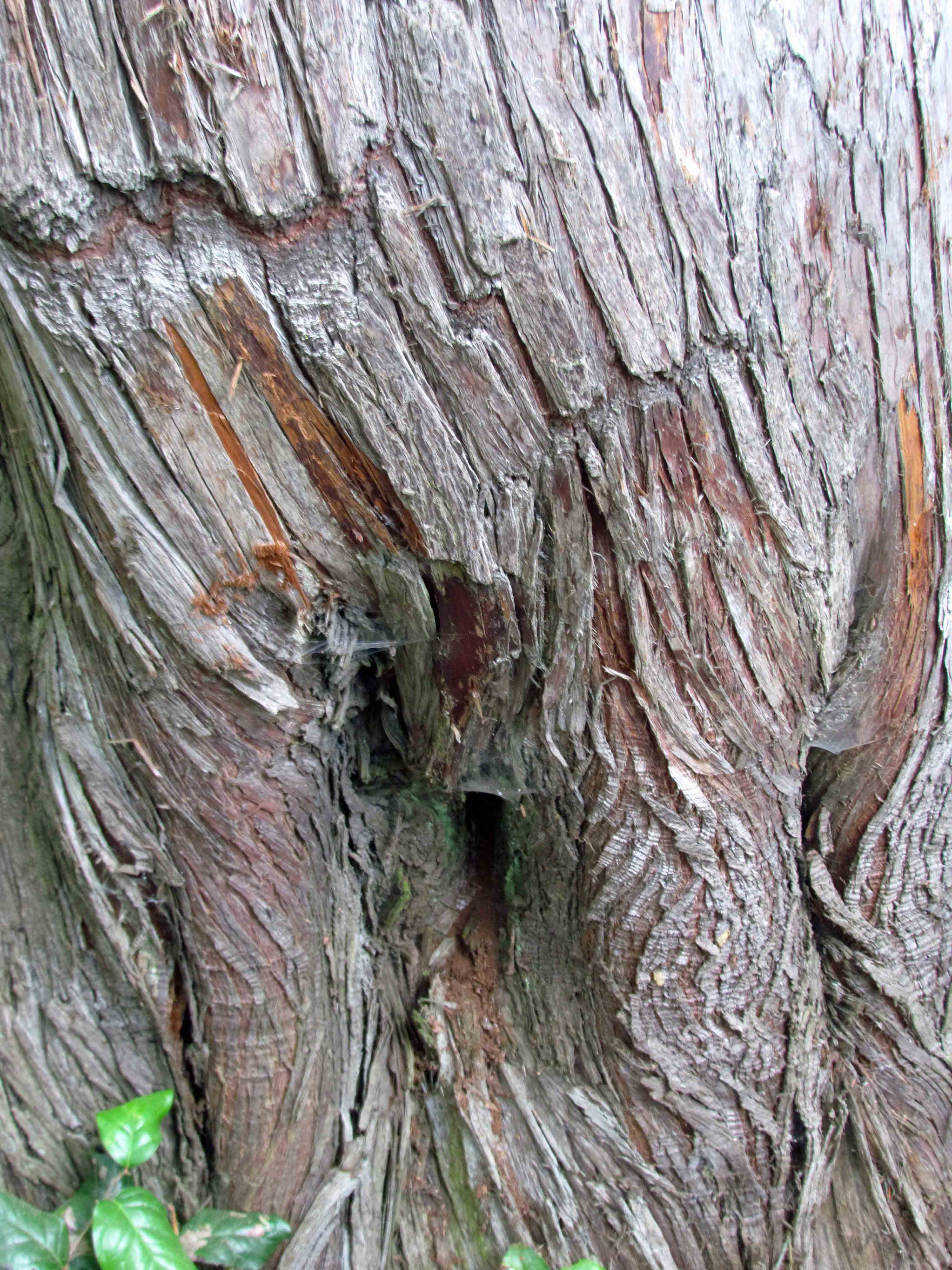
“Look,” my friend says, “it’s an elephant.” I turn around.  We’re walking along a path above the tide pools at Salt Creek, on the Straits of Juan de Fuca.  It’s a cold, foggy morning, summer slipping into fall. She points to a western red cedar on a curve of the path.  “I see an elephant,” she says.

She’s right.  But where she sees a generic elephant I see a mammoth, a young Columbian mammoth, with a shaggy curl of moss on its domed forehead and layered fur all the way down its trunk.  Its small ear flaps forward and a rounded burl eye stares sightlessly out over the straits.  His trunk (by now I’ve already decided his gender) reaches down into salal and young firs, as if he is browsing while standing on the edge of a cliff where land meets sea.

Mammoth in Cedar

I reach out and touch this frozen young giant – about seven feet tall to the top of his dome.  He’ll be ten feet tall when fully grown.  Of course he’s impassive, wooden to my touch, but the swirl of his bark/fur makes him seem as if he just stopped as we rounded his corner, hoping to blend in before deciding on our intent.

I retrace my steps to the other side of the tree and discover that my gender assignment is completely wrong.  On the exact opposite side of the mammoth’s head is its unmistakably female rear end, two legs solidly planted on the ground, a hanging vulva in between them.  Even though shaggy fur covers her rump, anus and legs, her triangular shaped vulva can clearly be seen.  Male elephants have internal scrotum and their small hanging folds are tucked up and under.  This mammoth is definitely female.

Mammoth Cedar female

The western red cedar grows straight and tall from the middle of her back.  I assume she grew around a nurse log, forming her shape during a hundred years or more.  Cedars like this one will grow to 180 feet and live for a thousand years.  Mammoths disappeared ten thousand years ago.  But I wonder if giants remember giants and try to resurrect them however they can.

Posted in Africa, Elephants, Nature, Nonfiction, Photography, Travel

Pilgrimage

The Face

(After a trip to Africa in 1999):

I’m nearly asleep, lying across several seats at Heathrow, dreaming of elephants, my body suspended at its origin eight time zones away.  It’s neither night nor day in my dreams.  I see fluorescent lights through the lids of my eyes, hear polite announcements for flights, smell the faint barnyard dust of Africa, sense a great presence looming towards me.

Step by step she comes closer.  She is confident, unafraid.  She looks me directly in the eye.  Her eyelashes are long and straight, her deep brown eyes are dark, dark pools.

She stops less than five feet away, just beyond the reach of an outstretched arm, should I be foolish enough to do so.  She is wild, in charge.  I am on her terms and she knows it.  She knows that people sit motionless on smelly, noisy, moveable rocks.  She knows the small sneezing sounds of the devices they carry in their hands and point at her.

She stares into my eyes, then shakes her head sideways in a movement that would say “no” in my language.  Her ears flap once, twice, and great clouds of dust rise from them.  She raises her head, looks down the top of her long trunk.  It’s an imperious, don’t-mess-with-me look, but that again is my language, not hers.  A rumble like a promise for distant rain fills my ears.  Then she sidesteps, turns and vanishes without another sound into a thicket of brush, her great presence subtracted, a void of air where she stood.

I am on a pilgrimage to that place.  I am waiting for my flight, asleep at Heathrow.  I am nearly, virtually there, in my dreams.