Posted in Elephants, Jabu, Morula, Sandi

Sleight of Trunk

An excerpt from my book:

The tip of Morula’s trunk, like that of all African elephants, has two opposing fleshy extensions of muscle called “fingers,” one on the top of the tip, one on the bottom.  Asian elephants have only one “finger” on the upper side of their trunk tips.  To pick up objects, Asian elephants grasp an object between their single digit and the thick, stumpy underside of their trunk tips.

With her “fingers” Morula can remove a thorn, uncork a bottle, turn on a faucet, write with a stick in the sand, pick a leaf from a branch without making the others quiver, hold a cup by its handle, and swipe loose objects with the dexterity of a pickpocket.

Morula pinches the cap on my head and lifts it.

“Morula, behave yourself.”  I hear Doug’s voice behind me.

My cap plunks down, askew.  I take it off and examine a two-pronged smear of mud on its crown.

Amazing.

I had no sensation of her huge trunk hovering over my head.

Morula backs away, gazing sideways and down, caught in the act.

Who me? says her body language.

An exultant thief, Morula looks in every direction but at me.  If she could giggle, she’d be doing it now.

”Morula,” Doug tone is scolding, but all of us laugh, humans and elephant together.  Morula’s mouth is open and curled at the ends and she becomes, if possible, lighter on her feet, cross-stepping away from me.

Doug once wrote in his field notes:  “To experience these creatures fully, you have to be anthropomorphic.”

I agree.  How do humans measure anything but against themselves?

Stacey can’t wait to join the sleight-of-trunk game, but her hat is brand-new.  It’s not even dusty.

“Here,” Doug says, and plunks his hat, stained multiple times by his elephants’ trunks, on Stacey’s head.

“OK,” he says, “Jabu.  Take.”

Jabu fingers the hat, swipes it, and lifts it to the crown of his head.
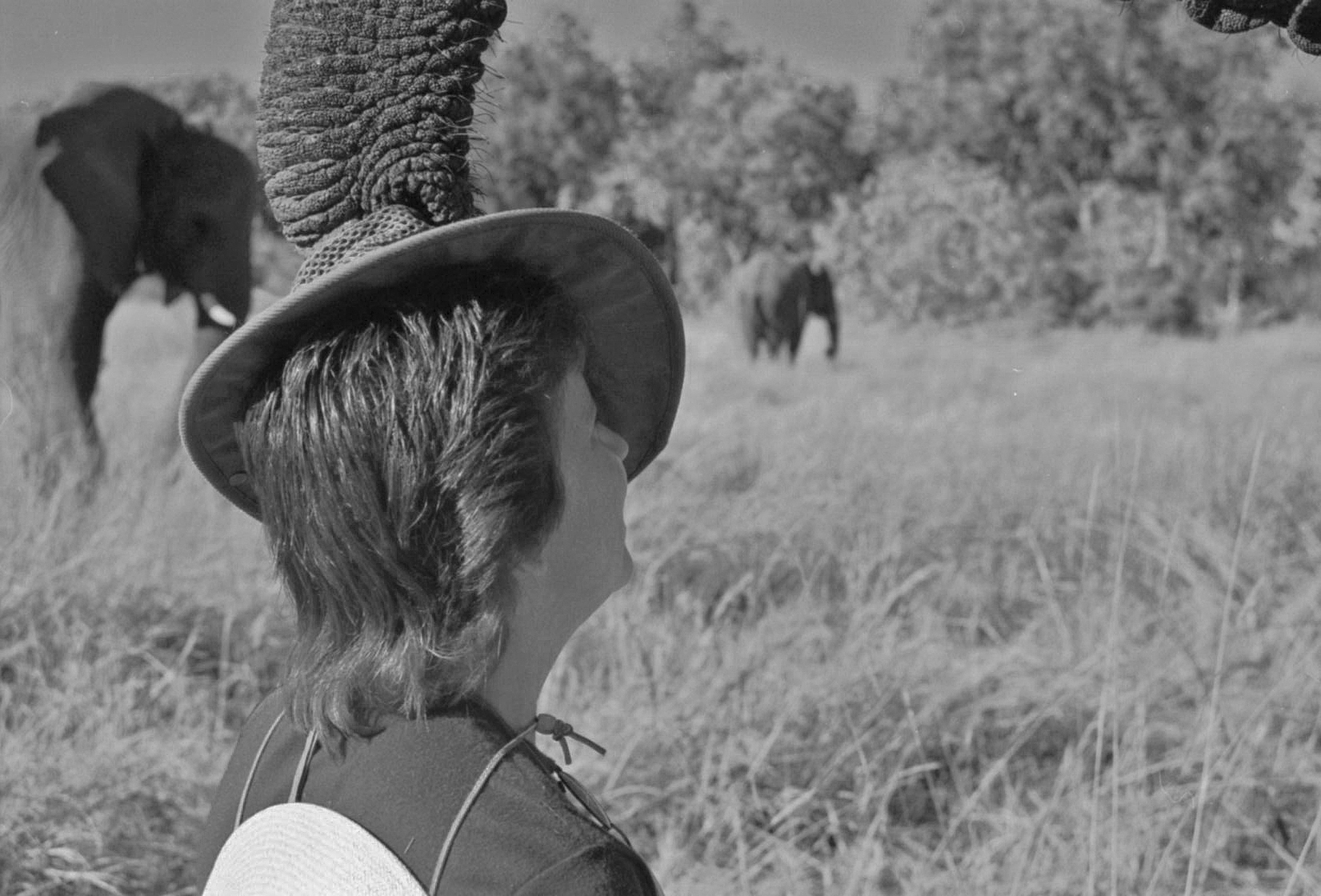
Jabu takes a hat

“Jabu, Allll right,” Doug says, and Doug’s hat is returned to Stacey’s head, one more smear on its discolored crown.

She turns it in her hands before handing it back to Doug.  “Wow,” she says.

But I’m more impressed with Jabu’s quick assessment of the change of rules in a game he’s played over and over again.  This hat game wasn’t a simple one.  Jabu had two side-by-side bare heads upon which to place Doug’s hat.  And Doug’s hat would smell like Doug.  Yet Jabu knew which head was which.  And he knew Doug’s hat did not belong on Doug’s head this time.

Out in the field ahead of us Morula and Thembi continuously wrap and rip grass out by its roots, zzzzzzt,  zzzzzzt.  They beat the grass on the ground to remove sand and then place the thatch sideways in their mouths.  Bits of it fall to the ground as they grind their massive molars together.

Sandi stands near the road, watching them patiently, a mother with bright, exuberant children.  Her eyes slide sideways as I walk up next to her.  “Do you ever get tired of this?”  I swing my arm, trying to encompass the entire scene.  Four inches shorter than I am, Sandi tilts her head to look into my face.

“No.  We’re family,” she says.  I don’t have a reply to that simple statement so we both watch the elephants.  Then she says, “Sometimes I miss lipstick and makeup and movies.  But not often.”

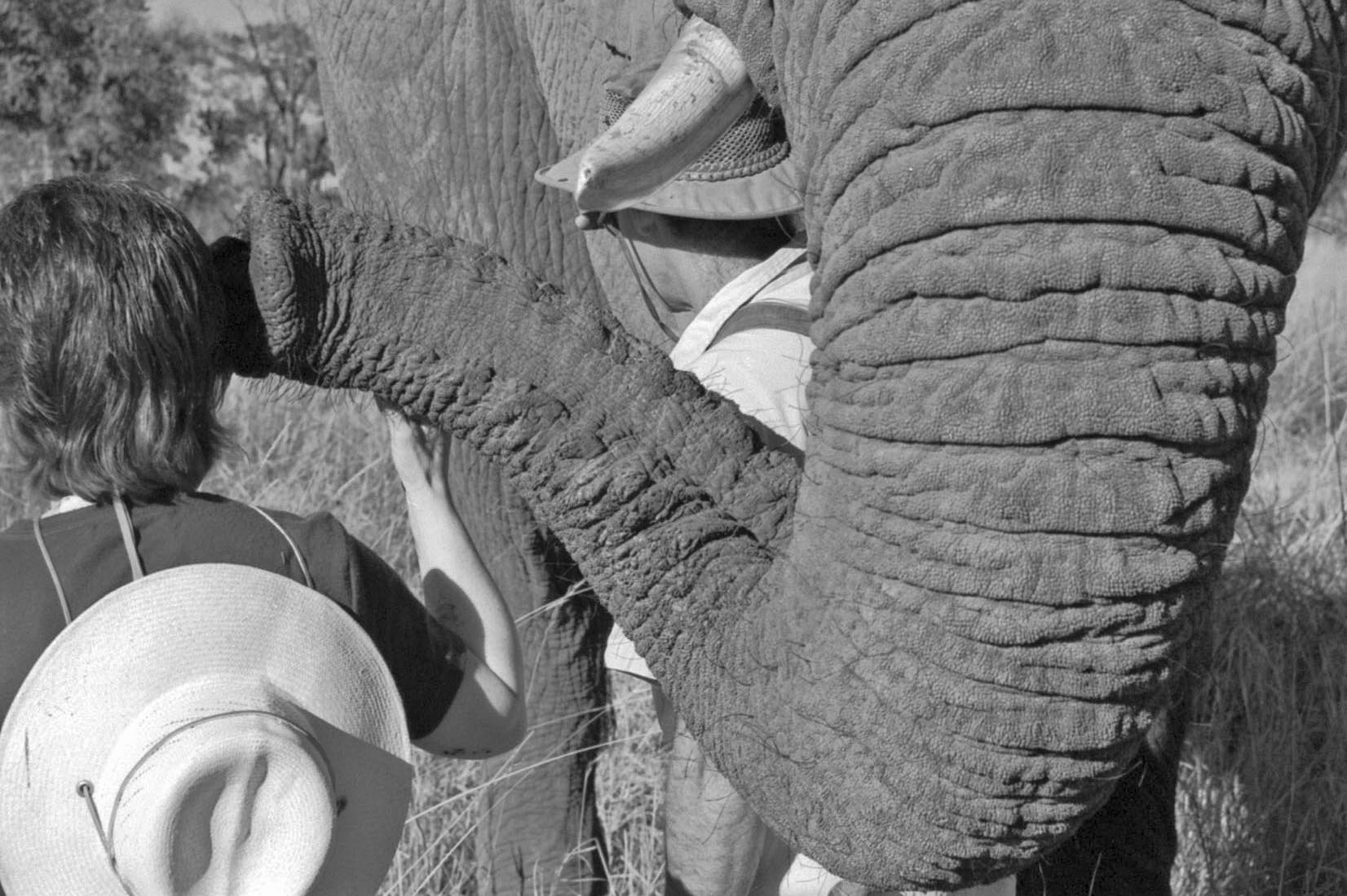
I turn around to look at Stacey and Doug behind us.  Doug stands under Jabu’s head and Stacey is next to him.  Deep in conversation, they have their backs to us, looking in general direction of the way we came.  Jabu curls his trunk down and awkwardly to the right, exploring the scent of Stacey’s hair.  Even though the tip of his trunk is out of his range of vision, it hovers an inch from Stacey’s face as she, absentmindedly, touches it with one hand the way a child might reach for the arm of a mother brushing her hair.
Posted in Africa, Elephants, Jabu, Morula, Thembi, Travel

The Most Useful Appendage Ever Evolved

Morula plucks a branch from one of her favorite snacks, a bush-willow.  She holds the stem in her teeth, wraps her trunk from right to left around the branch, and sheers off leaves, top-to-bottom with a single swipe.  She drops the branch and transfers the leaves from the curl of her trunk into her mouth.

Morula is right-trunked, as I am right-handed, preferring to grab and wrap from the right.  Thembi is also right-trunked, but Jabu’s a lefty.

One of the ways to determine an elephant’s dominant tendencies is to inspect the underside of its trunk for green stains on either the right side or the left.  But before you do this, make sure you know the elephant and, more importantly, the elephant knows you.

Morula peels and discards branch after branch.  Shredded bushes mark her path.  She pauses next to a candle-pod acacia, easily recognizable by its upright seedpods.  It reminds me of a giant leafy candelabrum, holding a hundred or more candles in ruffled tiers.  Sharp curved thorns protect each pod.  Morula strips the acacia of a branch, then puts it in her mouth and eats it, thorns, pods and all.

She sidles close to Doug and curls her trunk against her forehead.

“Those round bumps on her forehead might be an old skin infection,” Doug tells me, “but we really don’t know.”

Morula waves hello

A light breeze feathers the hair in her ears as she stands slightly sideways and nods the tipof her trunk in a tiny Hello. . .   Ribbed muscles cross the underside of her trunk.  Bristles stick out like the legs of a giant centipede.

There is no other living creature on this planet that has a trunk.  If elephants were already extinct, which brave paleontologist would go out on a limb and reconstruct the trunk just from evidence of bony nostrils high on the skull?  Who could imagine a nose dangling close to the ground where scents abound?  A nose with the ability to pick up a single straw, rip a tree out by its roots, bench-press 600 pounds and untie your shoelaces without you ever noticing?

“Stand here,” Doug commands me.

I obey, my back to an elephant lineup.

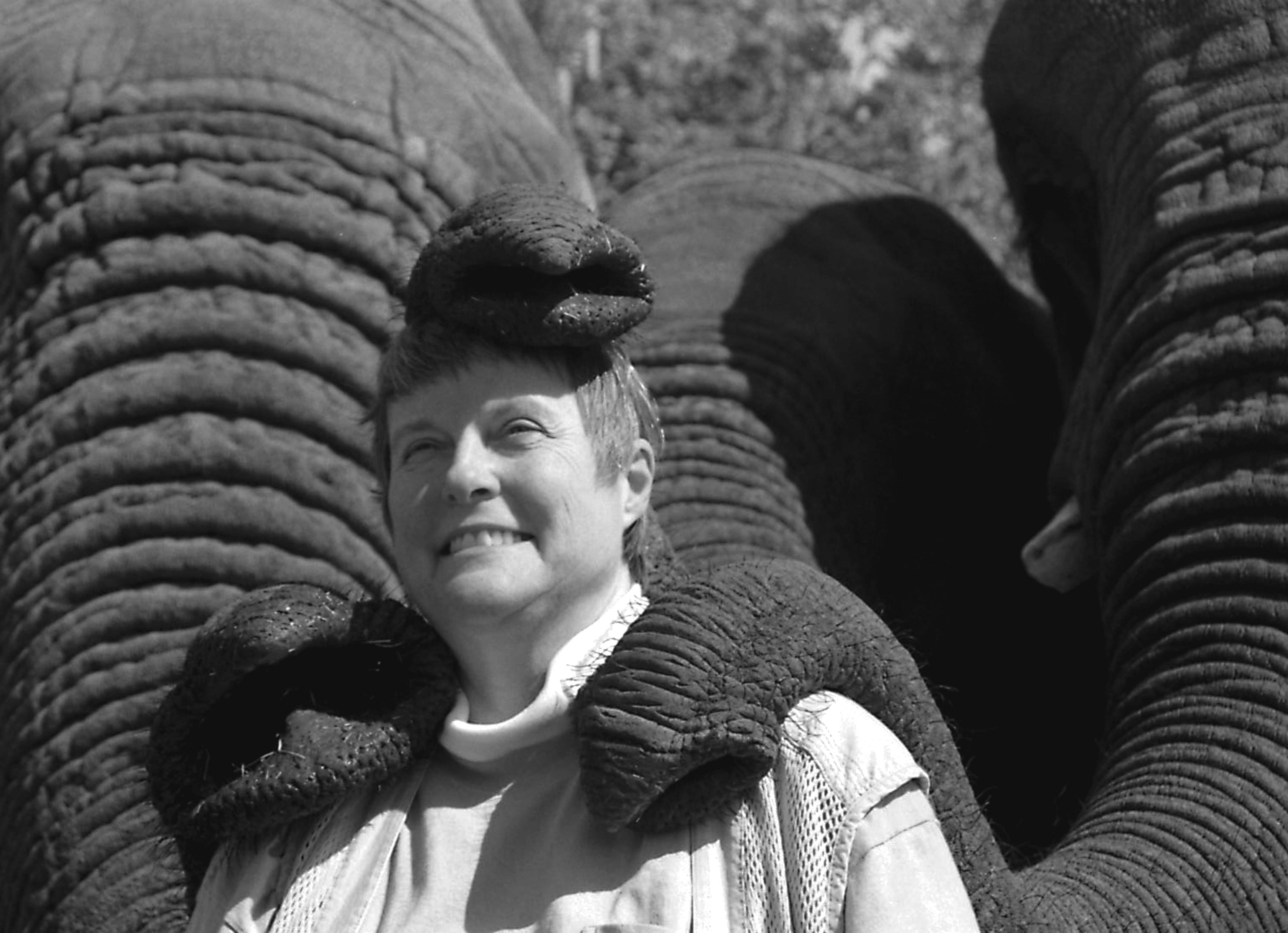
With a little guidance from Doug, Thembi gently places the tip of her trunk on top of my head.  It feels like a big beanbag up there, but one that’s warm, wiggly, drooling and breathing.

As Thembi rubs nose slime into my hair, Doug places Jabu’s trunk tip on my right shoulder and then Morula’s on my left.

Jabu has trouble keeping his trunk balanced on such a narrow ledge.  He constantly fidgets and pokes my cheek with his bristles.  Morula’s trunk drapes over my shoulder like a slack hose with a dripping nozzle.  Her runny nose continuously drains to clear out inhaled dust – the common condition of all elephant trunks.

When I look down and to the left, I have a close-up view of the two “fingers” on her trunk.  Her top finger is more pointed than the one on the bottom.  The shape of it reminds me of a hooded cobra.  But perhaps that’s because I think of Morula’s trunk as thinner and “snakier” than Jabu’s spectacular snout.

Which is getting heavier by the moment.  With the peripheral vision in my right eye, I see two nostrils dotted with grains of moist sand, nostrils more flesh-colored than gray.  Each opening is nearly as wide as the “O” of my mouth.

All three trunk tips, I can attest, are not just sheer weights.  They sniff, snorf, squirm, wiggle, inhale and exhale.  They create an atmosphere of elephant breath around my head.

Doug lowers my camera and pronounces, “Allll-right.”

The weights disappear.  For a few steps I am oddly light, as if walking on the surface of the moon.

There is an elsewhere, somewhere, but it’s not a place I want to be right now.

Posted in Africa, Elephants, Morula

Elephant Air-Conditioning

An excerpt from my book:

Under a sun-bleached sky that is no longer blue, dry coughing barks from black-backed jackals lope in from our left . . . Wraack, wraack, wraack. . .  Black-backs are scavengers, more aggressive than other types of jackals, occupying the same ecological niche in Africa as coyotes do in North America.  Unlike coyotes, black-backed jackals do not howl.  They often steal meat within the reach of a lion’s paw – although their main diet consists of insects, lizards, snakes, rodents, birds and ripe fruit.

Up ahead Morula slaps her ears flatly against her shoulders.

Whoooosh, thwack . . . Whoooosh, thwack . . . Whooosh, thwack . . .

Elephant air-conditioning for a creature that produces enough heat to warm a small house.

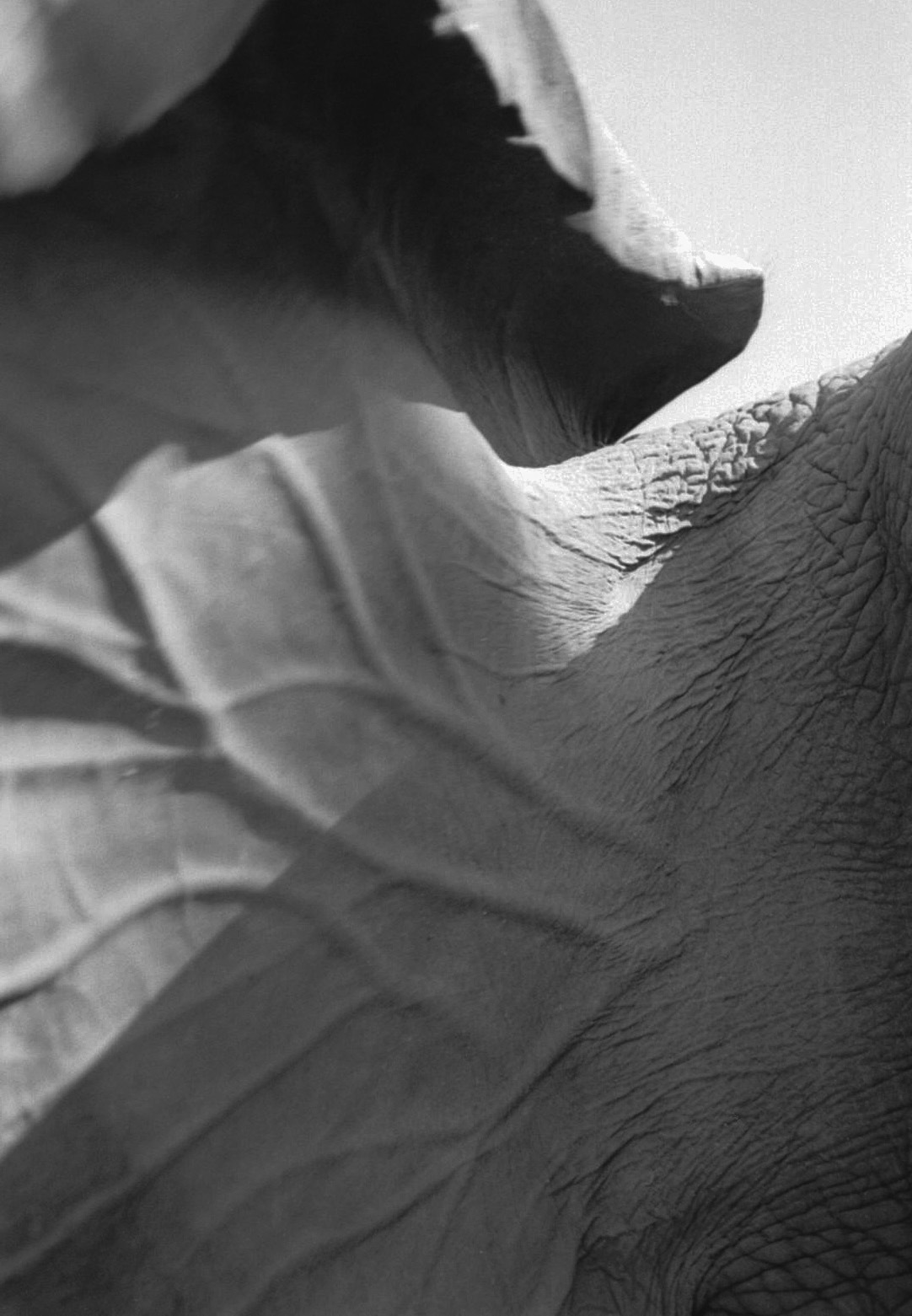
Elephants are pachy-dermed, “thick-skinned.”  Some of Morula’s blood vessels are buried as deep as one-and-a-half inches under the surface of her skin.  Since she doesn’t have sweat glands, her ears act like giant heat exchangers, regulating her body temperature.  As her ears open, her body size increases by roughly twenty square feet, a huge area for thermoregulation.  Air moving over the swollen arteries of each ear cools her blood as much as nine degrees before it returns to her body.

I take a photograph of her ear in mid-flap.  Where Morula’s ear attaches to her shoulder, wrinkles give way to he swollen vessels pumping five gallons of blood per minute across the surface of her ears.  The pattern of those arteries is as unique as a fingerprint, and often used for identifying individual elephants.

Morula's ear

Whooosh, thwack . . . Whooosh, thwack . . . Whooosh, thwack . . .

The breeze she creates dies before it reaches me.  I take off my cap and fan my own neck.

My teeny, itsy ears are built somewhat the same as hers are, with an upper rim of cartilage and a fleshy, lower lobe.  But I don’t have an auriculo-occipitalis, an ear muscle the size of a weightlifter’s bicep.  I can’t flap my ears.  I can’t even wiggle them.

Posted in Hyenas, Sandi

Hyenas

An excerpt from my book:

I zip shut my tent, first the inner mesh, then the heavy outer canvas flap, fastening the zippers all the way to their ends – a precaution against unwanted visitors such as scorpions, snakes or the thieving hyenas of Stanley’s Camp.  Two days ago, in the late evening, I waited for Doug while the camp’s manager kept me company.  He handed me a cold Tusker and pointed to the banks of a nearby lagoon.  “Hyenas drug our leather sofa out there and ripped it apart.”

The sofa never had a chance.  A pack of frenzied hyenas can devour a four- hundred-pound zebra in less than half an hour, eating everything: bones, skull, hair, even hooves – leaving only a smear of blood on the ground.  With a bite pressure of over a thousand pounds, hyenas pulverize and swallow enough bone their feces turn chalk-white.  They will filch anything not locked up: boots, toothpaste, shaving cream, underwear, soap, even bottles of hot sauce.  What’s glass to a creature that can eat a zebra’s hoof?  In the case of the sofa, they ate the leather and left a gnawed wooden frame.

“Why the sofa?” I asked the manager.  I imagined the scenario: in the dead of night the hyenas climb a set of wooden steps into the dining lounge, shove aside several tables and chairs, pull the sofa from the lounge down the steps and drag it the length of a football field to deposit it at the lagoon.

“Just the oil from human hands.”  He rubbed a palm across the sofa’s replacement.  It too is leather.  I tried not to think of it as also doomed.

A well-known hyena den is very near the main road to Stanley’s Camp.  Since I had some time before Doug arrived in his 3F, one of the guides drove me over to the den just at dusk.

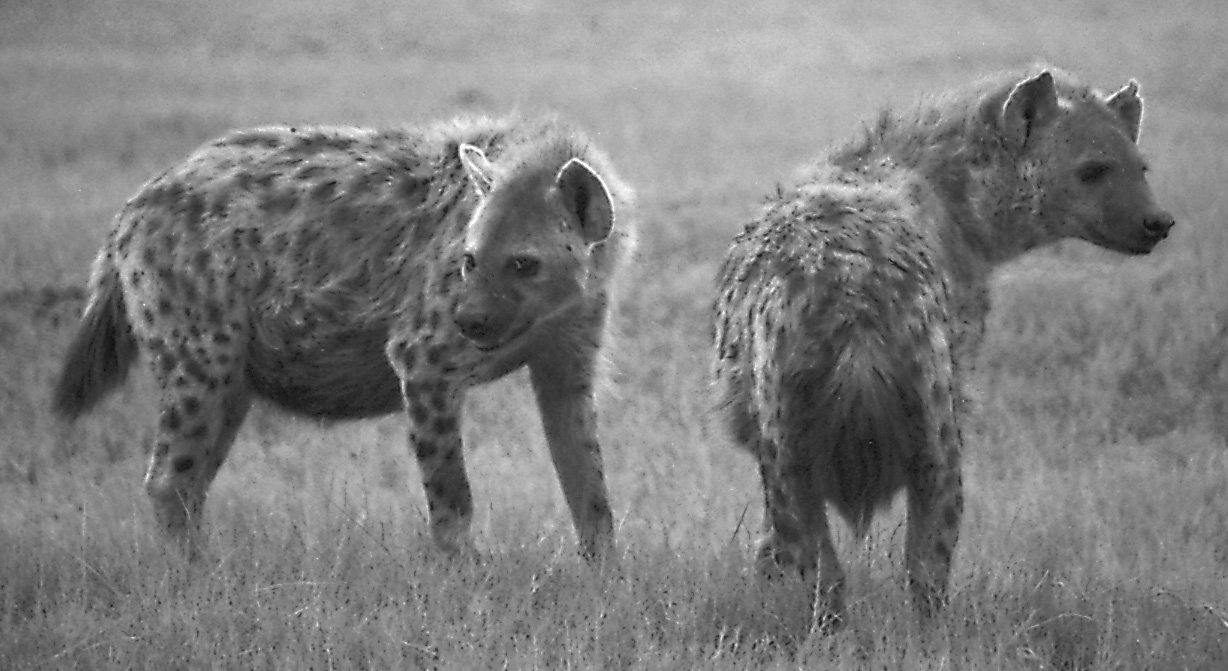
As we sat quietly, motor off, a lone Spotted Hyena tentatively emerged from the den.  She had the usual hyena slouched profile: massive head and shoulders tapering to small, tucked-in hindquarters – a hybrid creature: half fearsome predator, half coward.  The second largest carnivore in Africa, (after the lion), the Spotted Hyena is larger than her Brown Hyena cousins.  Her family is more aggressive, too – a single adult, weighing at the most 140 pounds, is capable of hunting and killing a bull wildebeest of 600 pounds.  Although hyenas kill ninety-five percent of what they eat, they also loot the kills of leopards, lions and cheetahs at every opportunity.  Lions can’t digest hair and bones, but  hyenas are happy to do that for them.

Grinning her famous false smile, the hyena sat at the entrance of the den and turned her black, empty eyes toward us.

Less than a moment after, black fuzzballs erupted behind her.  As she returned each pup to the den’s entrance, another escaped and then another.  The grinning, panting, anxious nanny seemed to be having a nervous breakdown.  I would have considered the pups cute, except for the hyena’s awful reputation.

Last night, when I mentioned the sofa, Sandi told me that hyenas had killed an eleven-year-old American boy several years ago at the Xakanaxa (Kah-khan-a-kah) Campground, thirty miles northeast of here.  Despite the young age of her son, the mother allowed him to sleep by himself.  Awakened by crazed laughter, the guide saw a huge female hyena dragging the boy’s partially eaten body into the bush.   Guides from nearby camps helped locate what was left of the decapitated body, driving away the hyenas and guarding it until daylight.  For two years afterwards, his mother haunted the streets of Maun and the area around Xakanaxa, carrying her son’s ashes, looking for clues as to how he died.  Did he leave his tent unzipped?  Did he have food in his tent?

In the parks and game reserves of Africa, you never, never sleep with your food.  At Doug and Sandi’s kitchen shelter anything even remotely edible is secured in heavy metal lockers or inside a propane-powered refrigerator.  Over at Stanley’s, food is kept behind the heavy doors of a wood-frame kitchen.  Watchmen patrol the camp.

Last night I double-zipped myself into my tent – first the heavy outer canvas flap, then the inner mesh.  Hyenas are opportunistic and would walk right in if my tent were open.  Hyenas hunt in packs and mostly at night, so I was grateful to find an enamel chamber pot on my side of the zipper.

My tent

This morning, I emptied the pot into the “African long-drop” located near my tent.  The “long-drop” is a plastic commode fitted over a hole in the ground that’s about five feet deep.  No walls, no roof, no door – just the surrounding bush, a hole in the ground and me.

Next to the commode a small shovel sticks upright into a pile of ash.  I raise the lid, empty the chamber pot, and shovel in ash and close the lid.  No smell, no flies.  I much prefer African long-drops to American outhouses.

I rinse the pot from the spigot outside my tent, throw the water out into the brush, stash the pot back inside the tent, wash my hands in a basin under the spigot, toss that water, replace the basin, stash the soap back inside my tent, and zip it shut.  No hyena’s gonna scatter my stuff all over Africa.

Posted in Africa, Elephants, Jabu, Uncategorized

Heart

I’m reposting this piece in honor of the new year.  It occurred very early in my blog:

Heart shapes can be found in nature, if you’re lucky enough to spy one.  There’s a heart on Jabu’s trunk, a ridge of skin that feels like fine shoe leather.  One of his wrinkles pierces the lower third of this heart shape, from left to right, straight as an arrow.  His real heart hangs between his breastbone and ribs, a little to the left, just like mine does.  But instead of having a heart with a single point, an elephant’s heart has two points at its apex – so it’s the wrinkled outline of a human heart that Jabu carries on his trunk.


The length of Jabu’s real heart is about twenty-two inches, its width eighteen.  His heart weighs around forty-four pounds, almost the same as a medium-sized dog.  Still, it’s less than 1% of his body weight, a common proportion among large mammals and among humans.  My heart also weighs less than 1% of my body weight: about ten ounces.

The human heart is approximately five inches long, three-and-a-half inches wide and shaped like a pulsing cone.  It is the only muscle in my body that acts on its own – my heartbeat doesn’t need any messages from my brain.  The cells in my heart tissue involuntarily constrict, all together, all at once, over and over, a soft perpetual-motion machine.  Rip my heart from my body, chop it into pieces, immerse the pieces in a saline solution, and then give them a small jolt of electricity.  The remnants of my cardiac muscle will contract . . . contract . . .  contract – all on their own, sometimes for hours.

It’s designed to be strong, my heart.

In mammals, birds, and reptiles the heart has the same basic pump-like design, a design that has worked through eons – even cold-blooded dinosaurs had hearts.  A day or two after fertilization, embryos develop a pinpoint that pales, then brightens, pales, then brightens, the beginnings of a tiny pump practicing emptying, filling, emptying, refilling.  An old, old pattern.  The master timepiece.

There are four chambers in my heart: two auricles (“little ears”) and two ventricles (“little bellies”) – named by anatomists for the external parts of the body they resemble.  Spent, dark-red blood is collected in the right auricle, then dropped into the right ventricle, which constricts and pumps it out to the lungs to pick up oxygen.  Bright red again, full of oxygen, blood circulates back to the left auricle and from there drops into the left ventricle.  In the next twitch blood is delivered to every corner of my body.

The “little ears,” the auricles, make very little sound as they drain blood into the lower chambers of my heart, a distance of an inch or so.  It’s the ventricles, the “little bellies,” that boom as each contraction forces open heart valves and blood gushes up the aorta under pressure.  Lupp DUPP.  Lupp DUPP.  Lupp DUPP.  One beat smaller, one beat larger, flush after flush.

My right ventricle has walls thin as paper – it delivers blood only as far as the lungs.  If I could hold it up to the light I could see right through it.  The left side of my heart is the heavyweight lifter, pumping blood all the way to my toes, moving 150,000 tons of blood in my lifetime.

Jabu’s great artery, the aorta, takes off from the left ventricle of his heart, the same as mine does.  Named in the Middle Ages, aorta means, “to heave.”   It’s an artery more flexible and sturdier than any manmade pipe.  Jabu’s left ventricle pumps a continuous stream of blood up and out of his heart into the aorta, which then drops down into his chest and down each leg, where it branches and branches and branches all the way to his toes.  Each arterial branch has less space than the artery it came from, but the sum of  their volume is always greater than their mother artery.  The blood moves, but more and more slowly through smaller and smaller pipes, trickling into all corners of Jabu’s body, trickling through capillaries one cell thick.

Blood’s trip back to the heart is made through veins.  Millions of tiny venules drain into thousands of small veins, thousands drain to hundreds, hundreds to the one that empties back into the heart.  Veins are even more elastic than arteries, can hold variable quantities of blood, and serve as a reservoir for all that moving liquid.  At any one moment, 65% of my blood is contained in my veins.  It’s an ancient blueprint, this branching, this heartbeat, this coming and going, a blueprint brought to life in even the tiniest of creatures.

Blood has to be literally hoisted from Jabu’s toes.  Squeezed along by muscles wrapped around veins, pushed by valves in the veins, and sucked upward by the huge action of breathing, blood finally arrives in the vena cava, where it drops into the heart.  Jabu has two vena cavae, possibly because of the large amounts of blood that need to be moved.  The blood vessels of an African elephant reach lengths of twelve feet, a huge network of life.

Jabu’s body contains 120 gallons of blood, enough to fill an aquarium six feet long, two feet wide and two feet deep.  At one-and-a-half gallons, my puny amount of blood would barely fill a birdbath.

Blood is the body’s only liquid organ, five times denser than water.  It takes food and water in, removes waste and byproducts to the disposal areas of the body, the kidneys, lungs, and skin.  Blood irrigates all tissue, both feeds and cleanses.  It leaves the heart at one mile per hour and returns, laden with waste, at about half that speed.  Construction materials move along highways of blood, demolished materials return.  Blood is 20% solids and 80% water, carrying products of digestion, products made by the body, foreign intruders, the dust of stars, even cobalt from the original ocean of the earth where both of us, human and elephant, began our journeys.

We each have roughly one billion heartbeats for our lives.  Mouse, hummingbird, elephant, human, all the same.  Like us, elephants suffer cardiovascular disease, die of heart attacks and strokes.

Cardiac arrest: when the heart shudders and stops, when the light in the eyes flickers, fades and snuffs.

And when the heart quits beating, its resonance

Lupp DUPP     Lupp DUPP     Lupp DUPP

is gone.  The gurgle of digestion, all the silky, sturdy, slapping noises, the blood rush, gone.  The symphony of the body is finished.

For those of us left, that silence is almost too much to bear.

The heart on Jabu’s trunk
Posted in Africa, Elephants

Where the Elephants Live

An excerpt from my book:

In the atlas on my desk there’s a satellite photograph of a giant bird footprint pressed into the southern part of Africa – an inland river delta the size of Massachusetts.  Swollen by November rains in Angola, Botswana’s Okavango River floods south, arrives in May or June, fans out and terminates at a fault line that stops the river in its tracks.  Most of it evaporates or sinks into the Kalahari sands.  Not a single drop reaches the sea.

But as the river pushes south, it filters through a 5,500 square-mile-delta, the largest in the world, an unparalleled ecosystem with an ark-full of animals.  And as the river dies, it leaves behind orphans: ponds no bigger than puddles, abandoned lagoons that shrink into brackish waterholes, and four main dead-end channels – the bird’s footprint.

Okavango Delta

Doug and Sandi’s camp is on Chief’s Island, about thirty-seven miles, or fifteen minutes flying time from Maun – rhymes with “down.”  Maun is an outpost, the last town before venturing into the Delta.

The pilot let me sit up front.  As his chattering Cessna lifted north I saw many haphazard dirt streets crossed by a few thin, barely-paved roads.  Dusty paths led to round bomas fenced by thornbush.  Shaded by an occasional acacia or mopane tree, each boma contained a tiny hut plastered with mud.  Some corralled a cow or a goat.  As we flew higher, Maun’s taller, three-story buildings flattened and disappeared.  The town melted into the desert.

Meandering two-rut tracks lost their way and vanished.  A waterhole appeared, left behind by last year’s flood.  Another came into sight and then another.

Soon a thousand or more blue eyes hypnotized me, stared upward, unblinking, as the shadow of our Cessna crossed them.  Etched in the sand by countless hooves, game trails meandered through the dry landscape, all headed to pockets of water stained cornflower blue by the sky.

We dropped lower.  A thousand mirrors signaled the sun.  Lower still, and the mirrors turned blue, became waterholes again, puddling the Okavango Delta as far as I could see.

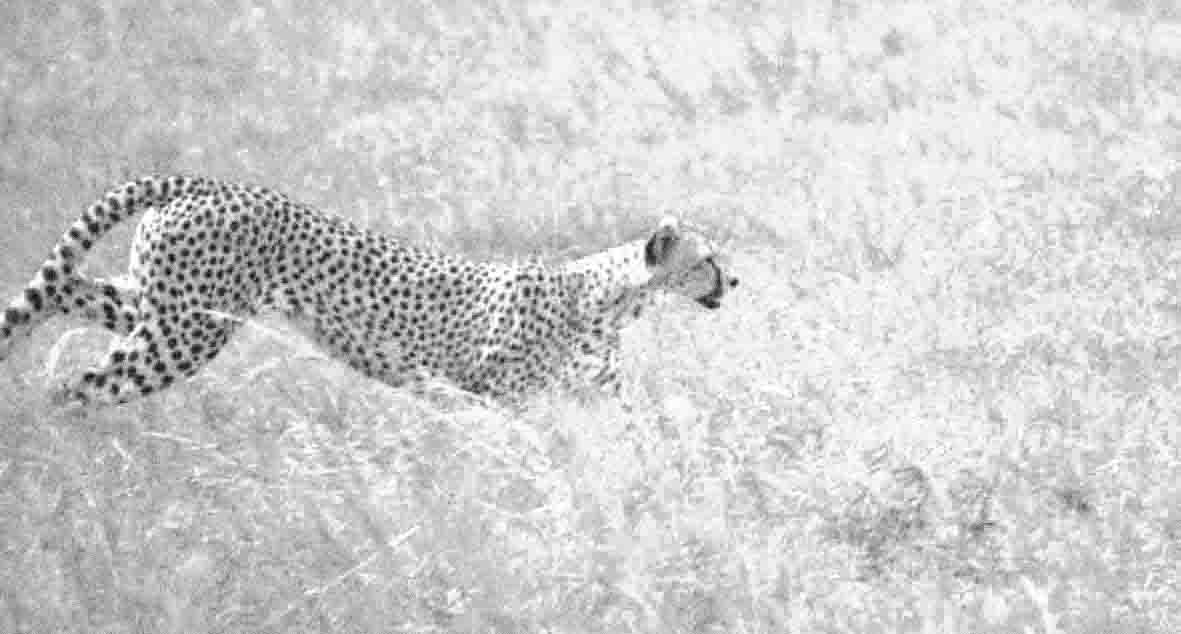
Right before we landed on a strip of dirt near Stanley’s Camp, the pilot and I glimpsed a cheetah sprinting for cover.  With that single spotted blur, my life divided between home and Africa.

Posted in Africa, Doug, Elephants, Jabu, Sandi, Thembi, Writing

The Elephants Who Accepted Me as Part of Their Herd

An excerpt from my book:

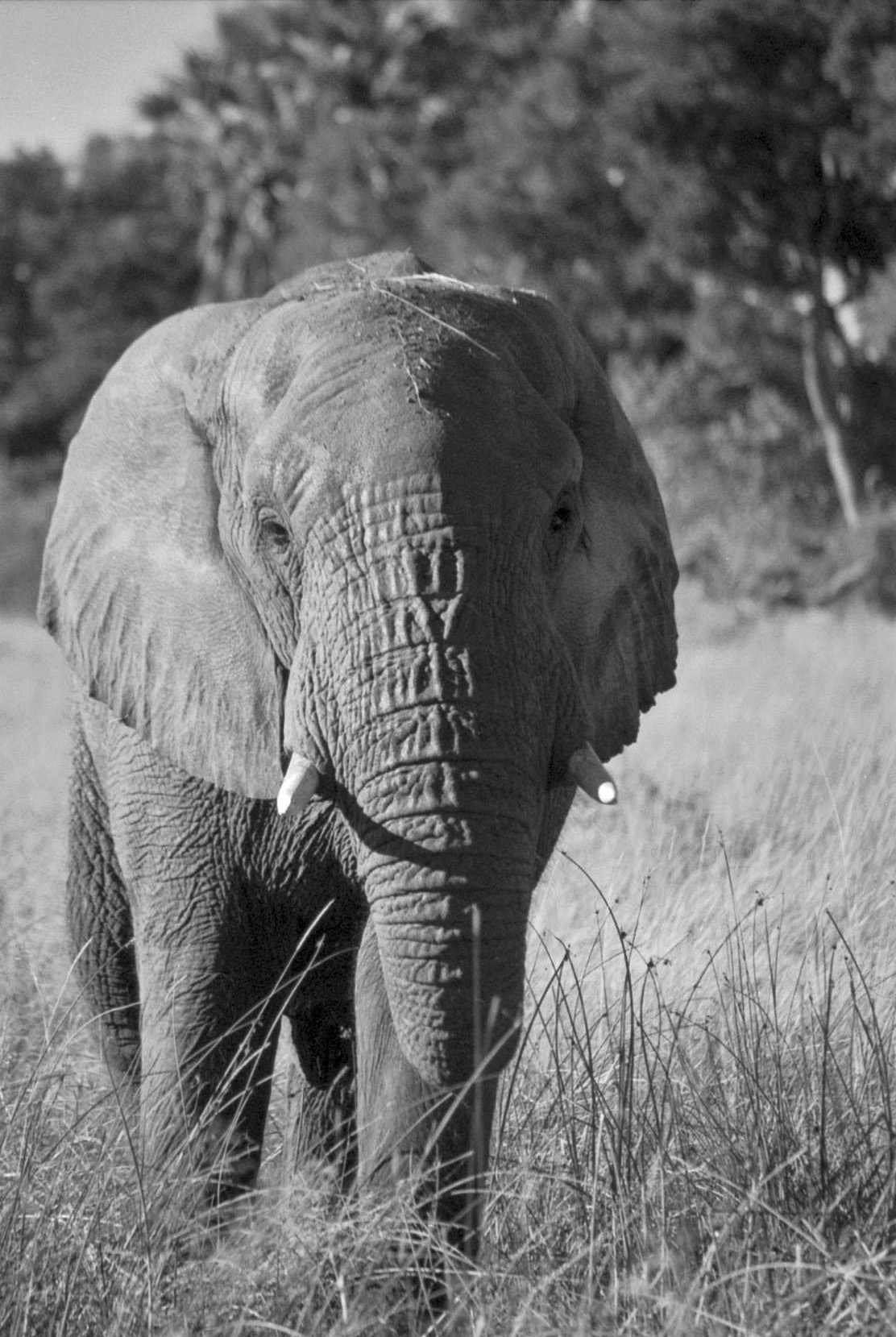
Jabu, Morula and Thembi live in Botswana’s Okavango Delta.  I don’t need radio collars or binoculars or even 4-wheel drive vehicles to study them.  They are companions, who allow me to walk alongside them, close as an eyelash.  Adopted as orphans from culling operations by Doug and Sandi Groves, they spend their days as most wild elephants do: strolling and eating.  But they are also willing ambassadors between the elephant world and the human world.

Walk with me.  Stroll with three unfettered and unfenced elephants in a world where the thin-skinned sky is a bare reminder that the earth is covered with air, where clouds stampede as if chased by lions – a world  without asphalt, without cell phones, without that strange human notion of time.

I hope you enjoy and follow this blog.

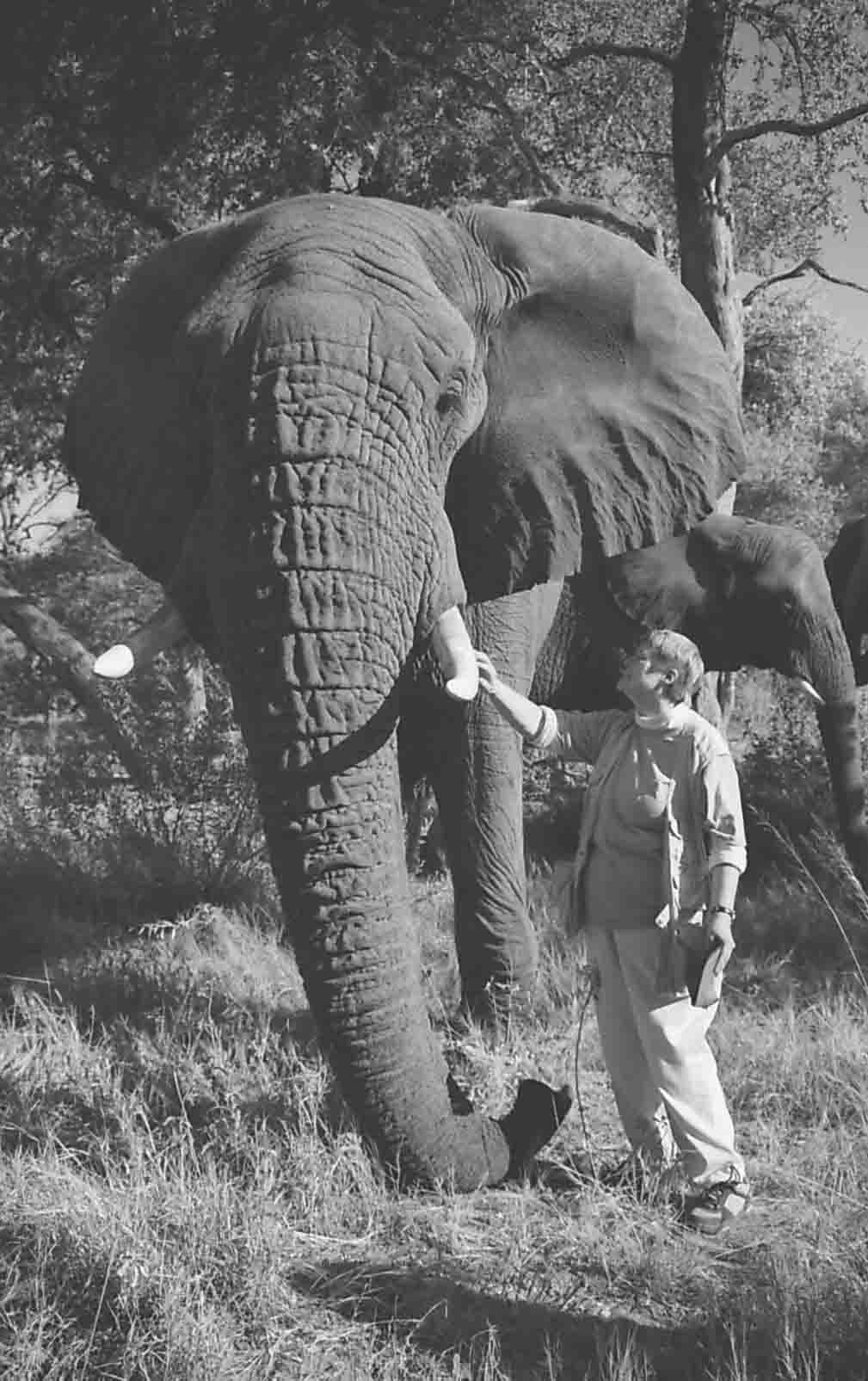
Jabu & me