Posted in Elephants, Nature

Ivory, Part Five

An Ivory Timeline: Netsuke

Popularized in the 17th century and still available today, netsuke (pronounced nets-keh) are small carved toggles used to attach pouches or boxes to the sashes of traditional Japanese robes worn by men, robes which had no pockets. Instead, “sagemono” (suspended objects) hung by cords from the belts of men’s kimono robes – the two holes in the netsuke at the end of the cords prevented them from slipping through the sash. Sagemono included cloth pouches, small woven baskets, or the most popular (and beautifully made) wooden boxes.   In this manner, Japanese men carried pipes, tobacco, writing implements, personal seals, medicine, or money. The combination of sagemona and netsuke were carefully considered before any well-dressed gentleman appeared in public.

www.starnetsuke.com
http://www.starnetsuke.com


Most popular during the Endo period (1615-1868), netsuke evolved from being strictly utilitarian objects made of shell and wood into intricately carved miniature sculptures with motifs inspired by animals, vegetables, fairy tales, daily life and mythological or religious figures. Most common are sculptural netsuke: compact three-dimensional figures carved into round shapes and one to three inches long. Other types include elongated carvings, hollow netsuke, masks, or trick netsuke with hidden or moving parts.

Materials used for carving netsuke include elephant and mammoth ivory, hardwoods, hippopotamus tusks, boar tusks, rhinoceros horn, antlers, and clay. Woven netsuke are made from cane. Other materials used are the casques (upper mandible) of the Helmeted hornbill; black coral; partially fossilized pine and cedar wood found under sections of Sendai, Japan; walrus tusks; sperm whale teeth; whale bone; bear’s teeth; tiger’s teeth; ivory palm nuts, walnuts; agate; the underground stems of bamboo; and ivorine – made from the dust created when carving ivory, which is mixed with clear resin and compressed.

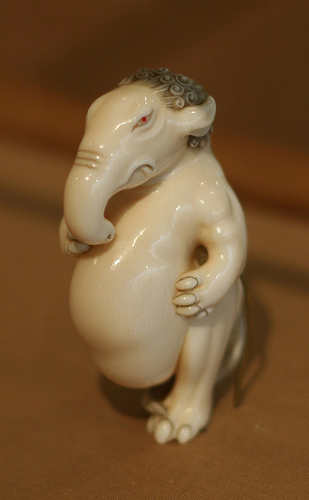
Subjects portrayed by netsuke include nearly every aspect of Japanese culture, including people famous, anonymous, historical, fantastical, or real. Some netsuke depict entire scenes from mythology, literature, or history. Trades people were often carved in action – woodcutters cutting wood, fishermen catching fish. Other subjects included plants, especially beans and chestnuts, often carved in actual size; inanimate objects such as roof tiles, coins and tools; and abstract patterns. Shunga, or erotic netsuke, include humans or animals in acts of conjugation or contain subtle or symbolic sexual references. Animal subjects varied from zodiac signs to rats, from octopi to rabbits. One of my favorites is by Masatoshi: “Baku Monster Who Eats Nightmares.” It resembles a standing pregnant elephant with red eyes, dark curly hair, and biceps. A contemporary piece, it is made of ivory.Angry elephant
Nearly 50% of netsuke is ivory.

Netsuke: an art that requires death.

Between 1977 and 1987 Japan imported 2,832 tons of elephant ivory. Two-thirds of that amount was carved into Hankos, writing seals still required on official documents. One hundred and seventy tons of ivory went into the production of netsuke. In 1989, a ban was enacted on all ivory trade. Still, countries could apply for, and receive, ivory under special sales. In 2006, 2.8 tons of illegal ivory was seized in Osaka. Japan last received a legal import of ivory in 2009.In 2011, Japan’s biggest ivory dealer, Takaichi Co., was found to be trading in “unregistered” ivory. An estimated 572-1622 illegal tusks had been converted into hankos between 2005 and 2010 by the firm – 87% of their production.And nearly all Japanese people have figurines, anime or cartoon characters, many made from ivory, hanging from their mobile phones — a mass-produced, contemporary way keeping alive the nation’s netsuke tradition.

Netsuke. Small, beautiful sculptures made of calcium, made from the incisors of dead elephants.

Posted in Nature, Photography

Moving Day

Hi to all the wonderful followers of this blog.  We are moving to a new house tomorrow and will be offline for a few days.  Sorry to interrupt the Ivory Timeline series, but it will be back soon.

Posted in Elephants, Nature, Photography

Ivory, Part Four

Ivory was the plastic of the Victorian Age:

From the 1860s to the 1880s, an estimated 100,000 elephants per year were slaughtered for their ivory, a total of two million elephants in twenty years.  Their tusks were made into:

Fish hooks, spoons, arrowheads, buttons, bagpipe joints, fans, buckles, brush handles,

Victorian Ivory Crucifix www.pinterest.com
Victorian Ivory Crucifix
http://www.pinterest.com

letter openers, rosary beads, bookends, tiny elephant statuettes, pistol grips,

bracelets, hairbrushes, fans, chess pieces, crucifixes, necklaces, perfume

bottles, furniture inlays, tankards, umbrella stands, champagne

buckets, vases, waste-paper baskets, chessboards, dice,

dominoes, rolling pins, rings, salt shakers, engraved

boxes, door knobs, shoehorns, paper clips,

broaches, pool cues, pens, guitar

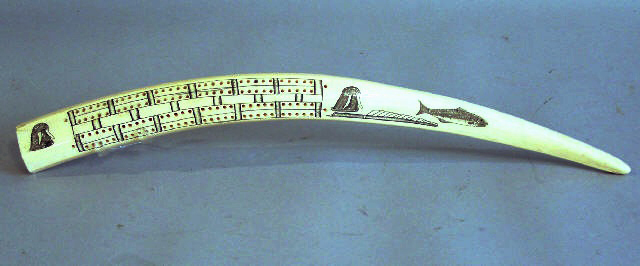
pegs, cribbage boards,

butter knives, cuff

links,  tie

tacks,

key chains, needles, flutes, hairpins, coins, salt cellars, reliquary panels, communion

boxes, hunting horns, cups, plumb bobs, knitting needles, fiddle pegs, thimbles,

whistles, stash bottles, opium pipes, book covers, napkin rings, spatulas,

foot-scrapers, snuff boxes, tiddlywinks, sword hilts, nit-picking

Ivory Tusk Cribbage Board www.cribbagecorner.com
Ivory Tusk Cribbage Board
http://www.cribbagecorner.com

combs, cricket cages, riding whips, telegraph keypads,

teapot handles, backscratchers, chopsticks,

toothpicks, stools, toys, corkscrews,

cigarette holders . . . .

Victorian gentry wore perforated ivory cylinders around their necks, each cylinder baited with blood – flea traps.  Women with high Marie Antoinette wigs had long ivory sticks for scratching their scalps.  Renoir’s favorite formulation for black paint included burnt ivory, which was also used to tint gray hair.  Peter the Great spent long hours turning out ivory candlesticks and goblets on his lathe.  It was fashionable for gentry to have such hobbies.  Newton had his portrait painted in watercolor on an ivory medallion, another fashionable thing to do.

Ivory was used in making billiard balls and piano keys – fixtures of Victorian gentility.  Industrialized plants in Ivoryton, Connecticut produced 350,000 pianos; each and every key made of ivory.  Ivory shavings were boiled with water into jelly and hawked for medicinal purposes.  Ivory dust was sold as fertilizer.

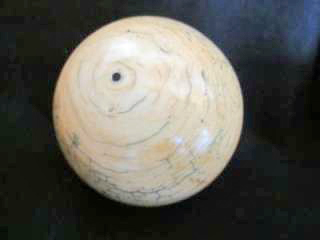
Billiard balls required the use of small, straight female tusks, which could yield five or less rough-cut balls, with the central nerve channel in the precise middle of each ball.  They were highly valued because such balls rolled in true lines.  The density of each ball was matched with similar balls to produce a complete set.   A complete set of fifteen billiard balls required the tusks from three elephants.

Victorian Billiard Ball Showing Nerve Channel www.ebay.com
Victorian Billiard Ball Showing Nerve Channel
http://www.ebay.com

Most billiard players were unaware that the click of one ball hitting another was the same sound elephants produce in the wild as they greet each other by gently tapping their tusks together.

Ivory billiard balls changed according to weather and the temperature of the room.  Queen Victoria kept her billiard table heated.  Shipping labels on sets of balls warned that they would split if used when cold.  Eventually, over time, ivory billiard balls developed an egg shape and needed to be replaced.  As a hedge against fluctuating supply (tusks) and demand (replacement sets) manufacturers stocked as many as twenty thousand balls in vaults with stable temperatures.

When cheaper resin replaced ivory for billiard balls and plastic replaced ivory piano keys, elephants were given a reprieve.

A hundred years later, that reprieve would end.

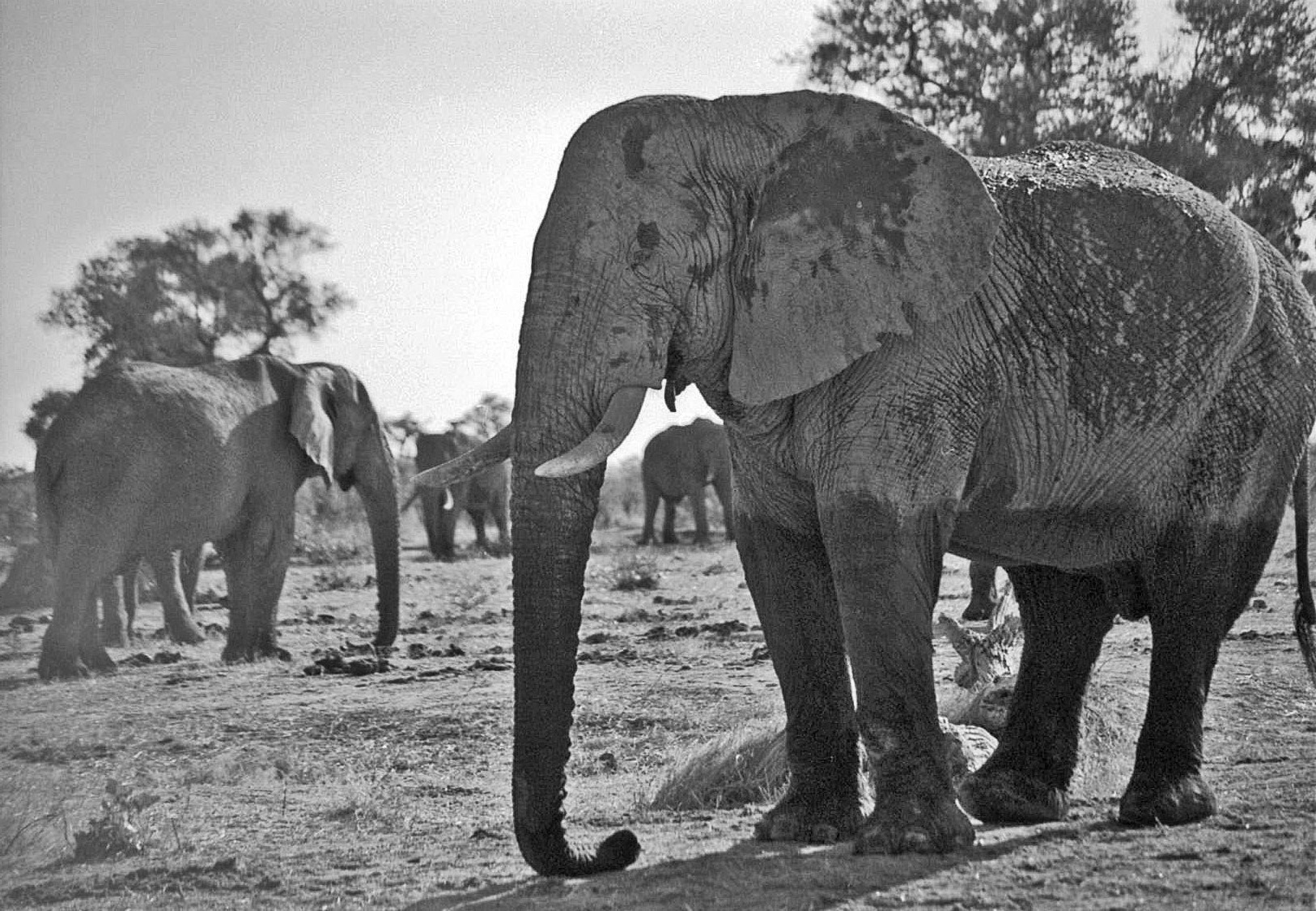
African Elephant photo by Cheryl Merrill
African Elephant
photo by Cheryl Merrill
Posted in Elephants, Nature, Photography

Ivory, Part Three

An Ivory Timeline:  from the Pharaohs to the Victorians

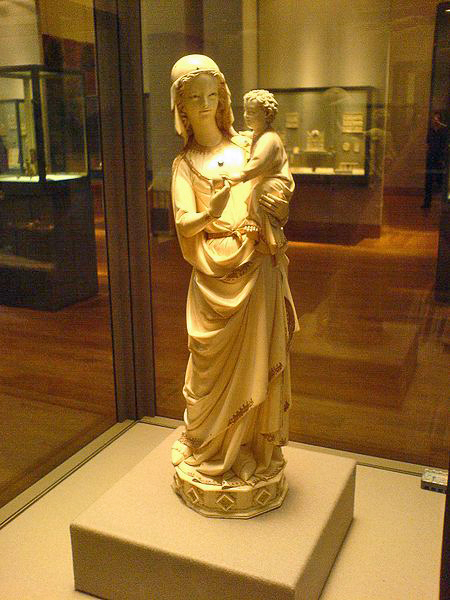
After the fall of Rome in 476 AD, Europe lost both its sources of elephant ivory and even knowledge of the animal that bore it.  But the military campaigns by the Latin Catholic Church for the control of the Holy Lands (known as the Crusades) introduced luxury goods from the East, ivory among them.  With the conquering of Jerusalem in 1099, merchants began shipping ivory from East Africa along the Red Sea and from trans-Saharan routes to the Mediterranean and on to Venice, Genoa and Marseille.   By the middle of the 13th century, a huge carving industry was based in Paris, supplying mostly religious items.  The Sainte-Chapelle Virgin (sculpted between1260 – 1270) replicates the natural curve of an elephant’s tusk in its stance.  The Virgin leans on one leg while supporting the Christ child on her opposite hip while the baby Jesus reaches out with his left hand to an apple she is holding.  Her robe is finely decorated with gold.  It was a popular sculpture in the Sainte-Chapelle church, with many imitations.

The Sante-Chapelle Virgin

After 1400, ivory began to appear in musical instruments (flutes, lutes, guitars and harpsichords) in scientific instruments (sundials, compasses and rulers) and in weaponry (matchlock inlays of nymphs and hunting scenes).  Traders swarmed the Ivory Coast (all of West Africa) the Gold Coast (Ghana) and the Slave Coast (Togo, Benin and western Nigeria).  These three main trade items – slaves, ivory and gold – made immense fortunes for the Portuguese, Spanish, Dutch, British and French.  From 1699 to 1725, in a span of only twenty-five years, a quarter million tusks left West Africa, representing the deaths of 117,500 elephants.  Each tusk was transported out of the interior on the back of a slave.

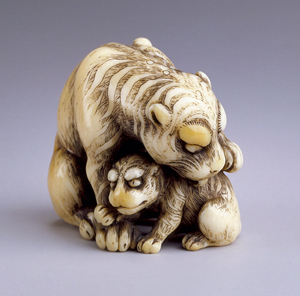
Invented in 17th century Japan, a button-like fastener called a netsuke secured cords that held small containers on the outside of traditional garments.  Originally utilitarian in design, netsuke evolved into objects of extraordinary craftsmanship, made of materials that ranged from hardwood to porcelain to ivory, and depicting subjects as diverse as animals to mythological deities.   Some netsuke pieces are highly sexual in content and some depict entire scenes from history – all on a miniature object usually no bigger than an inch long.

Netsuke Tiger & Cub
Netsuke Tiger & Cub

Although traditional netsuke production ended in the late 1800s, modern craftsman produce work that still demands high prices.  And, as in ancient times, netsuke continues to be carved from boar tusks, rhinoceros horn, hippopotamus teeth, and elephant tusks.  Unfortunately, many reproductions are mass-produced carvings sold with fake staining and cross-hatching that would be found in ancient ivory pieces.  Anyone collecting netsuke should have considerable knowledge of the subject before they spend money, even on modern boxwood netsuke.  And, as always, modern ivory carvings of any sort, unless they are made from mammoth ivory, probably originate with illegal elephant ivory.

From the 1860s to the 1880s, an estimated 100,000 elephants per year were slaughtered for the ivory trade, a total of two million elephants in twenty years, as ivory became the plastic of the Victorian Age.

Kenyan male elephant
Posted in Africa, Elephants, Extinction, Jabu, Nature, Nonfiction, Photography, Travel, Writing

Ivory, Part One

Jabu's tusk
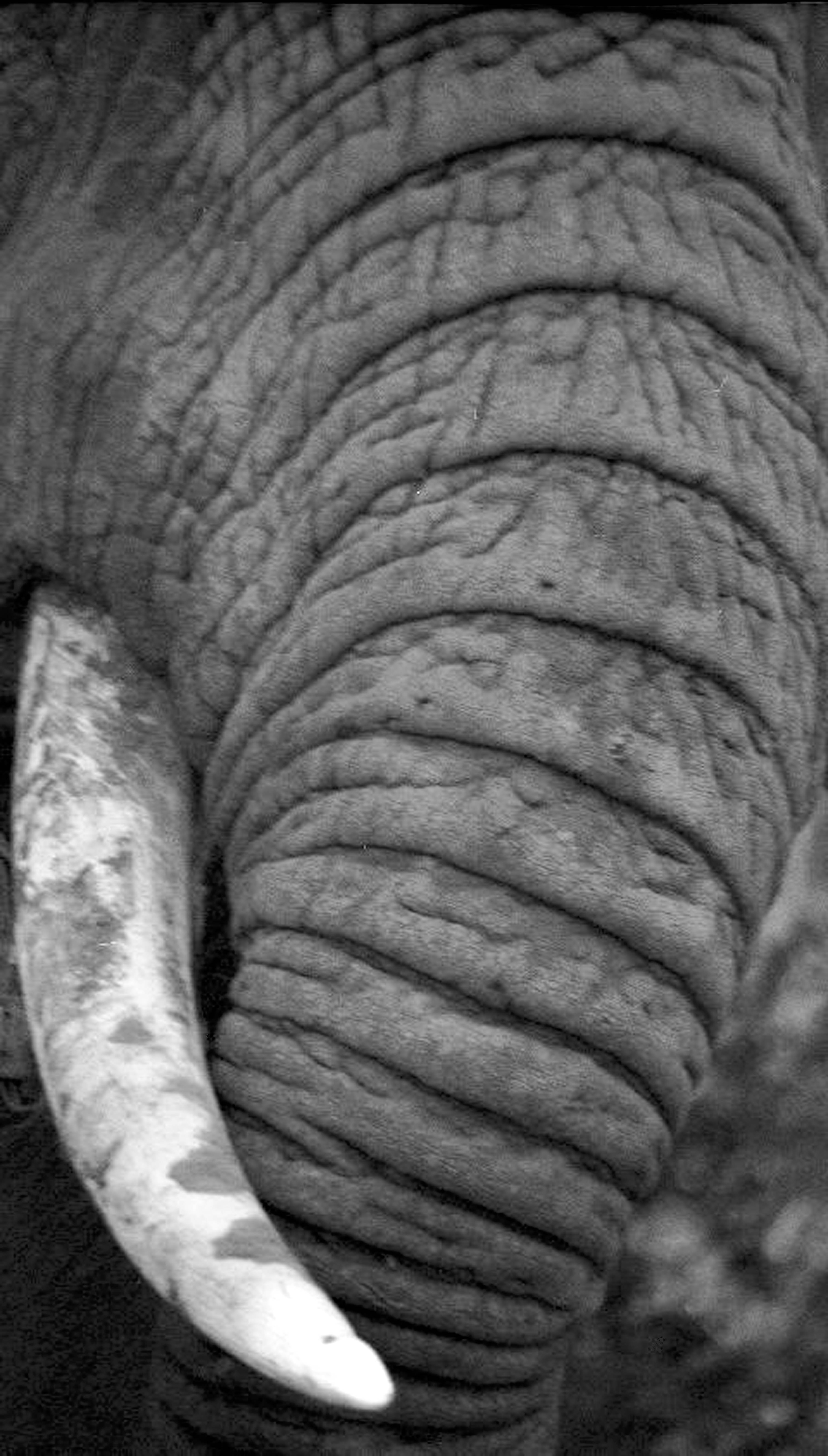
An African elephant’s tusk

Carved ivory thrones are mentioned in the Bible.  King Solomon had one, covered with gold.  Tutankhamen’s casket had a carved ivory headrest for his pillow.  Cicero wrote of Roman houses where ivory doors opened onto entire rooms covered with ivory tiles.  Gladiators had chariots made of ivory.

In the 1800s, in Africa, ton after ton of tusks were transported thousands of miles to Zanzibar and Khartoum, carried on the backs of slaves.  By the 1980s, more than 300 elephants a day were slaughtered for their ivory, nearly 100,000 per year.

In Amboseli National Park, in Tanzania, a recessive gene is becoming dominant, occurring in 50 years instead of thousands, selected by poachers.

Year after year tuskless elephants are born.

Both male and female African elephants grow tusks – the largest upper incisors on this planet.  Tusks are defined as long teeth protruding beyond the mouth growing usually, but not always, in pairs.  Most tusks are enlarged canines, such as those of warthogs, wild boars, hippopotamus and walruses.  Enlarged canines in the myriad species of cats and dogs are called fangs.

Elephants and narwhal whales have incisor tusks.  The narwhal’s single tusk is a left front incisor that grows in a straight spiral.  Found mostly in males, narwhal tusks are believed to be the origin of unicorn legends.  Oddly enough, narwhals with two tusks are usually female.

By the time Jabu is sixty, his tusks could theoretically reach a length of 18 to 20 feet.  But in reality – if he does reach sixty – they will be much shorter, due to the wear and tear of everyday use.

Tusks on bull elephants can weigh seven times that of those on cows.  The biggest pair of tusks on record weighed 460 pounds, taken from an old bull killed in 1897 near Mount Kilimanjaro in Kenya.

The longest tusks ever found came from an elephant shot in the Congo in 1907.  Its right tusk was 11.4 feet long; it’s left tusk 11 feet.

Such extraordinarily enormous tusks are a genetic trait, much the same as red hair is a genetic trait.  Over the centuries poachers and hunters have always targeted male elephants with the largest tusks.  As a result, the trait has disappeared from most elephant populations.

The same outcome would occur if redheads were systematically eliminated within family groups.   As their genes died out, the redheads among us would become extinct.

Posted in Africa, Elephants, Nature, Nonfiction, Photography, Travel

Underwater

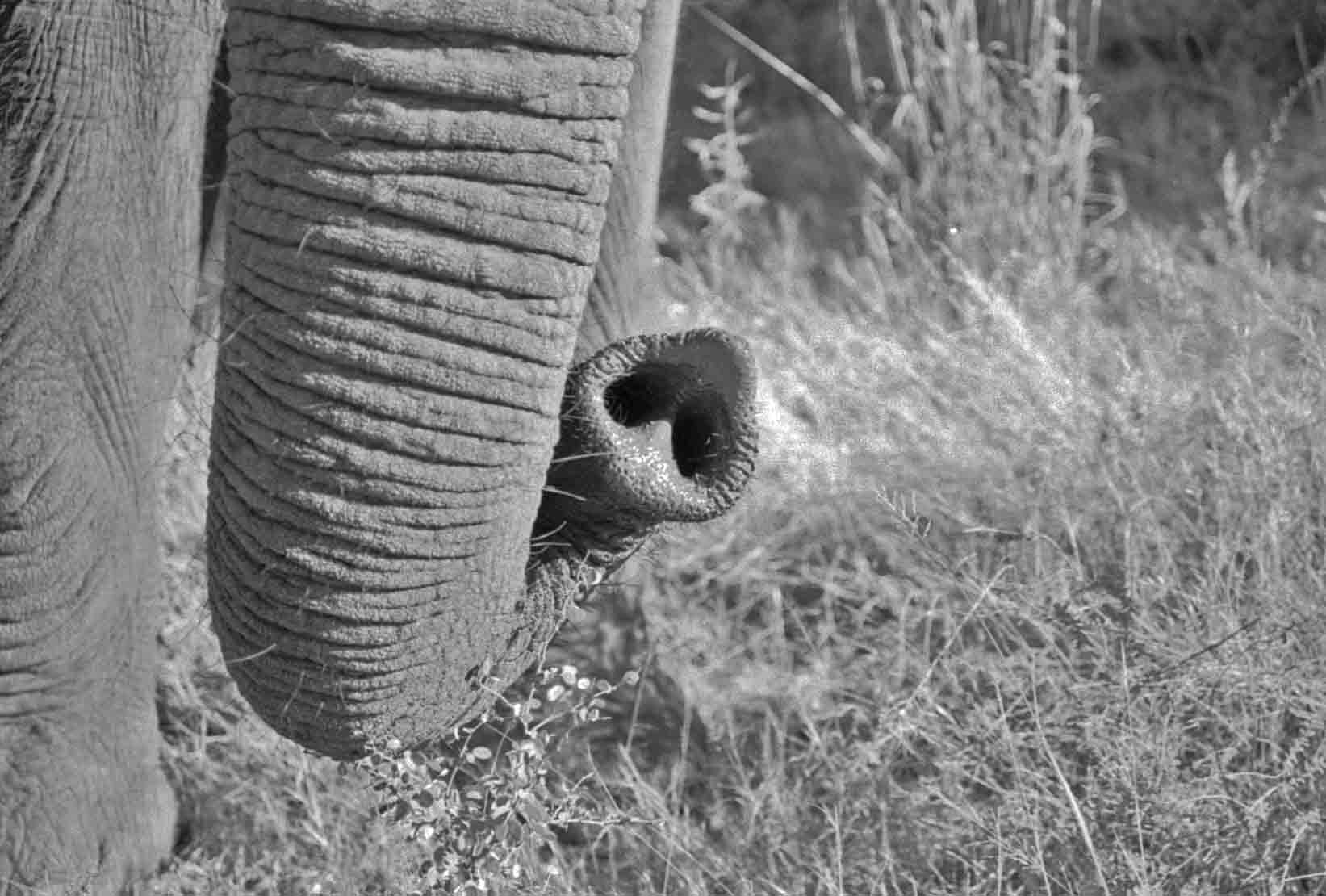
Trunk tip 2b&wAwash in a sea of scent, Jabu curls his trunk and samples wave after wave of odors breaking at his feet.  Redolent tides wash in, wash out, a floating realm populated with aromatic citizens.  Schools of scents cluster at his feet, swimming through the grass at the bottom of an ocean of air.

Sixty percent of his brain is dedicated to smell.  Jabu can distinguish between a million or more separate odors in the daily news that floats by on warm currents.  Just a few molecules bring him history and current events: stories of who was here, who is there, how long they stayed and in which direction they went.  Jabu can detect fellow elephants ten miles away.

He reaches out and flattens the tip of his trunk over a wet spot in the sand.  Eyes half closed, he stands completely still, as if lost in memory, his brain sorting through the various scents tumbling up his trunk.  He samples the air thoughtfully, as if listening to a quiet conversation, as if storing it, word by word, in those huge frontal lobes of his.

Flehmen flat trunkI remember that elephants see the world in yellows and blues, like color-blind humans.  I fasten a yellow filter over my camera lens, then a blue one.  Jabu turns aquamarine.  From far, far away, he snaps a branch from a shrub the color of kelp, chomps, munches, drifts closer.  His slow motions make perfect sense underwater.

I wade into a lagoon of grass.  Ankles, knees, waist, chest, neck.  Some of the grass stalks bob over my head.  My hands, my body, my thoughts, move slowly.

Immersed, my ears fill with a pure hum.  The sound of my passage whispers in seashell voices.

As Jabu drifts by, undertones of blue and gray shimmer against his flanks, reflections of seaweed and kelp.  I follow, sub-aquatic, at the bottom of air.  Carried by the current of my imagination, I am about to tumble downstream. Jabu aslant b&w

Then the breeze kicks up, feels as if it comes all the way from the bottom of the Kalahari, feels red, feels gritty, feels dry as a hundred-year-old skeleton left in the desert.  It sucks every bit of moisture from under me and lands me beached and gasping.

I lower my camera.  Red invades yellow and the world greens.

Posted in Africa, Elephants, Nonfiction, Photography, Travel, Writing

A Sea of Elephants

sea of elephants

Gray wave after gray wave surges out of the bush in small herds of twenty or less, first one group, now another, flooding the huge hollow that contains a waterhole.  Dust rises in the air, a potent blend of manure, dried grass and sand.  The backwash swells in our direction.  Soon a sea of elephants surrounds us.  We’re submerged in a roiling world of noise.  Snorts, grumbles, trumpets, growling bellies and gargantuan belches resound.  Some of the vibrations are too low to hear, but I feel them as they pass through my body, reverberate in my chest cavity, squeeze my heart.  Eye after eye inspects us as eddies of elephants swirl past.  An old world laps at the foot of our memories, extinguishes centuries of communal fires.  The ropes that tether us loosen.  We slip away from the familiar shore and set off towards unimaginable ways of being.  We look around with wild hearts.  We have become part of the herd.

Posted in Africa, Doug, Elephants, Nature, Nonfiction, Photography, Sandi, Travel, Writing

Fish Eagles/Bald Eagles/Fish Eagles/Bald Eagles

An excerpt from my book:

After a long morning walking with tourists we stumble into a shady grove near a lagoon and into the illusion of an al fresco dining room in an elegant restaurant. Fresh branches of mopane decorate the surface of a table covered with a white linen cloth.  The leaves on each mopane branch fold modestly like small olive origami decorations.  Knives rest across white linen napkins on white china bread plates.  The staff from Stanley’s have set up a buffet complete with chafing dishes.  White lace doilies edged with heavy colored beads protect the salads from flies.  Pepper grinders, oil & vinegar decanters water glasses and wineglasses complete the setting.  Nodding at murmured compliments, the bartender hands out cold beer, which has been uppermost on many minds.Al fresco restaurant b&w

It’s odd how fast we re-civilize.  All morning long the tourists had been mostly silent, filled with awe at walking next to elephants.  Now they sprawl in camp chairs and compare camera lenses.

A cake of soap sits in the fork of a bush next to a white basin on a folding wooden stand.  I use the murky water in the basin to lather my hands.  One of the camp staff holds a pitcher of clean water for rinsing.  The water in the basin turns even grayer with dirt.  I empty the basin and small puffs of dust rise from the force of the water hitting floury sand.

Then I too re-civilize, join the human conversation.

While Sandi minds the elephants, Doug mounds his plate with food.  He has that unique gift of talking and eating at the same time, consuming enormous amounts of food and speaking in short bursts.  Each time he answers a question he sets his fork down and regretfully watches where he places it.

“Look!”

Our heads swivel and our eyes follow a finger pointing skyward.

Locked together, talon-to-talon, fish eagles plummet toward earth in their mating dance, twirling in passionate grip with each other, taut bodies wheeling faster and faster towards earth, picking up suicidal speed.

The eagles break off a second before hitting the ground and swoop up to roost in trees opposite each other.  They scream back and forth, flinging their heads over their shoulders.  The female’s voice is lower, counter-point to the male’s shriek.

One of the camp staff shakes his head.  “I have never seen that before.”

Beaut fish eagle illus b&wLike the bald eagles of North America, fish eagles have chestnut bodies, long yellow beaks, yellow feet, pure-white heads, white tails and chests, although their bibs are larger.

They have the same habits: they mate for life and build huge stick nests in trees, nests twelve feet wide and ten feet deep.  They dwell in the same habitats: rivers, lakes, creeks, lagoons, estuaries, and man-made reservoirs.  Both carry fresh fish caught near the surface in their grasping talons, carry the fish headfirst for lesser wind resistance, one claw behind the other, surfing, riding a fish through the air.

The eagles are a reminder that in only five more days I will be going home.  Home, where I once witnessed bald eagles teaching their young how to snatch crows out of the air.  Where bald eagles row fish ashore, using their wings as oars when the fish are too large to hoist aloft.


Home.  Here.  Home.  Here.  Home.  Here.


Where I live and where I am.  That dual place inside me, moment and memory, locked together, spiraling, spiraling, just like these fish eagles, feather tip to feather tip, talon to talon.  Mind spinning, I want to hold onto a tree with fierce feet, cry out, return to the ground, stay here.  Learn from birds, from clouds, from rain.


Posted in Africa, Elephants, Nature, Nonfiction, Photography

The Giant Beside Us

One long hot afternoon at a waterhole in the Savuti area of Botswana:

Only a few yards from our vehicle, a single-cylinder water pump alternately chugs and sputters, drawing water from beneath the sand and sending spurts through a pipe to a square trough.  This artificial waterhole keeps the bachelor elephants close by, waiting for spring rains and the return of female breeding herds.

The steady sound of the pump, chug-sputter, chug-sputter, chug-sputter lull my eyes closed.  They open, close, open half-lidded, close again.

 “Here he comes,” someone whispers and my eyes flick open as a huge bull strolls past.  I pick up my camera.

Savuti male b&wI focus on his great head, nodding downward with each step, as he trudges past.  A thirsty pilgrim in a parched land, his trek to water is nearly finished.  He’s headed straight to the trough; the clicking and whirring of our cameras doesn’t alter his gait.

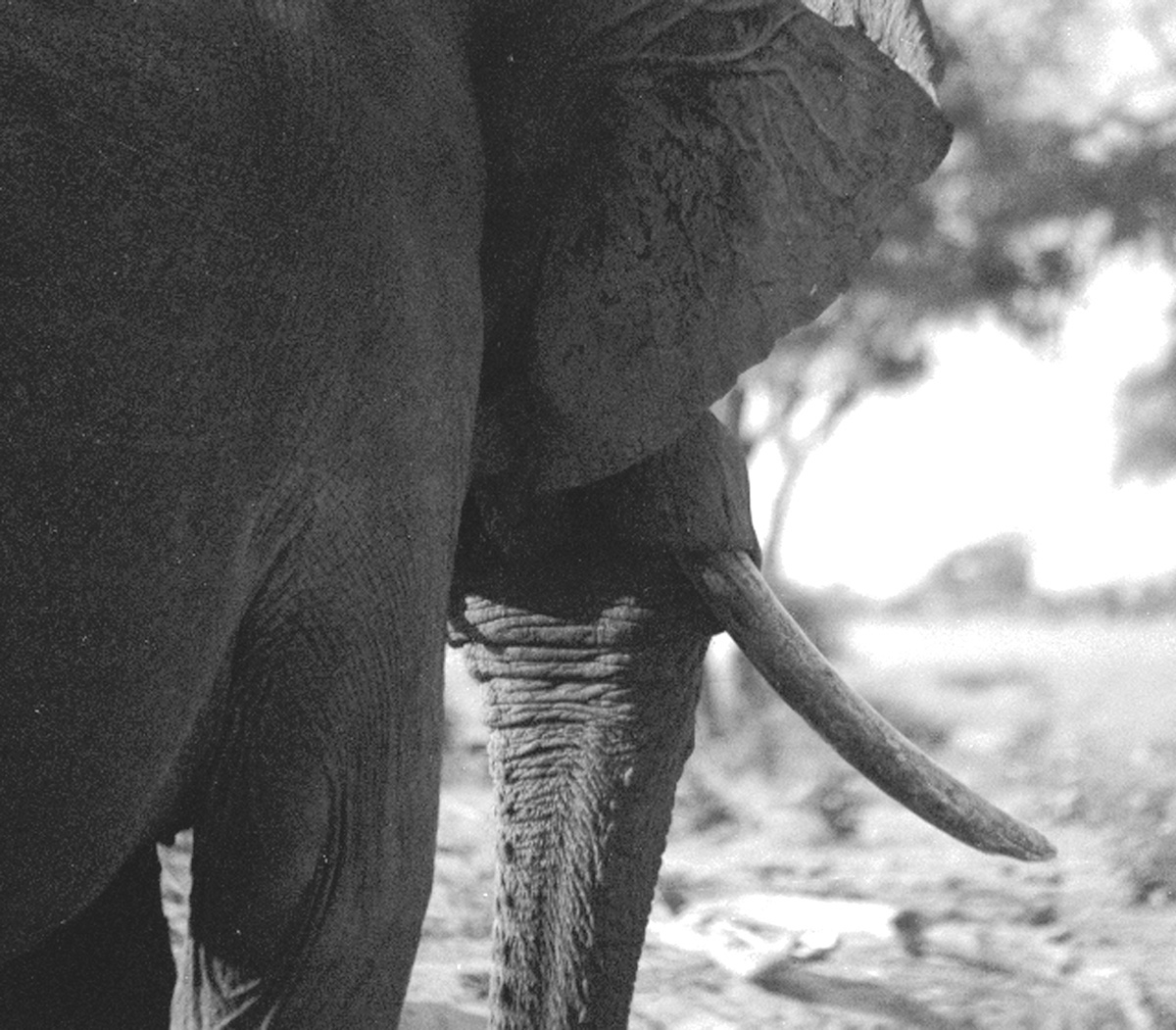
His enormous tusk splays out sideways.  It’s easily four feet long, stained and chipped on the end.  It grows out, rather than down and up – his tusks made him a much wider elephant than he really is.

Mid-drink, he curls his trunk into his mouth; head tilted back, eyes closed.  He makes gargling sounds as he drinks.  Extending his trunk down into the water, he blows bubbles.  Then he curls his trunk again and again to hose several gallons at a time down his throat.  Each swallow contains the taste of dung, samplings from all the animals that used this waterhole – zebra, wildebeest, warthog, ostrich, hyena and the occasional furtive flavor of lion.

I try to imagine the bouquet garni of the water and how its myriad fragrances might seep into the crevices of an elephant’s mind, form pools of scent they recognize, year after year, the liquid memory of Africa.  Perhaps this old bull is memorizing the stories in that trough, paragraphs of taste and smell, twists of plot and character and fate.

Finished drinking, he turns around and heads back to where our vehicle is parked, stopping just twenty feet away.  His skin is the color of seasoned cast iron.  The waterline on his body rises just past his belly.  Spatters of mud stain his ears and back.

After several long minutes, his eyelids droop and his mouth slackens.  Under the hot sun he falls asleep, lulled perhaps by the narcotic of a long, slow drink.  The tip of his trunk coils like a magic rope on the ground.  He sleeps with his weight on three legs, resting a hind leg, occasionally rocking back on it as if he’s dreaming of his trek.  Drool from the end of his trunk slowly seeps into the sand.

Ellie asleep b&wI match my breathing with his, and drowse, sedated by the sun.

The giant beside us rumbles soft snores in his sleep.  I wonder if he is aware of the humans next to him, nodding their heads, also falling asleep.  Other bachelors shuffle by quietly on their way to and from the waterhole, as if they don’t want to wake us.

Tiny paws of wind skitter across my arms; keep me half-awake.  But for one long moment, I almost entered his dreams.

Posted in Africa, Nature, Photography

Weekly Photo Challenge: Let There be Light

Could not resist re-blogging this for the WordPress Weekly Photo Challenge:

From 93 million miles away, pitched straight at me, vibrating, ululating like an African cry of greeting, light from the sun hurtles towards the earth at 186,282 miles per second and eight minutes later slams into me like a jabbering, long-lost relative trying to make up for lost time.  It babbles everything, all at once, into my eyes.

SunsetOur eyesight is an electro-chemical reaction to a vibrating particle-wave that gushes optical information splash into my brain.  I could shut my eyes to the wonder around me and be diminished.  I could shut my eyes to the atrocities around me and become hardened.

By opening my eyes, I give shape to my perceptions.  By opening my eyes I take responsibility for my vision, for what my eyes teach me.  By opening my eyes I learn that I belong to the world, not that the world belongs to me.

Our eyes are openings into and out of our bodies.  Are my eyes, as some would say, a window to my soul?

There is a cold way of seeing that clips wings and stifles our words into faint echoes.  But there is also a way of seeing where the eye can be like a mouth, swallowing color, taking in the entire world with just one gulp.  Just the sheer fact alone that we see color should provide enough wonder to fill our lives, should stop us in our tracks, should keep our eyes wide open, devouring everything as fast as we can choke it down, leave us slack-jawed, gasping for air.

Somewhere behind my eyes, a world exists that I yearn to inhabit, dreams that might become real if only I could imagine them with my eyes wide open.