Posted in Africa, Elephants, Nature, Photography

Where Clouds Stampede as if Chased by Lions

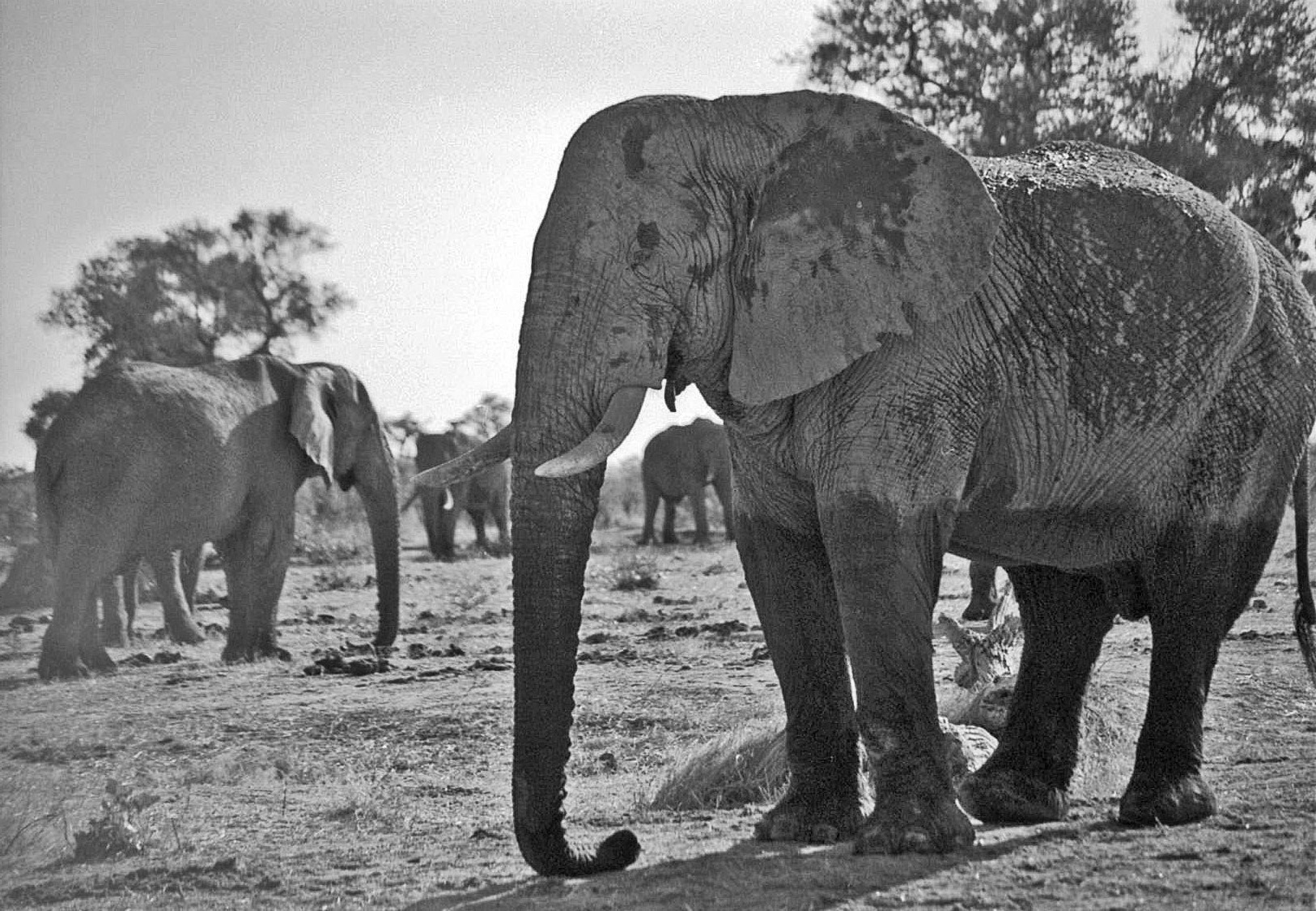
photograph by Cheryl Merrill


an excerpt from my forthcoming book:

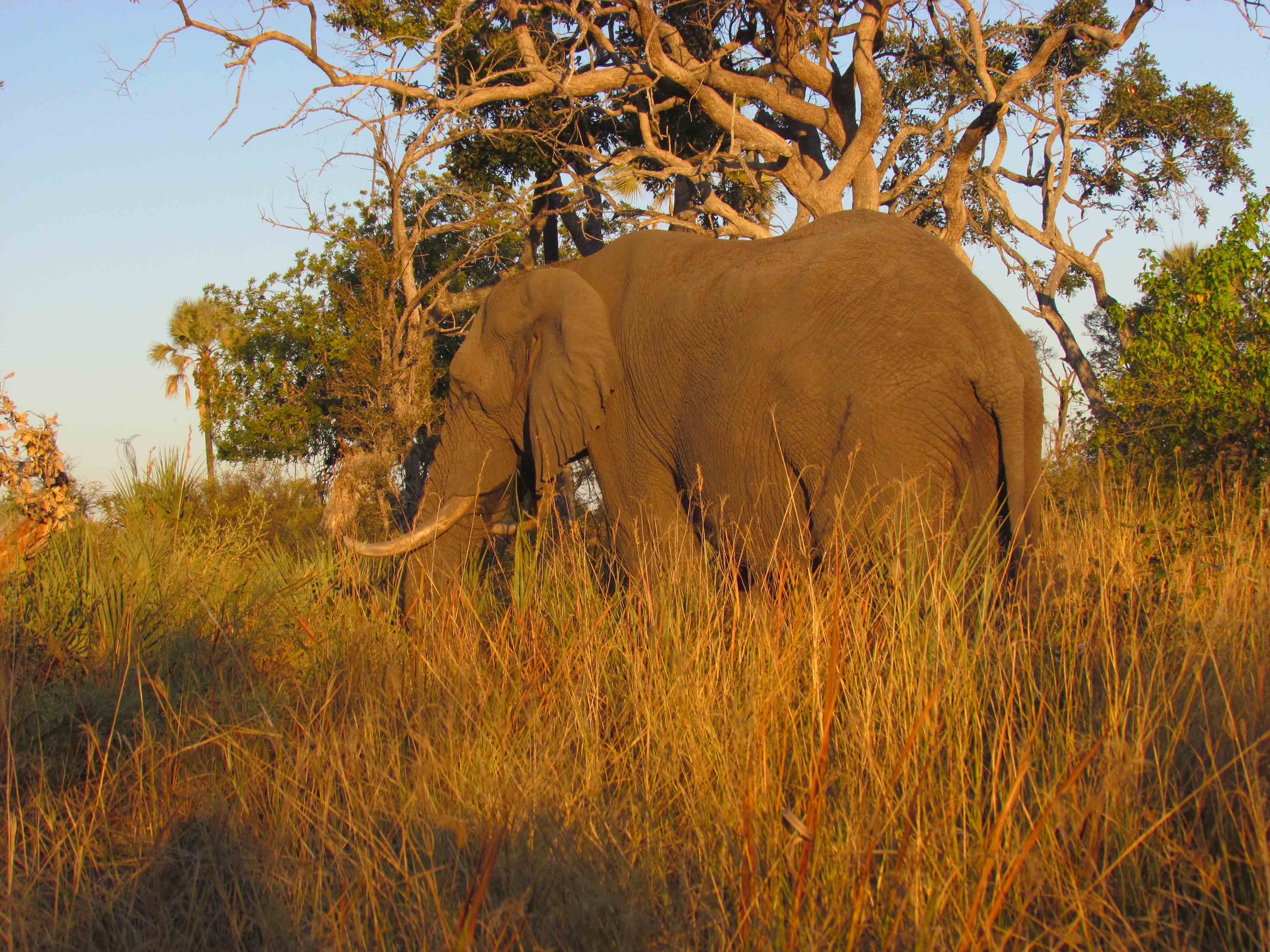
I look into a face like mine, a face with a mouth, a nose, two ears and two eyes, recognizable as a face.

Her eyes, like mine, are protected by bony sockets and eyelashes and eyelids and tears. Her eyes, like mine, sit high on her skull and light the darkness within.

The face that is like mine looks back at me.

Four-inch eyelashes cast shadows down her cheeks. She blinks and her lashes sweep against her skin like small brooms.

Each of the more than 200 lashes of my eye is shed every 3 to 5 months. Has anyone ever done research on the shed rate of elephant eyelashes?

I could.

I could stand here forever looking into the oak burls of her eyes.

Only one and a half inches in length, her eyes are just a little larger than mine are, but small in relation to her body size. A zebra’s eye is bigger. So are those of an impala or an ostrich.

I focus the lens of my camera on her oak-colored iris.

Peering through this window into the cavern of her mind, I remember she sees the world mostly in yellows and blues. Where the thin-skinned sky is a bare reminder that the earth is covered with air, where clouds stampede as if chased by lions, she treads through a harsh, dry landscape washed with the colors of waves.

I put a blue filter over the camera lens, then a yellow one. She turns aquamarine. Following in her wake, I begin to swim, serenely breasting an ocean of grass. She snaps a branch from a dark green shrub, chomps, munches, drifts closer. Her slow motions make perfect sense underwater.

As she floats by, undertones of blue and gray shimmer against her flanks, reflections of seaweed and kelp. I follow, sub-aquatic, at the bottom of air. Carried by the current of my imagination, I am about to tumble downstream.

Then the breeze kicks up again, feels as if it comes all the way up from the Kalahari, feels red, feels gritty, feels dry as a hundred-year-old skeleton left in the desert. It sucks every bit of moisture from under me and lands me, beached and gasping.

I lower my camera. Red invades green and the world yellows.


Posted in Africa, Nature, Photography

The Backbone of the Night

Edge of Darkness

I sit on my heels next to a high-burning fire and rock back and forth, toe to heel, toward the fire and away from it.  Leaning in, I cup the palms of my hands to its heat.  Tongues of flame lick blackened lips of wood as if they want to tell my fortune with hot, strange words.

In Botswana, this close to the equator, there are twelve hours of daylight and twelve hours of darkness.  The earth rolls into night at 1,000 miles a minute – thirty minutes from sundown to dark.  No long sunsets technicolored by particles of pollution, no lingering light due to the earth’s tilt, no instant barrage of street lamps.

My night is lit only by flame and stars.

The fire spits an ember into the sand near the toes of my boots where it flares and dies.

Above my head a brilliant swath of the Milky Way spanned a vault of sky already crowded with stars.  Stars wheel toward dawn, the second hand on a clock face, the only clock that measures eons of time.

The beginning and the end are up there, somewhere.

The people of the Kalahari call the Milky Way “The Backbone of the Night.”  They believe it keeps the sky from crashing down on their heads.  If I squint hard enough, long enough, the Milky Way knits itself into what might look like pieces of solid bone.

Each time I look up it births even more new stars.

Most of our Old Stories must have originated like this, at night, around a hand-warming fire.

The fire burns down to single chips of orange.  My hands make a small lid over the last of its heat.

I walk down the path to my tent.  Soft night shadows loom around the circle of my flashlight.  At the tent’s threshold, I switch it off.  I trace the outlines of gods in the constellations overhead.  I see Orion doing a slow cartwheel, his left hand already touching the horizon.  Leo naps on his back, the way most lions sleep.  Scorpio thrusts one claw into the leaves of a fan palm.  Buried deep in the Milky Way, a jewel box of stars contains the tiny, tilted Southern Cross.

Moonlight rains through mesh openings of the tent’s windows, spatters my blanket with shifting, delicate squares.  Sleep comes quickly, like an African nightfall.  My dreams fill with elephants as the backbone of the night arches over me and holds up the entire sky.


(an excerpt from my book-in-progress, Larger than Life: Living in the Shadows of Elephants)


Posted in Africa, Elephants, Nature, Photography

The Elephant in Her Backyard, Part Two

Subsistence farmers depend on hard work and luck. About 70% of rural households in Botswana derive their livelihoods from subsistence farming crops dependent upon seasonal rains. As a consequence of low and erratic rainfall and relatively poor soils, such farms have low productivity.

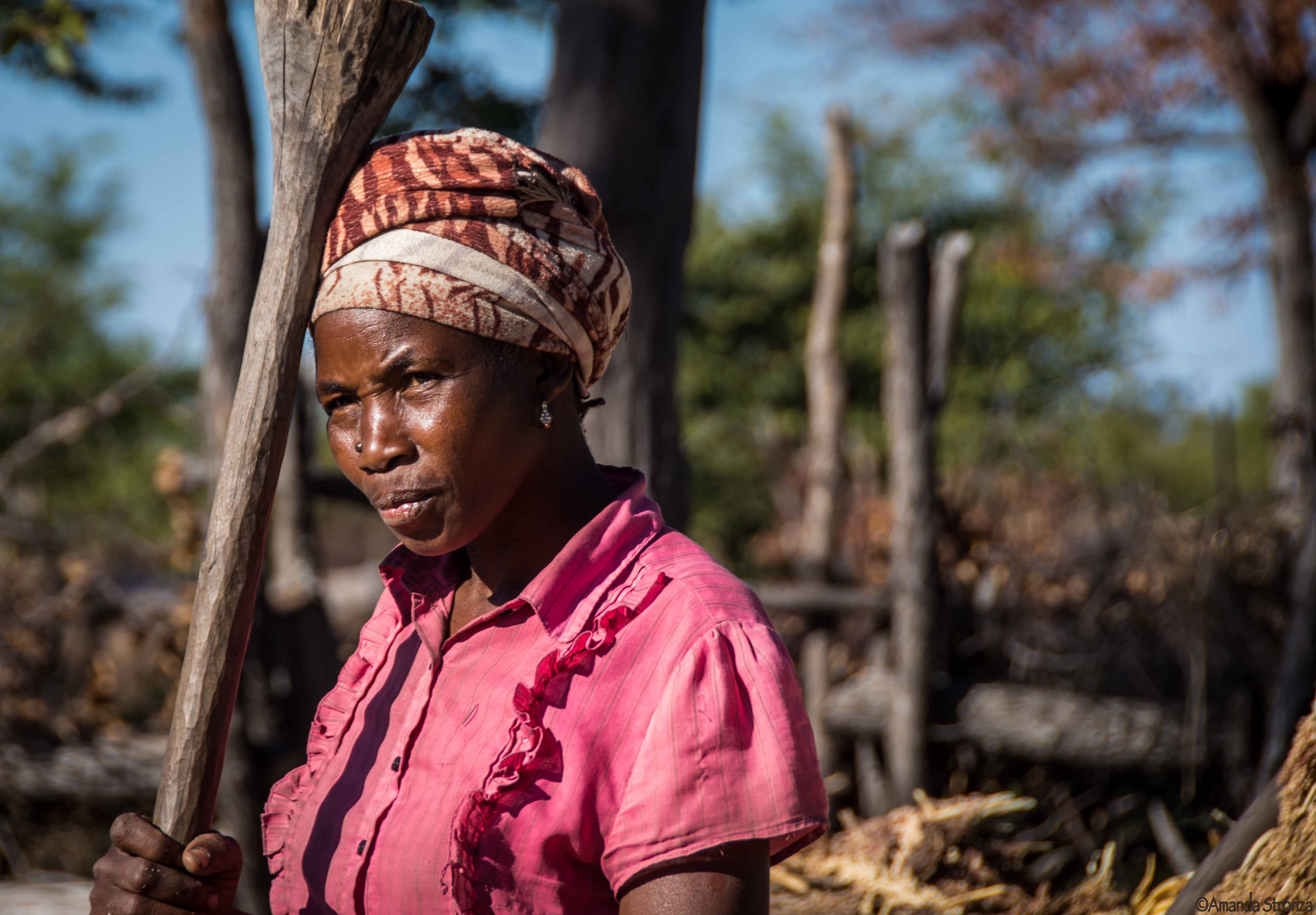
Keikagile (Kee-ka-HEE-lay) owns such a farm, in the panhandle of the Okavango Delta. But she has one large problem most subsistence farmers do not have: elephants. Her field is close to one of the most frequently used pathways used by generations of elephants as they move south in April and June from the drying pans near Namibia to the waters of the Okavango River. A night’s raid by a single herd of elephants could destroy her entire crop.


Photograph by Dr. Amanda Stronza
Keikagile, Photograph by Dr. Amanda Stronza


In her book Coming of Age with Elephants: A Memoir, elephant researcher Joyce Poole writes: “Imagine having your entire livelihood destroyed by a beast that comes in the dead of the night. Imagine defending your homestead from a monster weighing close to a hundred times your weight, one that knows exactly where you are through its extraordinary sense of hearing and smell, while your only useful sense is reduced to what you can see in a dim circle of light from a flashlight with failing batteries. Imagine being too poor to buy new batteries.”

And once each year, coming and going on ancient pathways, elephants pass close to Keikagile’s farm. However, starting in 2014, she’s had help from Ecoexist, one of the programs featured in Howard G. Buffet’s book, 40 Chances: Finding Hope in a Hungry World. A five-year effort aimed at fostering coexistence between the 15,000 elephants and the 15,000 people of the Okavango panhandle, Ecoexist http://www.ecoexistproject.org/ seeks to apply multiple strategies to alleviate human/elephant conflicts and improve human/elephant coexistence.


Photograph by Dr. Amanda Stronza


In partnership with Texas A&M University, and with support from the Amarula Trust, and USAID”S Southern Africa Regional Environment Program, The Ecoexist Project has five main goals, designed to work in tandem with each other:

  1. tracking the elephant herds; 2. building plans for co-existence; 3. learning together with farmers & villages how to protect fields; 4. making fields more resilient to crop-raiding events; and 5. building an elephant economy.

Using techniques such as radio collars and GPS tracking, the Ecoexist researchers are learning more about the movements and habits of the elephants in the Panhandle, in order to help predict possible points of land use conflict. The government of Botswana pays farmers to expand their fields in order to increase productions, yet the land boards responsible for allocating the land lack information about where and when elephants move through villages and fields. Ecoexist is mapping elephant movements in order to help local land boards allocate fields away from the elephants’ pathways. By amplifying the voices, experiences and ideas of farmers such as Keikagile, policy makers learn from those most affected by crop-raiding, while the farmers are able to share responsibility with policy makers to manage the knowledge, tools and resources for field protection. Improving yields with short-cycle crops, early harvests and planting techniques ensure that farmers are less vulnerable to elephants raiding their fields. Since tourists rarely visit their part of the Okavango watershed, efforts to collaborate with private companies to market the Panhandle as an elephant-based destination with community-based tourism experiences are being developed.


Photograph by Dr. Amanda Stronza
Village Meeting in Xakao, Photograph by Dr. Amanda Stronza

Ecoexist has a large team of advisors and participants. Its directors include a conservation biologist, an ecologist and an anthropologist, as well as post-graduate students and interns from Botswana’s department of Wildlife and National Parks and other relevant government departments. With input and guidance from Botswana’s Department of Agricultural Research, the College of Agriculture, the Department of Wildlife, land boards, international trusts, private corporations, Oxford University, Texas A&M University, the University of Botswana, and most importantly local farmers and residents, the goal of Ecoexist is to make the Panhandle “a place where elephants benefit people more than imperil them…a place where people benefit elephants more than imperil them.” It’s also an endeavor to create solutions that can be used throughout Botswana and beyond.

Keikagile has already used new planting techniques and a solar-powered electric fence to protect her field. Her millet yield this year is 10 times the national average! And next April, when the elephants begin their seasonal migration, she’ll be able to sleep better at night.


To see more of Dr. Stronza’s incredible photographs, click Here.

To follow Ecoexist’s Facebook page: http://www.facebook.com/ecoexistproject

Posted in Africa, Elephants, Nature, Photography, Travel

The Elephant in Her Backyard, Part One

For several months of each year Keikagile (Kee-ka-HEE-lay) has elephants in her backyard. Entire herds of elephants. Lions, zebras, crocodiles, hippos, hyenas, and other wild denizens of Africa surround her home. But it’s the elephants she most fears, for they can destroy her entire farm in just one night.


Photograph by Dr. Amanda Stronza

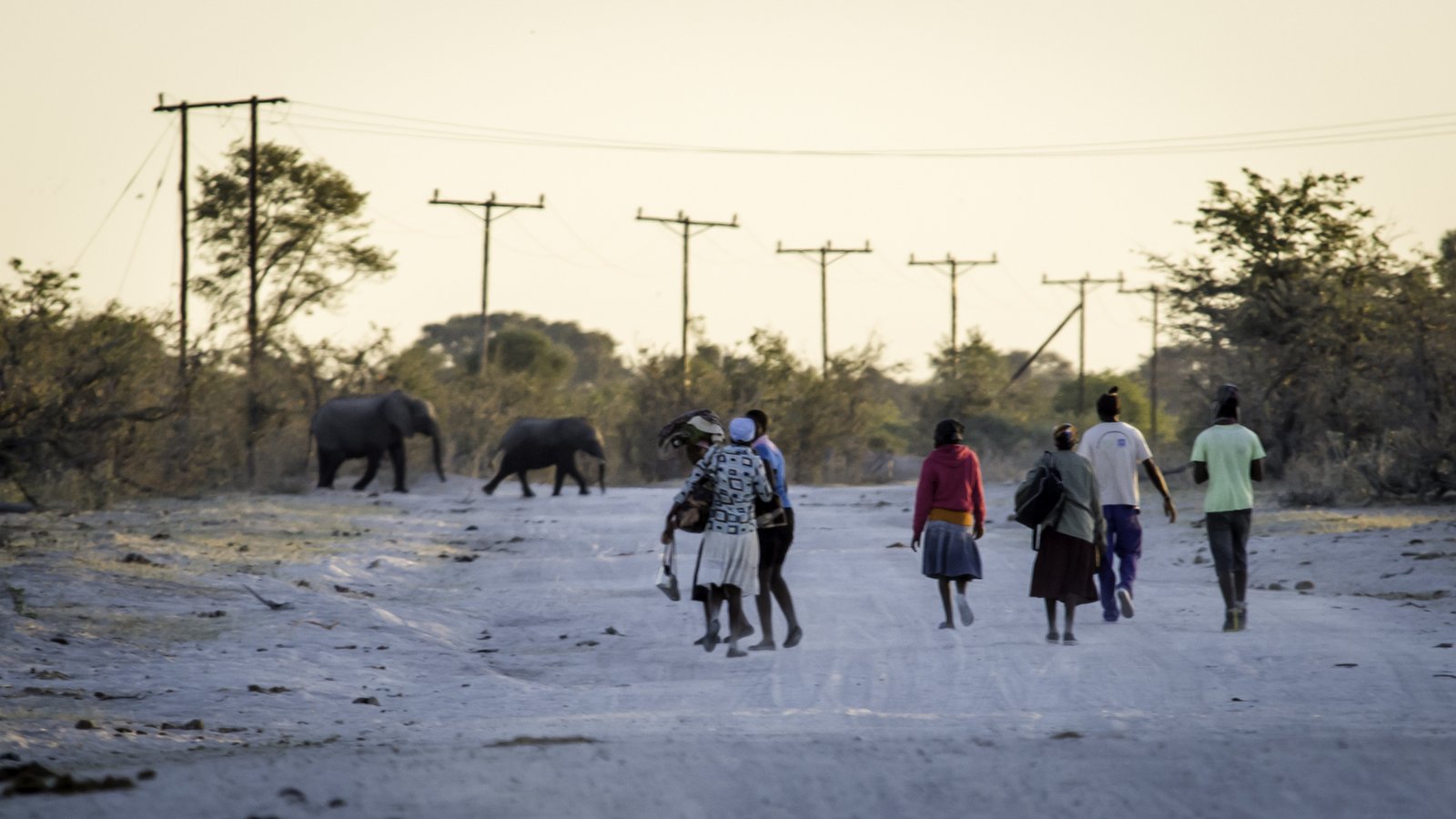
Keikagile lives in the Okavango Delta of northern Botswana, in an area of roughly 3,500 square miles (9,000 km2) where 15,000 elephants roam freely and 15,000 people plant fields, herd livestock, and walk to and from school. Between April and June, elephants move southward from drying pans near Namibia to the permanent waters found in the Delta. And as they follow their ancient migration routes, the herds often stop to forage in the fields planted closest to those paths. When seasonal rains return in November, the elephants return north along the same routes.

Photograph by Dr. Amanda Stronza

Keikagile’s fields are less than a mile (1.2 km) from one of the largest and most frequently used elephant pathways. Her farm is twice as likely to be raided as those further away, a risk that could happen twice a year, as the elephants migrate to and from the waters of the Delta. (Note the man in the background of this photograph and the power lines.)

Keikagile’s crops are mostly pearl millet, maize (corn) and Bambara ground nuts. Pearl millet has been grown in Africa since prehistoric times. It has a slightly nutty taste, can be cooked like brown rice and ground into flour for flatbreads. It’s high in antioxidants and magnesium. Dried ground maize can be cooked into porridge or a dish called bogobe, made by putting sorghum, maize or millet flour into boiling water, stirring the mixture into a soft paste, and then cooking it slowly. Sometimes the sorghum or maize is fermented, and milk and sugar added. Bambara ground nuts ripen, like peanuts, below ground. They are high in protein (an important food source for people who cannot afford animal protein) and can be eaten roasted, salted or boiled, similar to beans. Most importantly, the plant improves the soil with nitrogen fixation.

Pearl millet grows well in soils with high salinity and is a highly drought-tolerant crop. The Bambara ground nut grows best in sandy soils and is resistant to high temperatures. Maize, the most difficult to grow in a semi-arid climate, is preferred by farmers. The three plants can be grown together, mixed into the same space, in a practice called intercropping, which maximizes space and creates biodiversity.


Pearl Millet
Pearl Millet

As a subsistence farmer and a single mother, Keikagile feeds and provides for her three children. In the past, the yields from her fields were barely enough to support her family. And the threat of catastrophic damage to her livelihood by elephants is an annual worry for her.

EcoExist (Ecoexist) hopes to change that. Partnering with local farmers, EcoExist (EcoExist Facebook)is a five-year program aimed at reducing human/elephant conflicts in the Okavango Delta. Read about the dual efforts of Keikagile and EcoExist in Part Two, The Elephant in Her Backyard.

Posted in Africa, Nature, Travel

A Thunder of Hippos

An excerpt from my book-in-progress:

Whenever I leave for Africa I’m always, invariably asked, “Aren’t you afraid?”

“Of what?”

“Snakes. Alligators. Lions.”

“Well,” I usually reply, “there are no alligators in Africa. Only crocodiles.”

“So crocodiles, whatever.”

Once, in Tanzania, I saw a submerged crocodile lunge up amid four wildebeest faster than they, or I, could blink. I don’t know how, but he missed all of them as they leapt in four different directions. I’ve never taken a bathing suit to Africa. Didn’t seem like a great idea on my first trip and less so on subsequent ones.

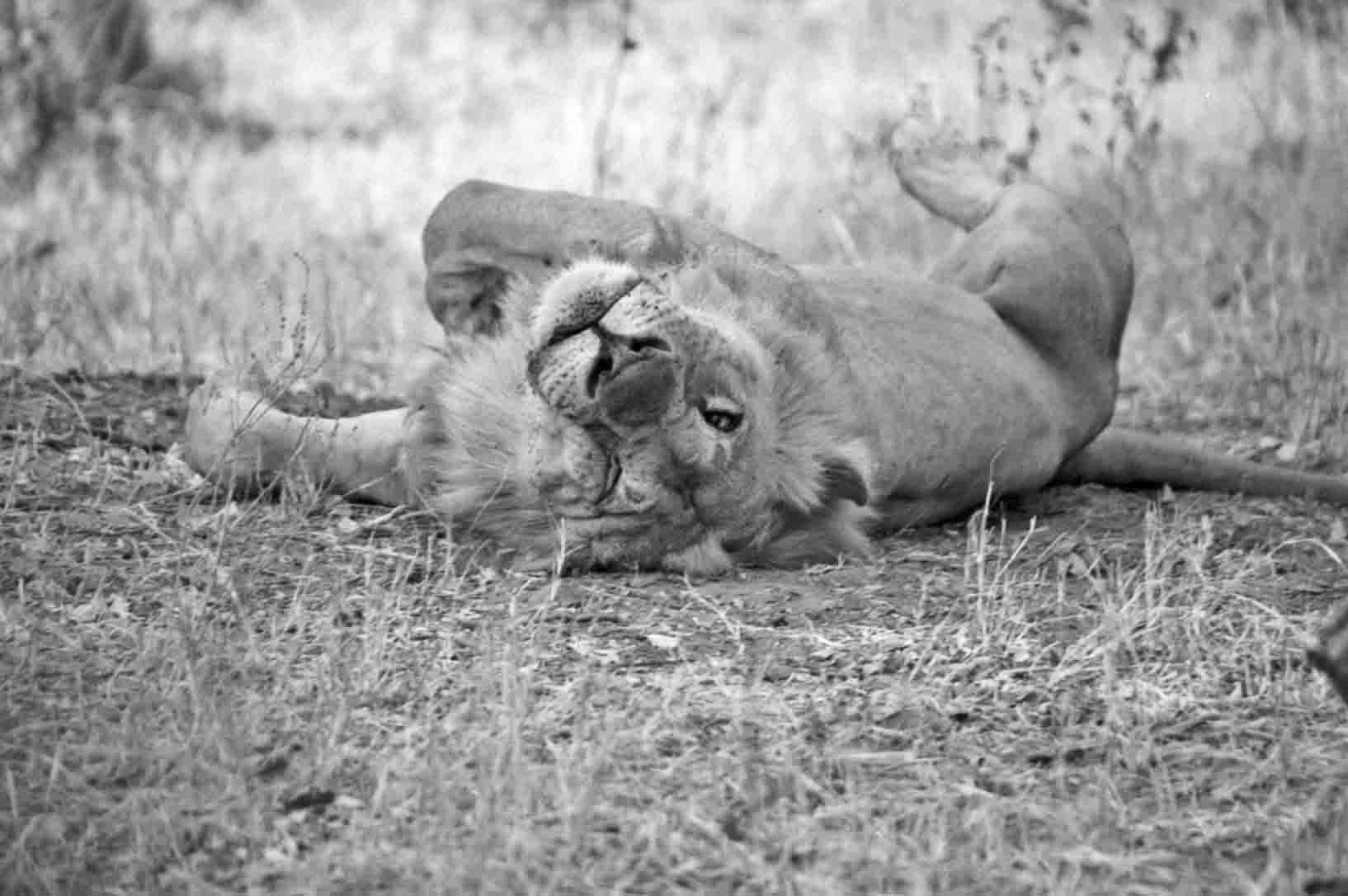
Lions? Well, lions will consider me prey if I act like prey. Look! Breakfast! And it’s fat and slow!

The possibility of actually encountering a lion is pretty rare. There are only about 20,000 lions left in Africa, down from 200,000 in 1975. Until 2007 Botswana allowed 50 lions to be hunted per year. By the time a hunting ban was enacted many of the male trophies were just two or three years old – requiring hair extensions woven into their manes before they were mounted on a hunter’s wall.

B&W male lion

Snakes? There are a lot of snakes in Africa. Black mambas. Vipers. Cobras. Pythons. Boomslangs. Puff adders.   In the Okavango Delta I could encounter Egyptian cobras or a puff adder or an African rock python or a black mamba or perhaps even a shy boomslang. I could, but I haven’t. In all the times I’ve been to Africa, I’ve never seen a snake. Bad luck, I guess, because each of these snakes, in their own way, is fascinating, and I really wouldn’t mind seeing one of them.

The deadliest animal in Africa is not a snake nor a crocodile nor a lion – it’s the hippo, those oddly comic, rotund herbivores that Walt Disney put in tutus. Hippos kill more people in Africa than any other animal: several hundred per year. In contrast, sharks kill only around ten people per year, worldwide.

Hippos don’t even eat the people they kill. They emerge at night from ponds and rivers to spend all night eating grass. Their beady, sherry-colored eyes don’t see well, but their sense of smell is acute. Males defend territory, females their calves. They can outrun you, and you never know what might set them off.

In 2002, I was on a game drive with six people in an open-sided Landcruiser. Laid-back hippo blimps floated in a nearby pond. One of the hippos grunted, burbling like a submerged tuba.

A herd of hippos is known as a “thunder” – possibly a reference to their size, but more likely because of the noises they make. When a group of hippos get going, their combined grunts sound like rolling thunder. But these hippos were relatively quiet. They rose and sank, twirled their ears, exhaled wetly through their nostrils.

It was that magic half-hour before sunset when the light is golden and incredible – perfect for photographs. A short distance away a male grazed on flowers. I raised my camera.

Without warning, the hippo opened his mouth in a threat gesture, displaying his long, razor-sharp canines. A second later, he charged, head swinging side to side like a giant sledgehammer, running directly for us at a surprisingly clip, intent on slamming into our vehicle. Since a hippo’s top speed is around twenty miles per hour, he was closing fast. All I could see through my camera lens were those massive incisors, as the autofocus kept singing out zzzzt zzzt, zzzzzt zzzt.

Charging hippo b&w

Luckily, the engine of our vehicle started without a cough and the hippo just missed the back bumper. He continued on into the bush for thirty yards before stopping to wonder where we had gone.

Posted in Africa, Elephants, Nature, Photography

The Oldest Human Footprints in the World

An excerpt from my book in progress:

Morula

After Morula finishes browsing, I follow her down one of the unmapped, two-track, lightly traveled, nameless roads of the Okavango Delta.

Zik! Zik! Zik-zik! A masked weaver hops through the brush beside us. White clouds above our heads twirl like cotton candy across the sky. The track we’re following parts a shallow lake of grass and climbs out on an island of trees. A game trail crosses the road. Morula swivels her trunk to one side, then the other, at the intersection where the grass is beaten down.

In dun-colored sand as finely ground as cake flour, Morula’s prints barely register. I can’t see a single puff from the impact of her feet. With each step, she leaves behind outlines of small moons. We cross the recent, delicate hoof prints of impala and the moons obliterate them.

photo by Cheryl Merrill

My boot prints, inside the crater of her footprints, look like exclamation points, the heel separate from the rest of my sole.

The oldest human footprints in the world are 1500 miles north of here, at Laetoli, in Tanzania. Found in 1976, the 3.5 million-year-old footprints are not far from the Olduvai Gorge, where the Leakey family discovered the first hominids. Although the Laetoli hominids are Australopithecines and not Homo sapiens, they are part of our family tree, a relationship comparable to that of mammoths and elephants.

Fossil footprints are not uncommon, especially near ancient riverbeds. But the Laetoli footprints were created when a nearby volcano erupted, covering the ground with a slurry of volcanic ash somewhat the consistency of concrete. Once excavated, the site was found to have over 9,500 impressions, mostly made by rabbits. In order of decreasing abundance, tracks were also found of guinea fowl, hyena, antelope, rhinoceros, giraffe, buffalo, elephant, horse, small carnivores, monkeys, pigs and ostriches. Just one short, 80-foot section was made by hominids.

Their footprints – that of a man, a woman and a small child – tell us much about our ancestry. For in that trackway is a hesitation, as if one of the hominids thought about turning left. Perhaps it was the moment before an earthquake, when the ground was no longer solid beneath their feet. Or perhaps one of them considered turning around, going back.

I stop and look over my shoulder, in the same way my human ancestor did. All of Africa stretches out behind me – overlapped boot prints and footprints leading backward into her hot, crowded maze of life. It was Africa who designed us to walk upright across her landscapes. Because of Africa, I know the ground better than I know trees.

In the distance, across a golden backwater of high grass, stand a family of giraffes. They are motionless, watching us cross between islands of bush. The spotted derricks of their necks swivel in all directions to get a better look at us. At the end of each neck a head is cocked sideways: the universal body language that says, “Huh?” But once we stop to look, they turn away and head for cover, except for one curious female who continues to watch us.

photo by Cheryl Merrill

Tramping along in Morula’s wake, I’m beginning to get the hang of all this walking and browsing – less sweating, less reliance on my water bottle.   I’m beginning to wish I could do this every day of my life.


Posted in Africa, Elephants, Extinction, Nature, Photography

Morning in Africa: Year of the Elephant

Taking a break from the Ivory Timeline and beginning a new series to heighten awareness of how elephants live.  If poaching is not stopped, elephants will become extinct in our lifetimes.

Morning in Africa

“I never knew a morning in Africa when I woke up and was not happy.”  Earnest Hemingway

Posted in Africa, Elephants, Nature, Nonfiction, Photography, Travel

Underwater

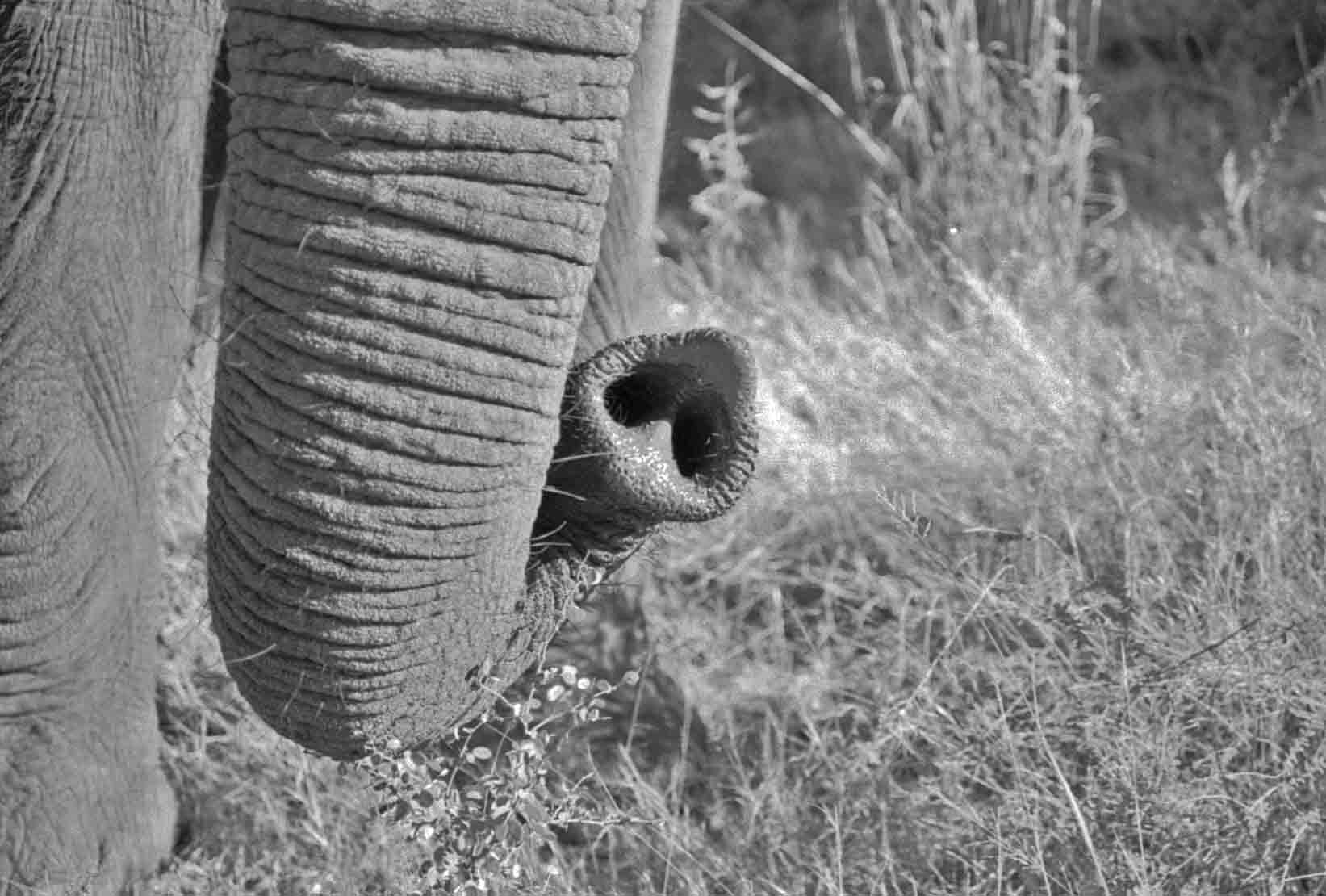
Trunk tip 2b&wAwash in a sea of scent, Jabu curls his trunk and samples wave after wave of odors breaking at his feet.  Redolent tides wash in, wash out, a floating realm populated with aromatic citizens.  Schools of scents cluster at his feet, swimming through the grass at the bottom of an ocean of air.

Sixty percent of his brain is dedicated to smell.  Jabu can distinguish between a million or more separate odors in the daily news that floats by on warm currents.  Just a few molecules bring him history and current events: stories of who was here, who is there, how long they stayed and in which direction they went.  Jabu can detect fellow elephants ten miles away.

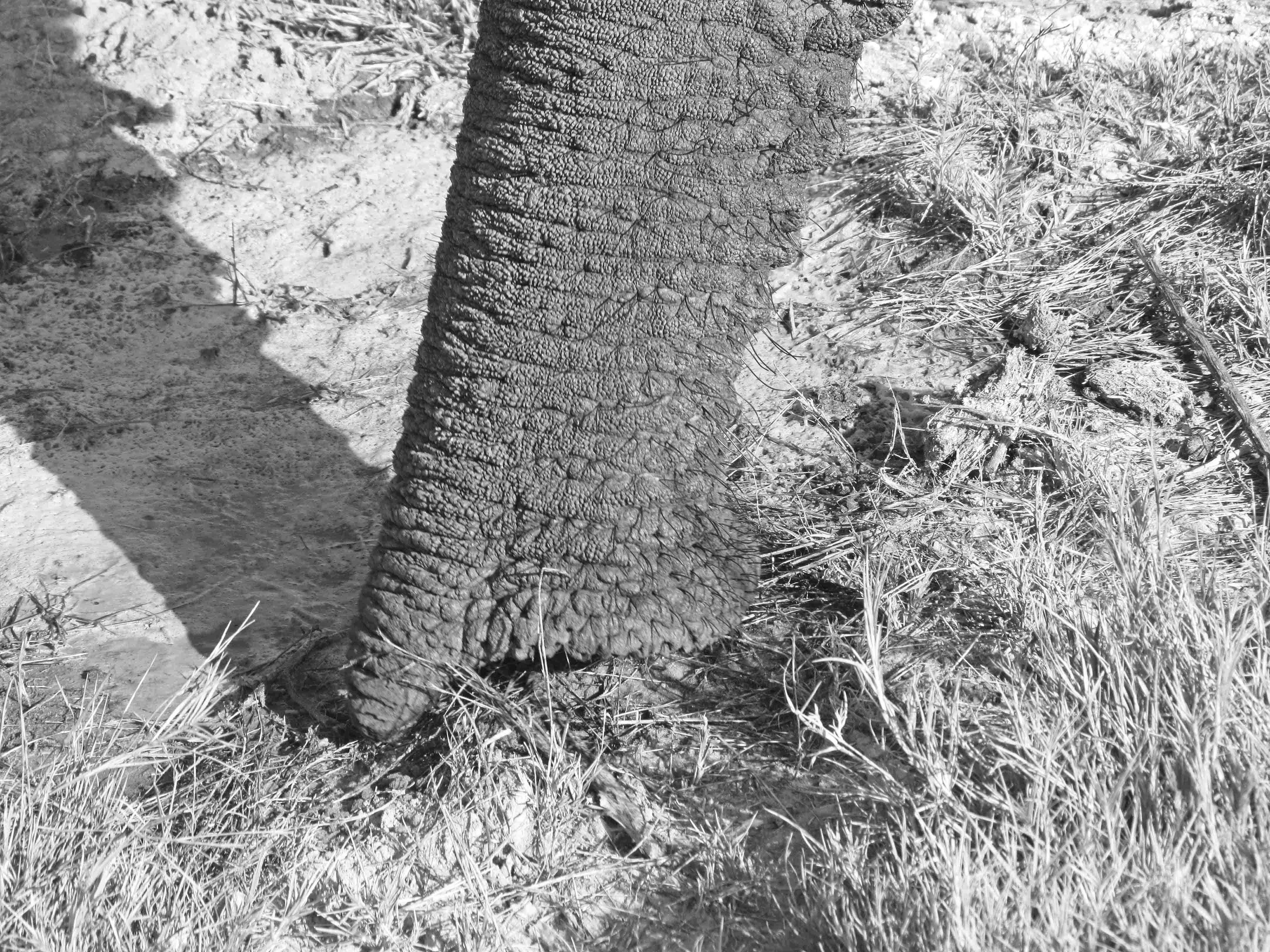
He reaches out and flattens the tip of his trunk over a wet spot in the sand.  Eyes half closed, he stands completely still, as if lost in memory, his brain sorting through the various scents tumbling up his trunk.  He samples the air thoughtfully, as if listening to a quiet conversation, as if storing it, word by word, in those huge frontal lobes of his.

Flehmen flat trunkI remember that elephants see the world in yellows and blues, like color-blind humans.  I fasten a yellow filter over my camera lens, then a blue one.  Jabu turns aquamarine.  From far, far away, he snaps a branch from a shrub the color of kelp, chomps, munches, drifts closer.  His slow motions make perfect sense underwater.

I wade into a lagoon of grass.  Ankles, knees, waist, chest, neck.  Some of the grass stalks bob over my head.  My hands, my body, my thoughts, move slowly.

Immersed, my ears fill with a pure hum.  The sound of my passage whispers in seashell voices.

As Jabu drifts by, undertones of blue and gray shimmer against his flanks, reflections of seaweed and kelp.  I follow, sub-aquatic, at the bottom of air.  Carried by the current of my imagination, I am about to tumble downstream. Jabu aslant b&w

Then the breeze kicks up, feels as if it comes all the way from the bottom of the Kalahari, feels red, feels gritty, feels dry as a hundred-year-old skeleton left in the desert.  It sucks every bit of moisture from under me and lands me beached and gasping.

I lower my camera.  Red invades yellow and the world greens.

Posted in Africa, Doug, Elephants, Nature, Nonfiction, Photography, Sandi, Travel, Writing

Fish Eagles/Bald Eagles/Fish Eagles/Bald Eagles

An excerpt from my book:

After a long morning walking with tourists we stumble into a shady grove near a lagoon and into the illusion of an al fresco dining room in an elegant restaurant. Fresh branches of mopane decorate the surface of a table covered with a white linen cloth.  The leaves on each mopane branch fold modestly like small olive origami decorations.  Knives rest across white linen napkins on white china bread plates.  The staff from Stanley’s have set up a buffet complete with chafing dishes.  White lace doilies edged with heavy colored beads protect the salads from flies.  Pepper grinders, oil & vinegar decanters water glasses and wineglasses complete the setting.  Nodding at murmured compliments, the bartender hands out cold beer, which has been uppermost on many minds.Al fresco restaurant b&w

It’s odd how fast we re-civilize.  All morning long the tourists had been mostly silent, filled with awe at walking next to elephants.  Now they sprawl in camp chairs and compare camera lenses.

A cake of soap sits in the fork of a bush next to a white basin on a folding wooden stand.  I use the murky water in the basin to lather my hands.  One of the camp staff holds a pitcher of clean water for rinsing.  The water in the basin turns even grayer with dirt.  I empty the basin and small puffs of dust rise from the force of the water hitting floury sand.

Then I too re-civilize, join the human conversation.

While Sandi minds the elephants, Doug mounds his plate with food.  He has that unique gift of talking and eating at the same time, consuming enormous amounts of food and speaking in short bursts.  Each time he answers a question he sets his fork down and regretfully watches where he places it.

“Look!”

Our heads swivel and our eyes follow a finger pointing skyward.

Locked together, talon-to-talon, fish eagles plummet toward earth in their mating dance, twirling in passionate grip with each other, taut bodies wheeling faster and faster towards earth, picking up suicidal speed.

The eagles break off a second before hitting the ground and swoop up to roost in trees opposite each other.  They scream back and forth, flinging their heads over their shoulders.  The female’s voice is lower, counter-point to the male’s shriek.

One of the camp staff shakes his head.  “I have never seen that before.”

Beaut fish eagle illus b&wLike the bald eagles of North America, fish eagles have chestnut bodies, long yellow beaks, yellow feet, pure-white heads, white tails and chests, although their bibs are larger.

They have the same habits: they mate for life and build huge stick nests in trees, nests twelve feet wide and ten feet deep.  They dwell in the same habitats: rivers, lakes, creeks, lagoons, estuaries, and man-made reservoirs.  Both carry fresh fish caught near the surface in their grasping talons, carry the fish headfirst for lesser wind resistance, one claw behind the other, surfing, riding a fish through the air.

The eagles are a reminder that in only five more days I will be going home.  Home, where I once witnessed bald eagles teaching their young how to snatch crows out of the air.  Where bald eagles row fish ashore, using their wings as oars when the fish are too large to hoist aloft.


Home.  Here.  Home.  Here.  Home.  Here.


Where I live and where I am.  That dual place inside me, moment and memory, locked together, spiraling, spiraling, just like these fish eagles, feather tip to feather tip, talon to talon.  Mind spinning, I want to hold onto a tree with fierce feet, cry out, return to the ground, stay here.  Learn from birds, from clouds, from rain.


Posted in Africa, Elephants, Nature, Nonfiction, Photography

The Giant Beside Us

One long hot afternoon at a waterhole in the Savuti area of Botswana:

Only a few yards from our vehicle, a single-cylinder water pump alternately chugs and sputters, drawing water from beneath the sand and sending spurts through a pipe to a square trough.  This artificial waterhole keeps the bachelor elephants close by, waiting for spring rains and the return of female breeding herds.

The steady sound of the pump, chug-sputter, chug-sputter, chug-sputter lull my eyes closed.  They open, close, open half-lidded, close again.

 “Here he comes,” someone whispers and my eyes flick open as a huge bull strolls past.  I pick up my camera.

Savuti male b&wI focus on his great head, nodding downward with each step, as he trudges past.  A thirsty pilgrim in a parched land, his trek to water is nearly finished.  He’s headed straight to the trough; the clicking and whirring of our cameras doesn’t alter his gait.

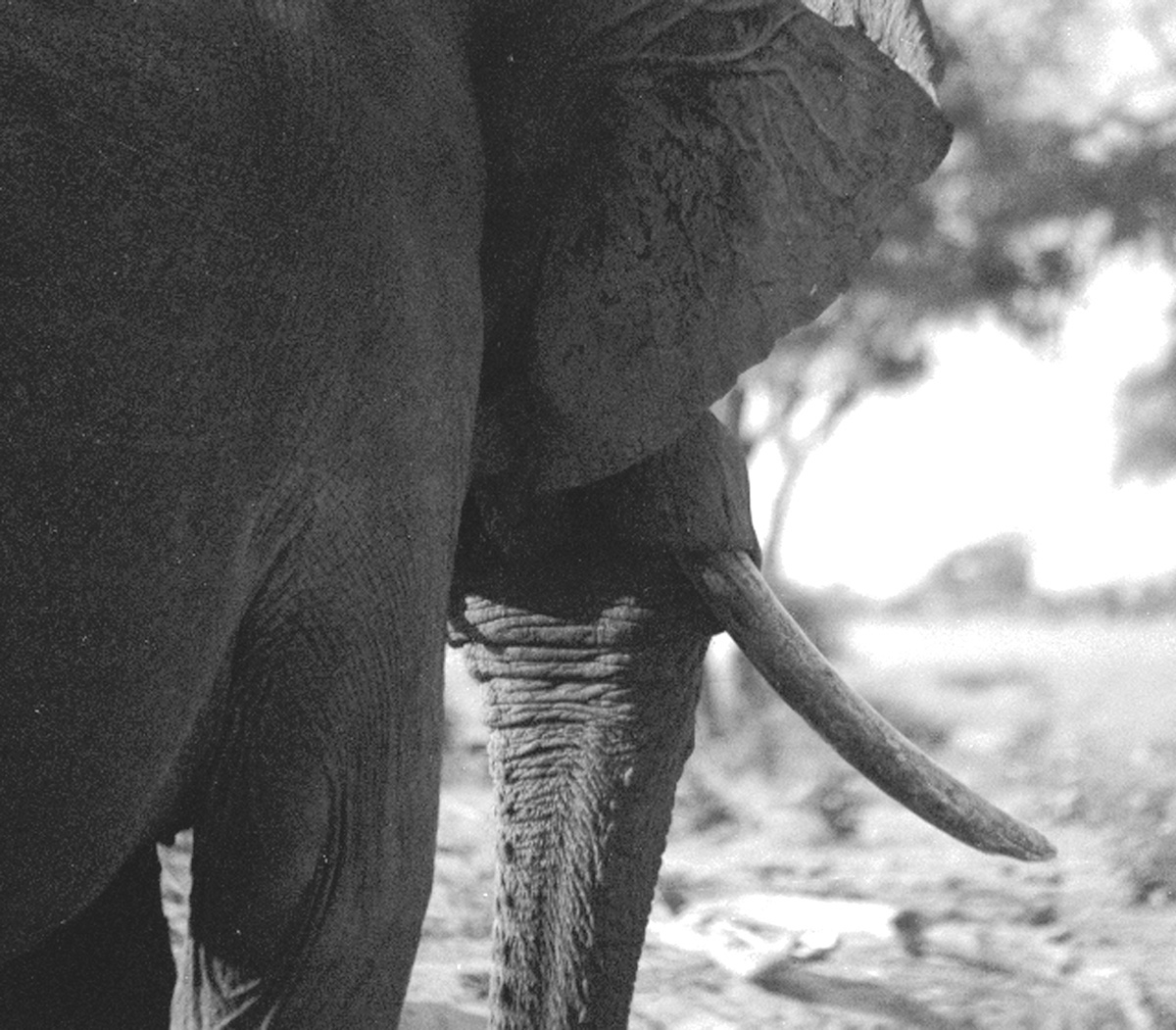
His enormous tusk splays out sideways.  It’s easily four feet long, stained and chipped on the end.  It grows out, rather than down and up – his tusks made him a much wider elephant than he really is.

Mid-drink, he curls his trunk into his mouth; head tilted back, eyes closed.  He makes gargling sounds as he drinks.  Extending his trunk down into the water, he blows bubbles.  Then he curls his trunk again and again to hose several gallons at a time down his throat.  Each swallow contains the taste of dung, samplings from all the animals that used this waterhole – zebra, wildebeest, warthog, ostrich, hyena and the occasional furtive flavor of lion.

I try to imagine the bouquet garni of the water and how its myriad fragrances might seep into the crevices of an elephant’s mind, form pools of scent they recognize, year after year, the liquid memory of Africa.  Perhaps this old bull is memorizing the stories in that trough, paragraphs of taste and smell, twists of plot and character and fate.

Finished drinking, he turns around and heads back to where our vehicle is parked, stopping just twenty feet away.  His skin is the color of seasoned cast iron.  The waterline on his body rises just past his belly.  Spatters of mud stain his ears and back.

After several long minutes, his eyelids droop and his mouth slackens.  Under the hot sun he falls asleep, lulled perhaps by the narcotic of a long, slow drink.  The tip of his trunk coils like a magic rope on the ground.  He sleeps with his weight on three legs, resting a hind leg, occasionally rocking back on it as if he’s dreaming of his trek.  Drool from the end of his trunk slowly seeps into the sand.

Ellie asleep b&wI match my breathing with his, and drowse, sedated by the sun.

The giant beside us rumbles soft snores in his sleep.  I wonder if he is aware of the humans next to him, nodding their heads, also falling asleep.  Other bachelors shuffle by quietly on their way to and from the waterhole, as if they don’t want to wake us.

Tiny paws of wind skitter across my arms; keep me half-awake.  But for one long moment, I almost entered his dreams.