
Doing what elephants do 20 our of 24 hours – eat the landscape.
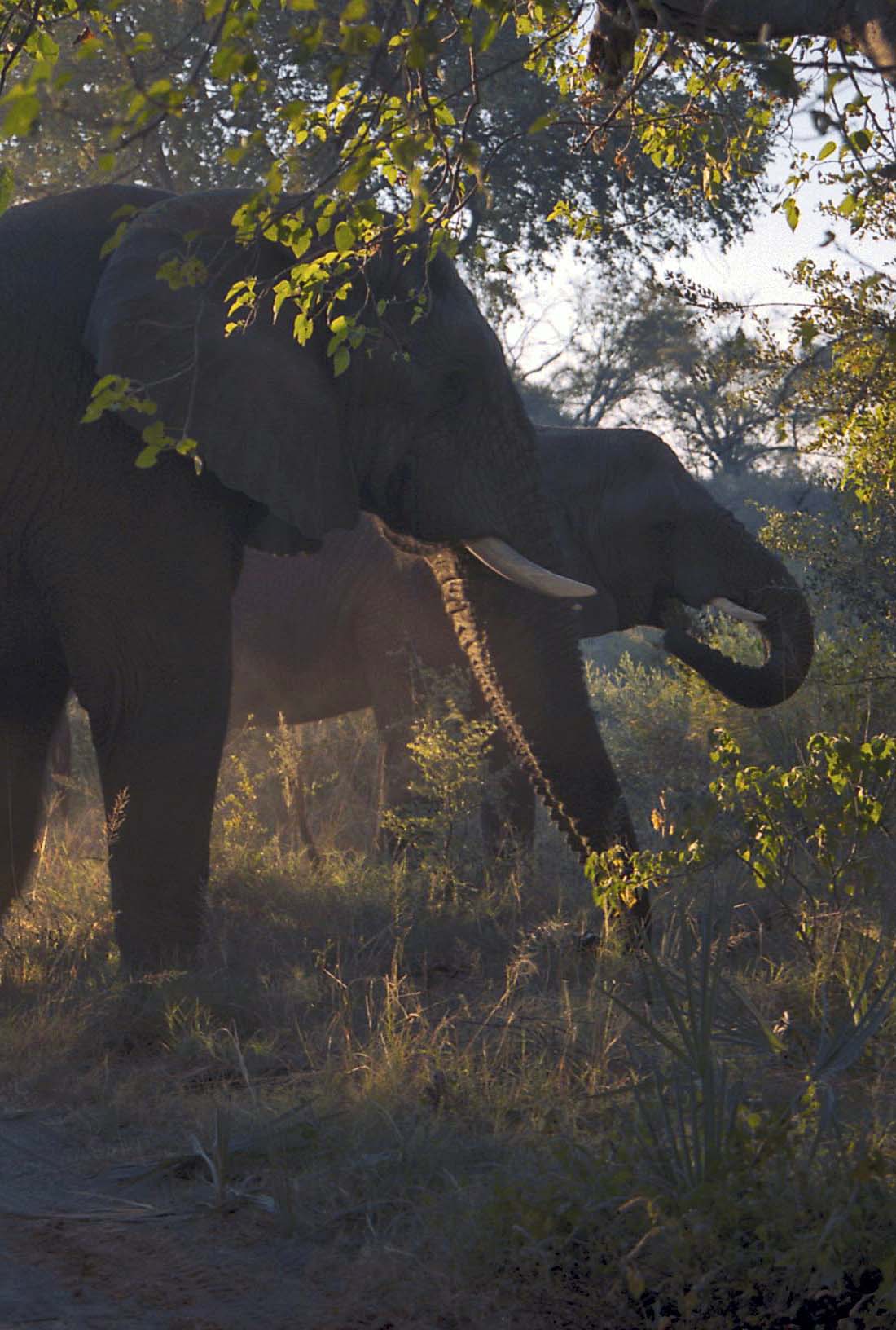
Doing what elephants do 20 our of 24 hours – eat the landscape.
A different perspective.
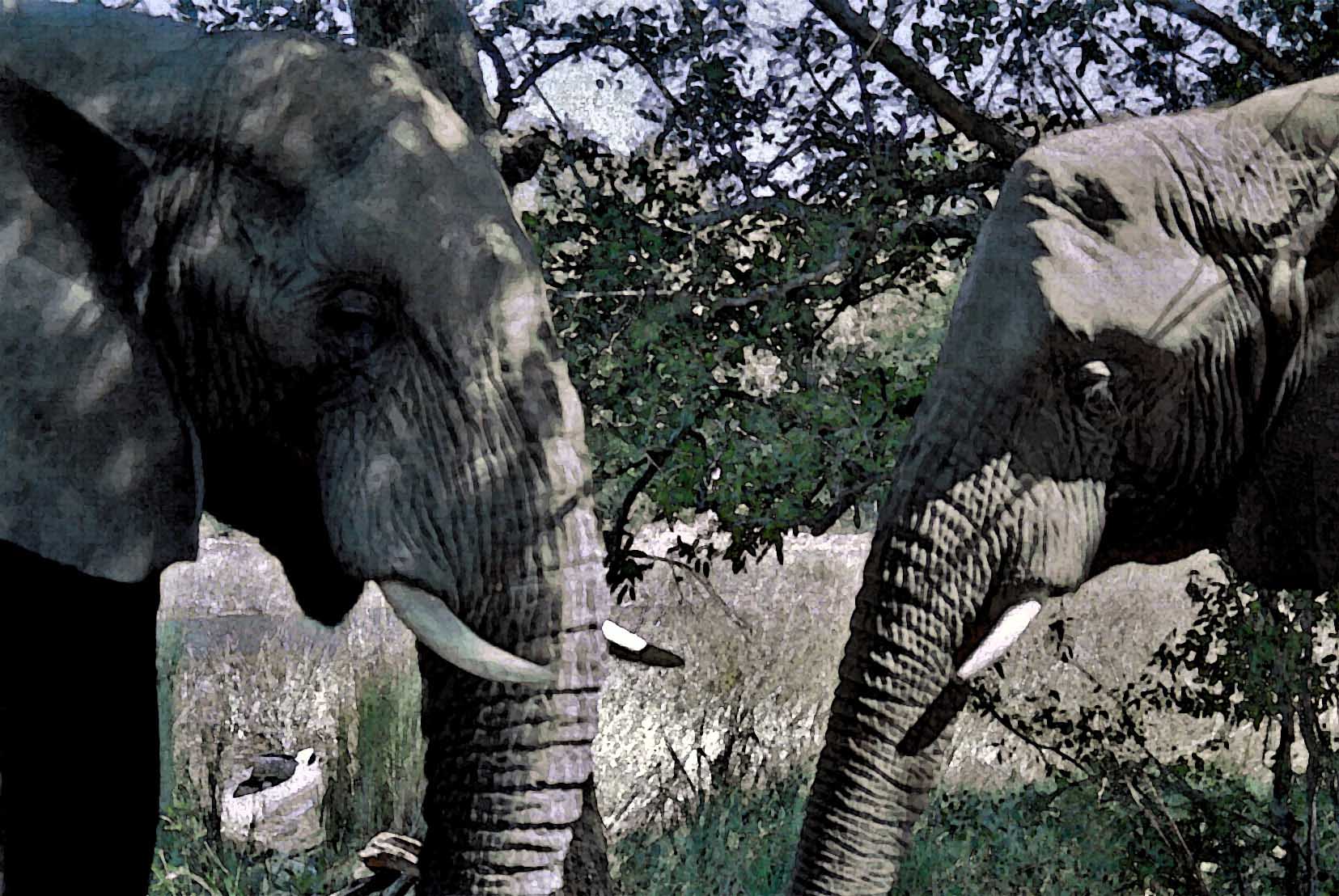
Landscapes are made even more amazing by the landscapes of the bodies of the creatures who move through them.

No two elephant ears are the same. As pliable and soft as worn canvas, the leading edge of an elephant’s ear is often caught and torn on branches or by the tusks of other elephants. In Zimbabwe I once saw an elephant with a pie-shaped wedge sliced from her ear. In Kenya I watched an adolescent flare her ear like a matador holding out her cape. Backlit by sunlight, three perfectly round holes on its border reminded me of diamond studs. Nearby, a huge bull posed for my gulping camera as I shot an entire roll of film in less than two minutes. Only later, with the film developed and the prints in my hands, did I notice the edges of his ears were as scalloped as an old lace tablecloth.

Photographs are moments caught, then left behind. In this photograph, at that moment, there’s so much going on. An elephant strolls by, eating a branch from a thorn bush while he wraps a stalk of grass in his trunk. Do you see his broad toenail, his scalloped ear with its large veins? Do you see the small round pebble on the top of his head, the flecks of leaves cascading down his forehead to his trunk? Do you notice the perfect fan palm in the background, the outline of a nipple upon his chest? Or is your attention focused solely on his gleaming white tusks and your furiously beating heart?

An eye tucked behind a massive trunk. A body as tall as trees.
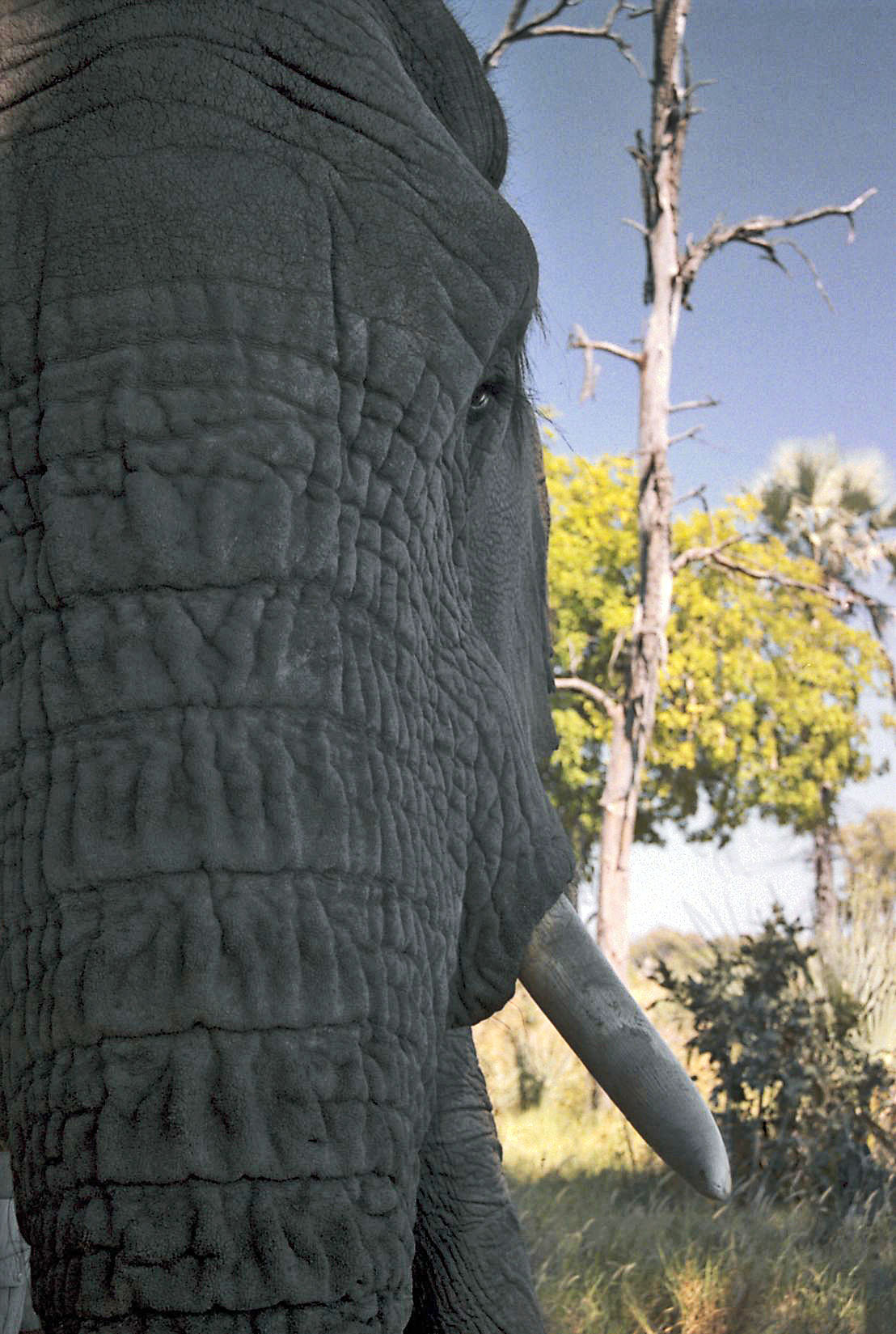
Each of the more than 200 lashes around my eye is shed every three to five months on average. Has anyone ever done research on the shed rate of elephant eyelashes?

I could. Or I could watch the sunlight on his five-inch eyelashes forever.
Elephant trunk and fan palm. Elephants raise their trunks to sample the air or, like this elephant, wave hello.

While I’m out of town for a few days this gentle eye will watch over you.

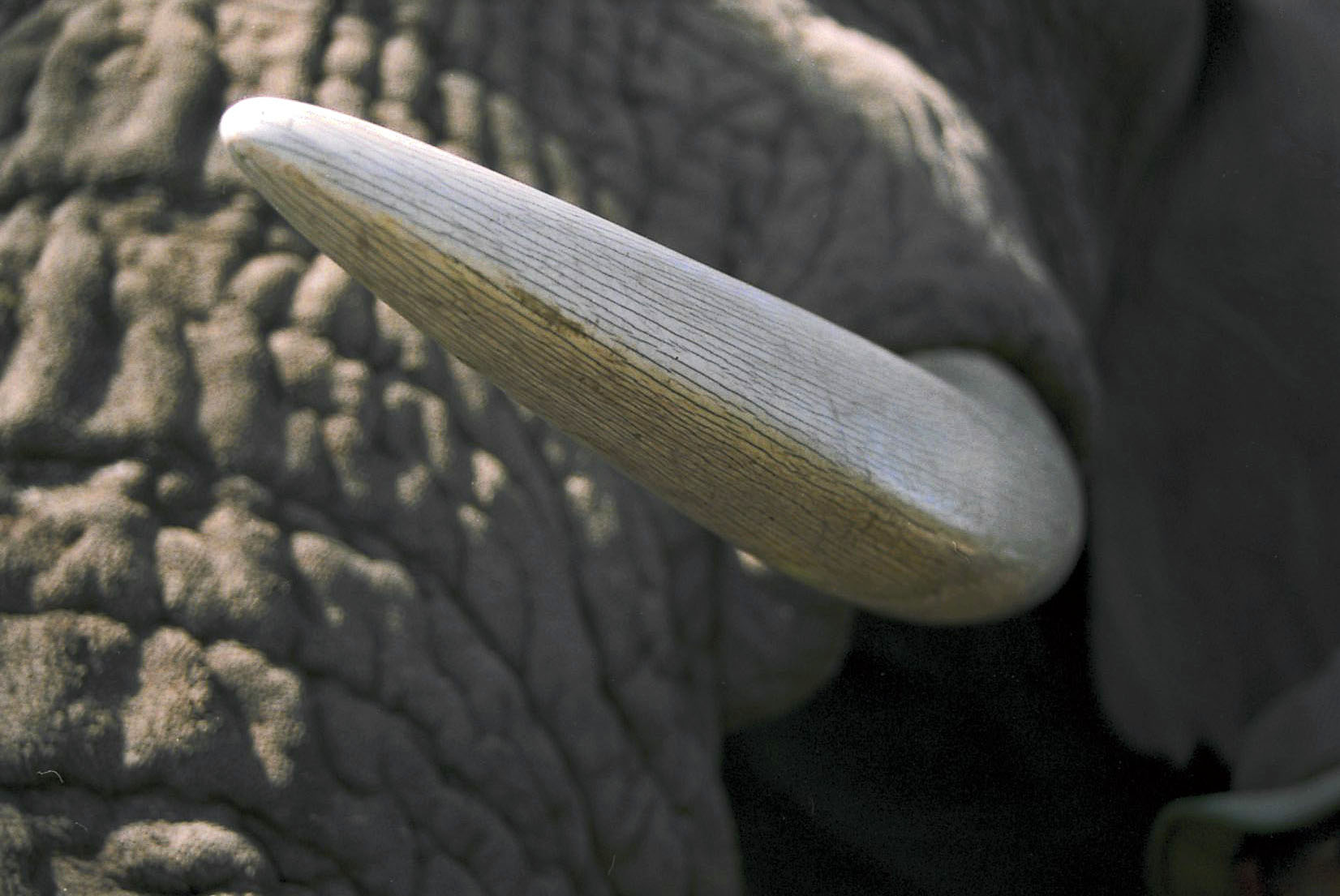
Tanzania has lost 60% of its elephant population in five years. All because of this, an elephant’s incisor, which looks far more beautiful on an elephant than carved into trinkets.
 ABOUT ELEPHANTS