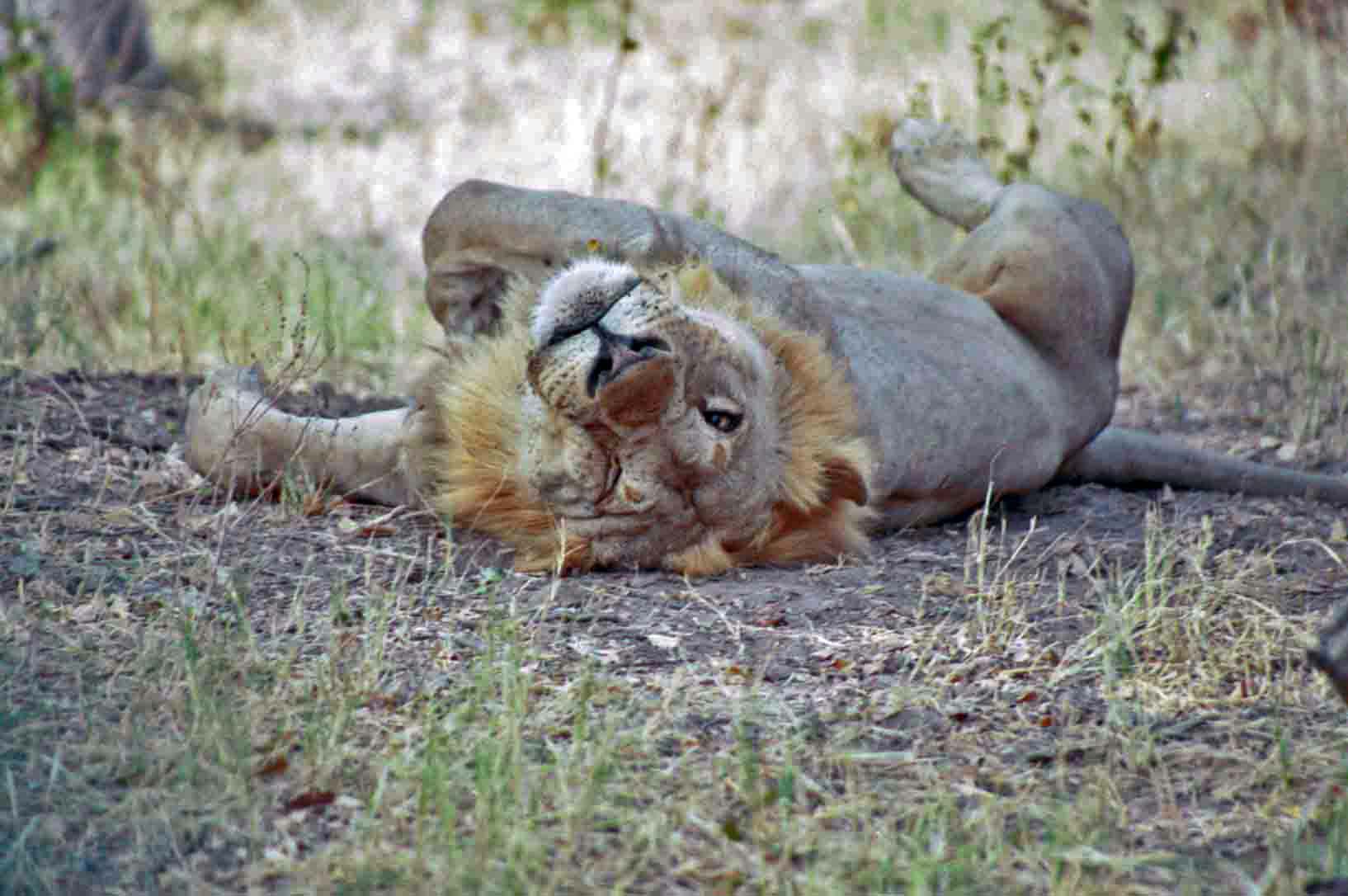
In support of World Lion Day: my favorite photograph of a lion, keeping one eye on us. Lions are increasingly under threat, mostly from habitat loss, which is a fancy way of saying that the human world is closing in upon them. Here is a link to some absolutely spectacular photos and important websites: World Lion Day
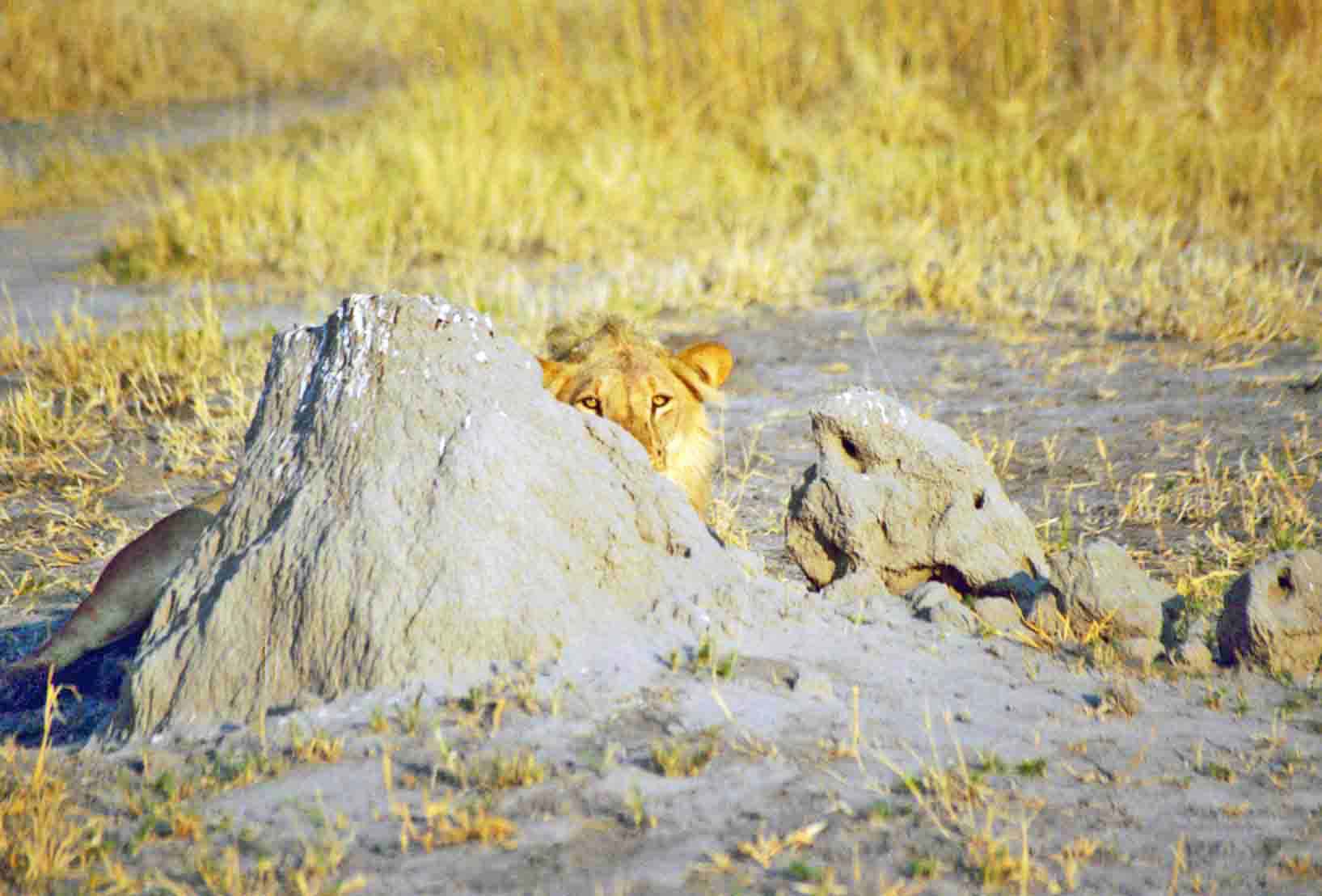
Here is my favorite photograph of a male lion, taken in the Khwai area of Botswana. I think he was hoping, as he hid behind an eroded termite mound, that we couldn’t see him. Of the five subspecies left in the wild, this male is a member of the Southwest African lion, (Panthera leo bleyenbergi), the same species as Cecil, the Zimbabwean lion whose death as created an international uproar. This subspecies, also known as the Katanga lion, is the largest of all lion types and can be found in Namibia, Angola, Zaire, and Zambia, as well as Botswana and Zimbabwe.
There are only 20,000 lions left in the wild. Of the eight original species known in the Holocene, the age of man, one is extinct, 2 are critically endangered, and one lives on in captivity only: the Addis Ababa lion. Of the five remaining species that make up most of their population, I’ve been privileged to observe three: the Masai lion in Kenya and Tanzania; the Southwest African lion in Botswana, Namibia, Zimbabwe and Zambia; and the Transvaal lion, found in and around Kruger National Park in South Africa. I’ll post a photos of them until World Lion Day.
This Masai lion has a wonderful mane, marking him as an older lion. Male Masai lions have a great range of mane types, from nonexistent to luxurious, from red to black. A Masai male lion grows up to 9 feet long. The Ghost and the Darkness, the famous lions who killed 35 railroad workers in 1848 were Tsavo lions, a maneless variation of the Masai lion with a reputation for aggressiveness.
Although the media world’s attention has been focused on the trophy hunt of Cecil in Zimbabwe, there hasn’t been much attention paid to the dwindling number of lions in the wild – the lions isolated in the pockets of national parks and game reserves. One could argue that those bits of the wild also function as natural zoos, since they are usually far apart. What a dwindling population does mean is that the 20,000 lions left in the wild are also genetically isolated, splintered into populations that do not have contact with each other. Each breeding lion removed from such populations reduces their genetic fingerprint further. There are 8 subspecies of lions. I have seen three. The lifespan of a lion is 10-14 years in the wild. All the lions in my photos, except for the ones I’ll post last, are dead, hopefully of natural causes, since they were all observed in game reserves. But, as the story of Cecil illustrates, lions are not easily lured out of their protected areas.
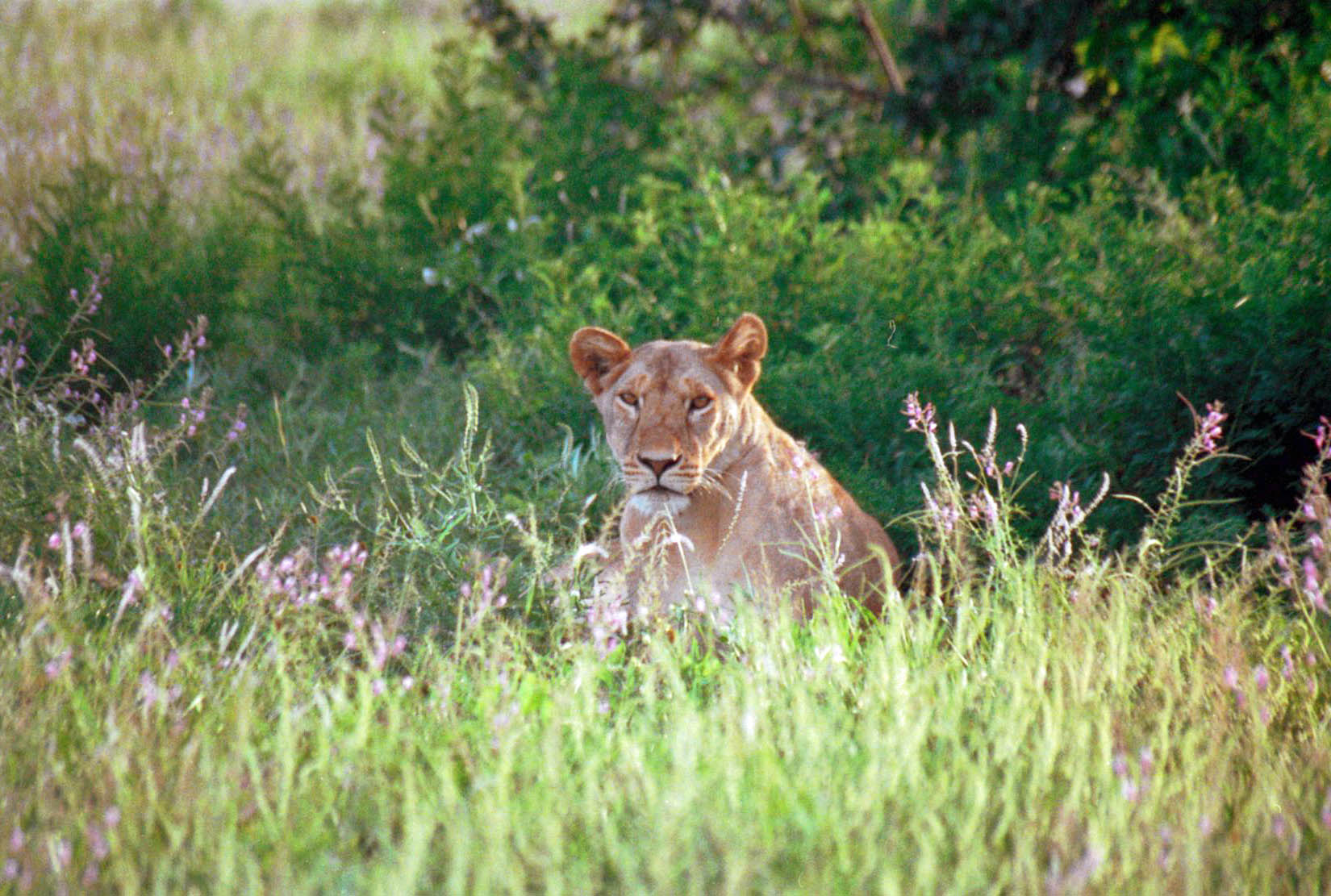
A female in the flowers, subspecies Masai or E. African lion, photographed in Samburu Game Reserve, Kenya, 2002.
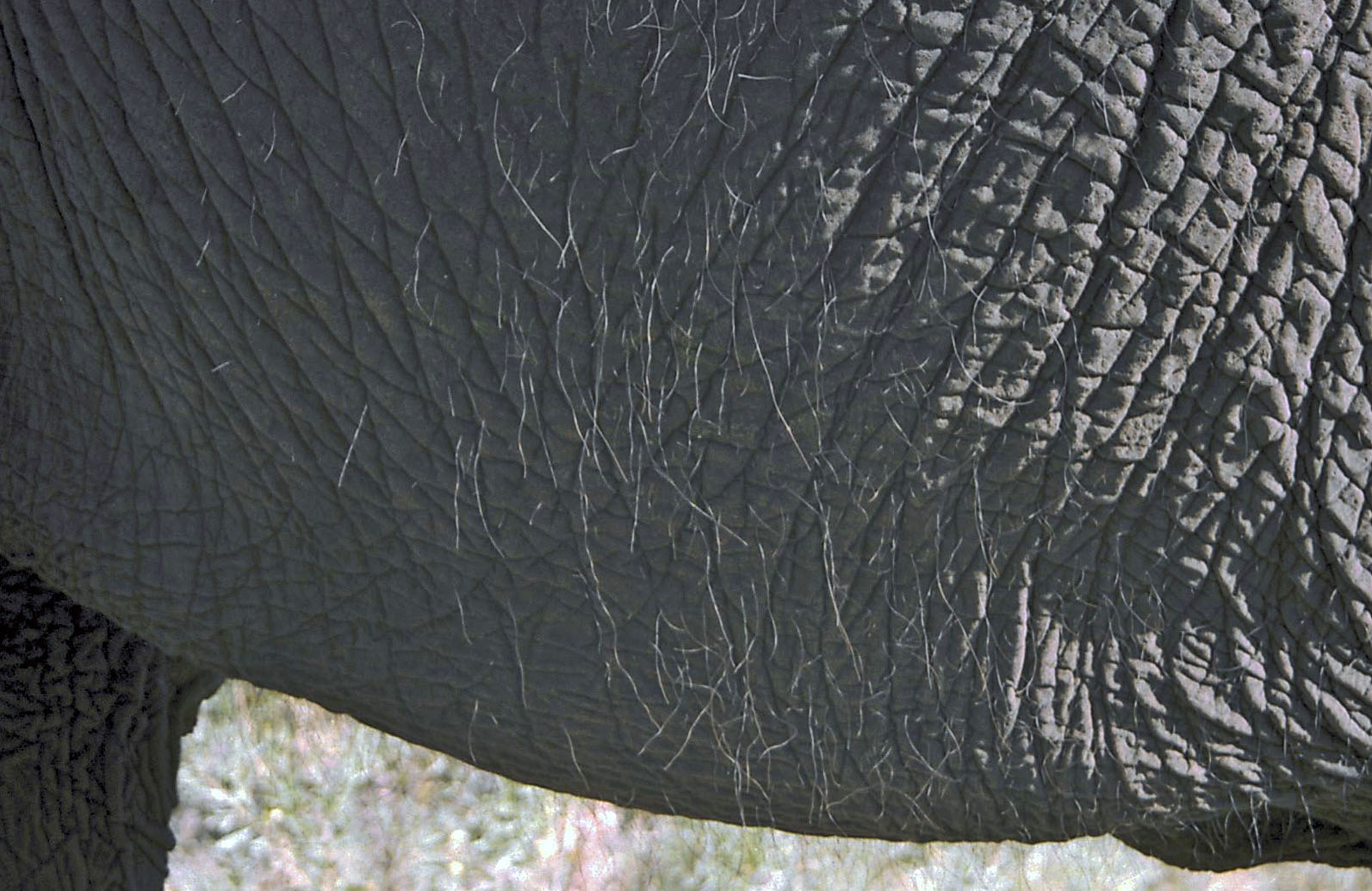
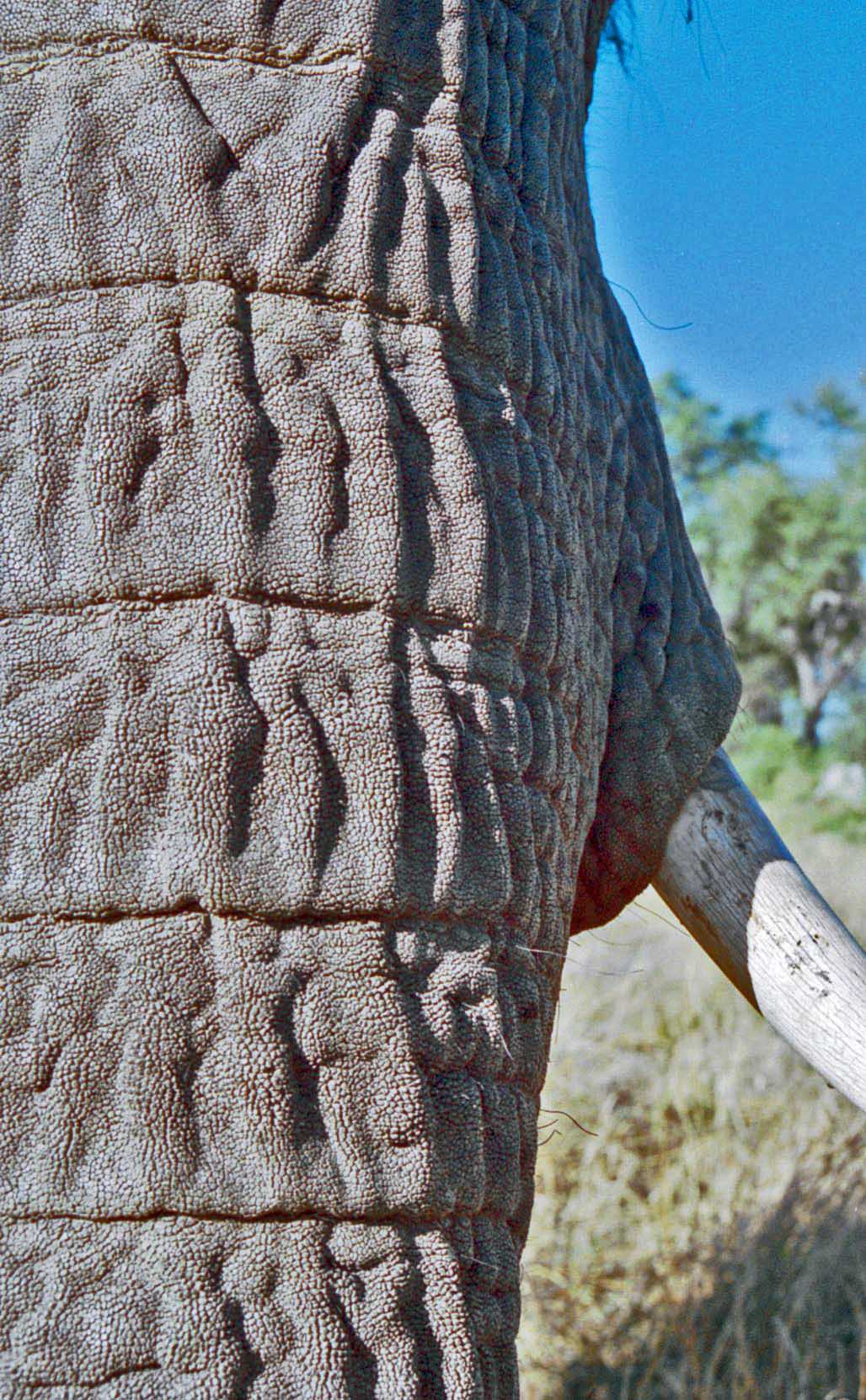
A stray hair against a blue sky, the tips of eyelashes, hair around tusk, and on trunk. Wiry hair, soft hair. African elephants are surprisingly hairy, especially when you’re this close.






 ABOUT ELEPHANTS