
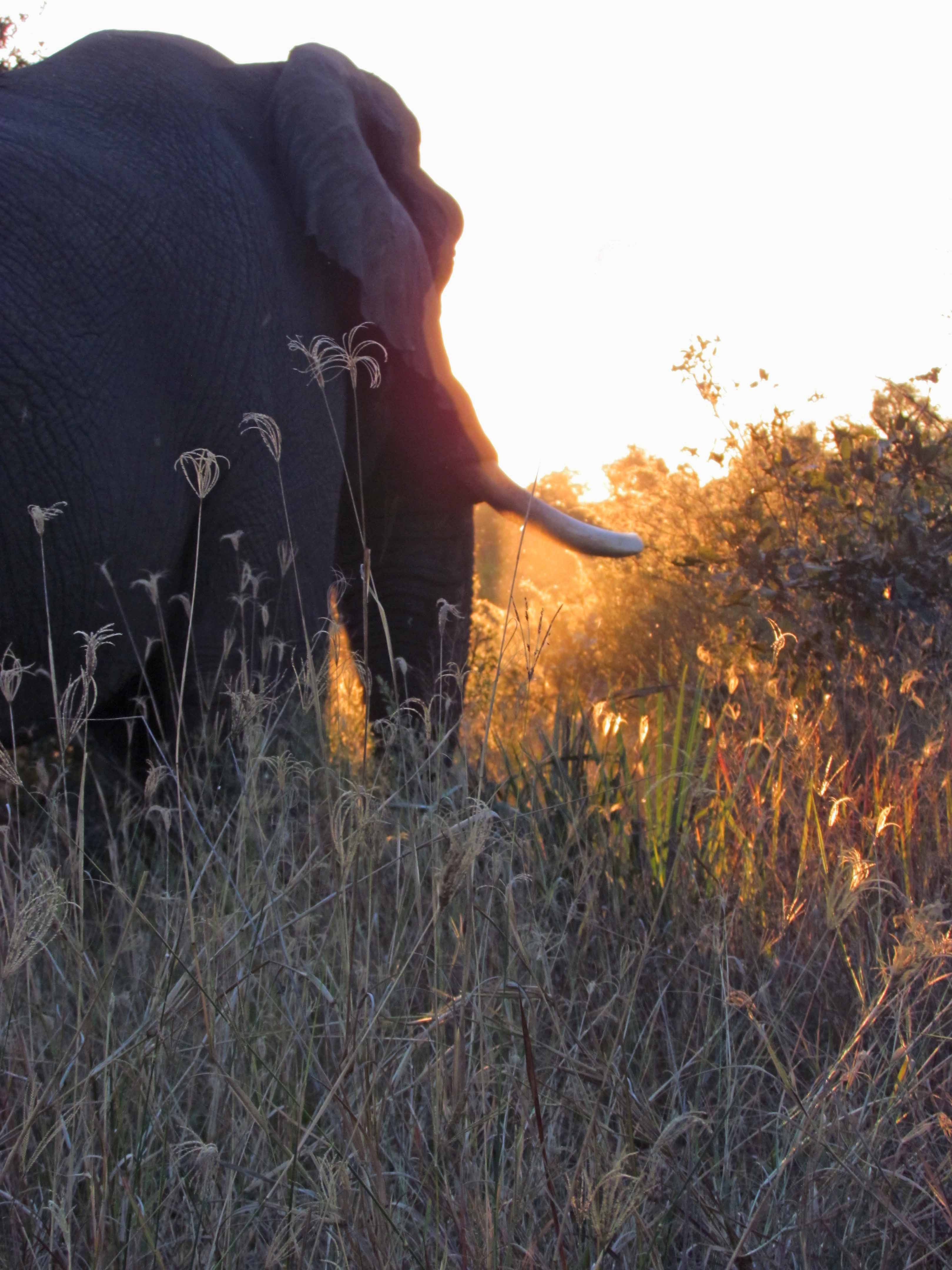
I’ll be gone for awhile, but here’s a very lovely elephant to watch over you. Our house sitter isn’t “into” elephants, but I promise to try and reply to comments while I’m on the road.

I’ll be gone for awhile, but here’s a very lovely elephant to watch over you. Our house sitter isn’t “into” elephants, but I promise to try and reply to comments while I’m on the road.
A shoulder lifts, a leg straightens and accepts weight as the foot splays out. The back leg opposite moves forward, toenails nearly scraping sand, straightens, accepts weight, and the foot splays out. As his body shifts side to side, the bull elephant walks ponderously and gracefully towards me. Even from twelve feet away he fills my entire range of vision.
He trails his trunk, knuckling the ground, leaving smooth marks like a giant side-winding snake. A creature bigger than most monuments is on the move, yet his movements are loose and his pace casual. He reaches out and rubs the bottom of his trunk across a cow elephant’s backbone.
Shyly she turns her head away, her expressive ears folded neatly against her shoulders, a diamond on her forehead.


Jabu’s trunk tip investigates my right boot. Its scent swirls up two seven-foot-long nostrils – nostrils surrounded by nerves, arteries, veins and a staggering array of longitudinal and transverse muscles, the world’s biggest, longest and certainly most flexible olfactory organ.
A trunk is the most useful appendage that ever evolved. Imagine having an arm in place of your nose, an arm long enough to reach to the top of a tree and pluck a single leaf from its crown. Imagine having a nose that could rip, tear, excavate, whack, and blow bubbles. You could steal with your nose, suck on it, or swat, poke and siphon with your nose. You could take a shower, scratch your back, or whistle with it. You could even arm wrestle with your nose.
The seven-foot septum that divides Jabu’s nostrils is made of muscle, not cartilage. It becomes cartilage where his trunk attaches to his skull above his eyes. Thick layers of skin and muscle protect his trunk. It’s impossible for him to break his boneless nose, even when he uses it like a battering ram.
He picks up a wizened palm nut.
I ask Sandi, “How many of the fruits can he hold in his trunk?”
“Would you like a photo of that?” She takes some of the fruit already on the ground and puts them one, by one in the tip of Jabu’s trunk. “Jabu, good boy, Jabu, one more.”
Three, it turns out, but carefully placed so he can still breathe.
“Good, my boy, goooood. Okay Jabu!” Sandi tells him, and he spits out the fruits Whoooof! all at once.
Then he picks them up and gently tosses them, one by one, back to her.
When I was a teenager, I spent summers reading the National Geographics stored in my grandmother’s attic. I disappeared from those dull, never-ending days into a world full of gorillas and man-eating lions, of exotic peoples dressed only in feathers, of crocodiles and snakes and fish that could eat me. From old black-and-white photographs I conjured a fantastical place that mixed the jungles and deserts and continents of the world and labeled it Africa!
In 1996, fresh off a 747, I smelled the air of southern Africa for the first time: soft and warm as clean sheets drying in the sun, mixed with a whiff of smoke and sweet mulch, the mineral scent of sand, hot fur and the dry and dusty trees. I was absolutely convinced I had breathed this scent before, as if my body remembered Africa as the birthplace of my species.
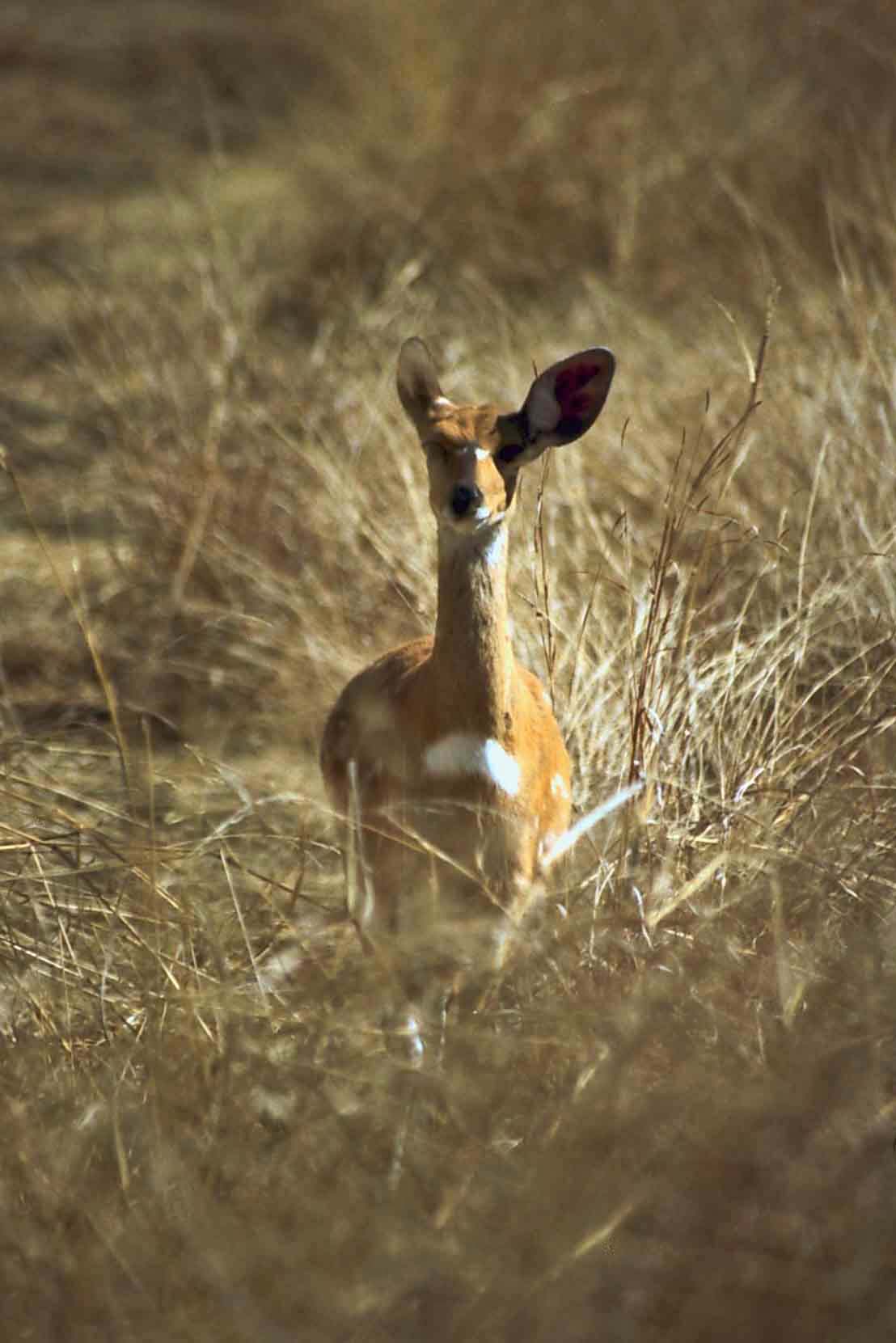
This is the first photo I took of wildlife in Africa: a bushbuck in the small park that surrounds Victoria Falls, on the Zimbabwe side. And in the five trips I’ve taken since then, I’ve never seen another bushbuck. That’s Africa: never the same day twice.
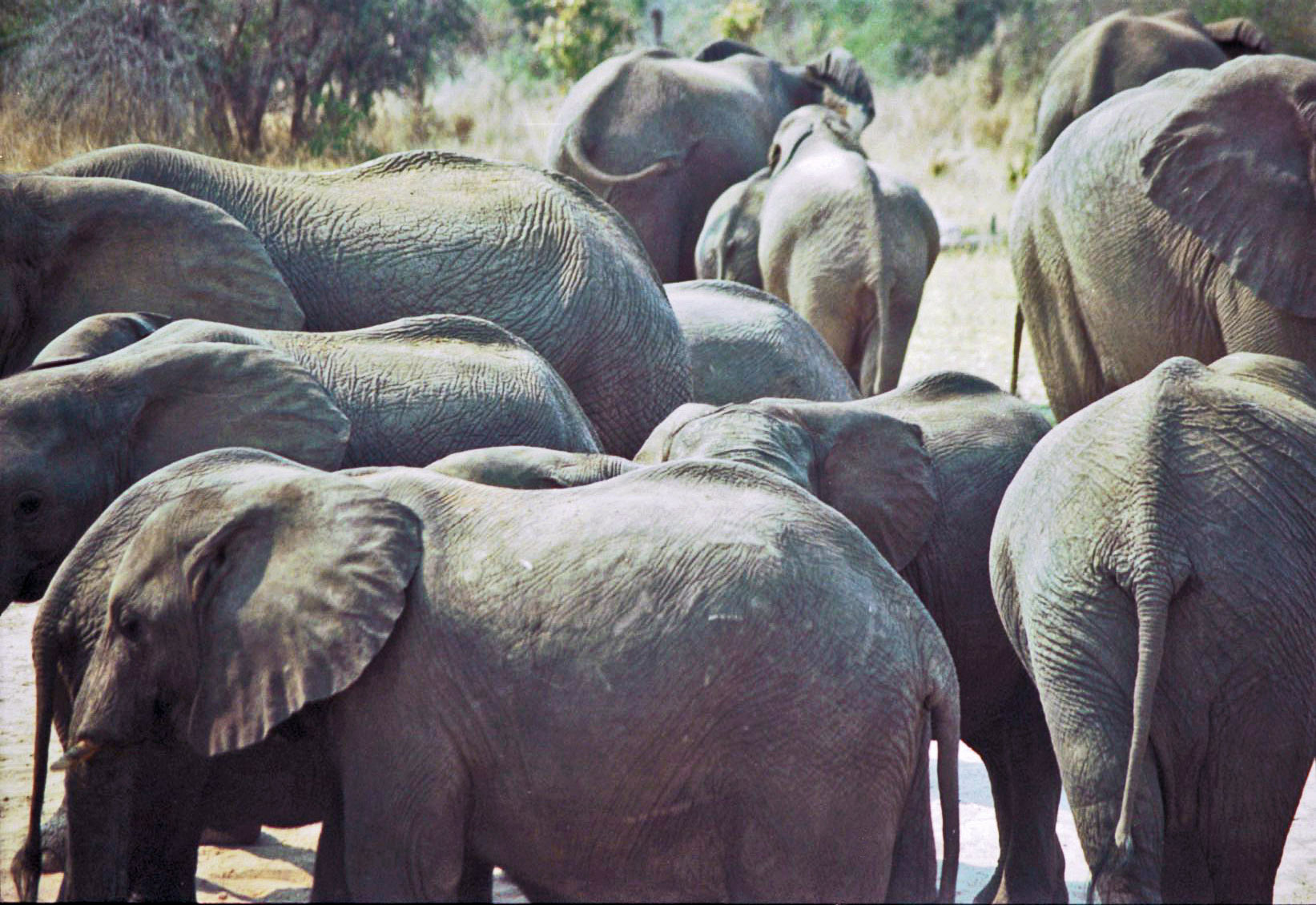
How many are left? With no real protection, with rampant corruption, with a continuous conduit to China, I wonder how many in this scrum are still alive. The thing I love most about this photograph are skin textures: wrinkles and rubs and stains contrasting with the smooth skin on their ears.
African elephant calves develop deciduous tusks called tushes that grow up to five centimeters (two inches) in length and fall out when the elephant is between 6 to 12 months of age. Tushes consist of crown, root and pulp. They provide the foundation and orientation of permanent tusks, which are extensions of an elephant’s only incisor. Permanent tusks grow approximately 17 centimeters (6.7 inches) per year and grow throughout an elephant’s lifetime. This young elephant is about three or four years old. Female tusks grow at a slower rate, so her permanent tusks are just beginning to show.
I’ve never thought of baby teeth as deciduous, like the shed leaves on trees. Who knew that elephants have baby teeth?

Tons of organizations to explore for getting involved at World Elephant Day.
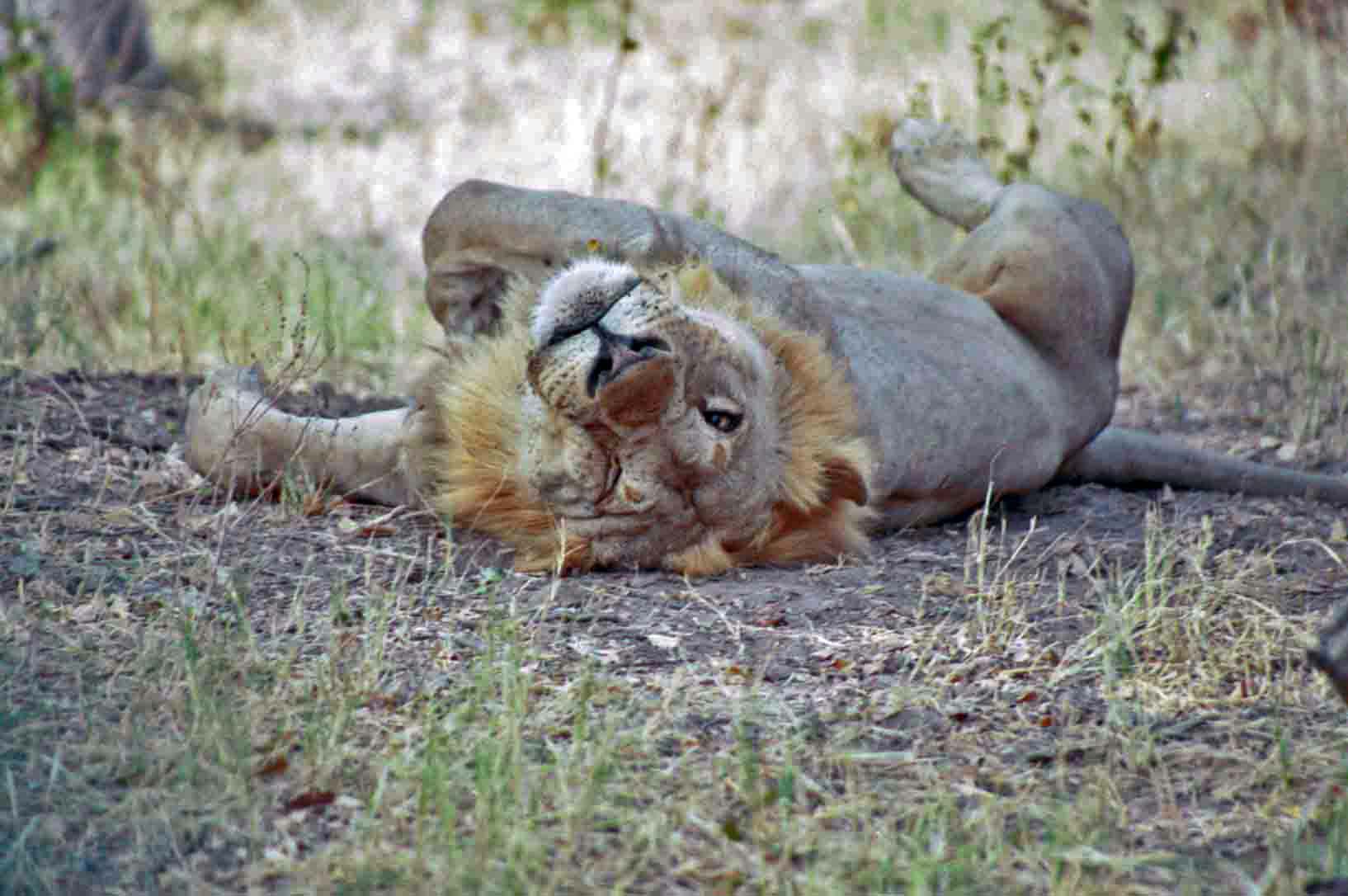
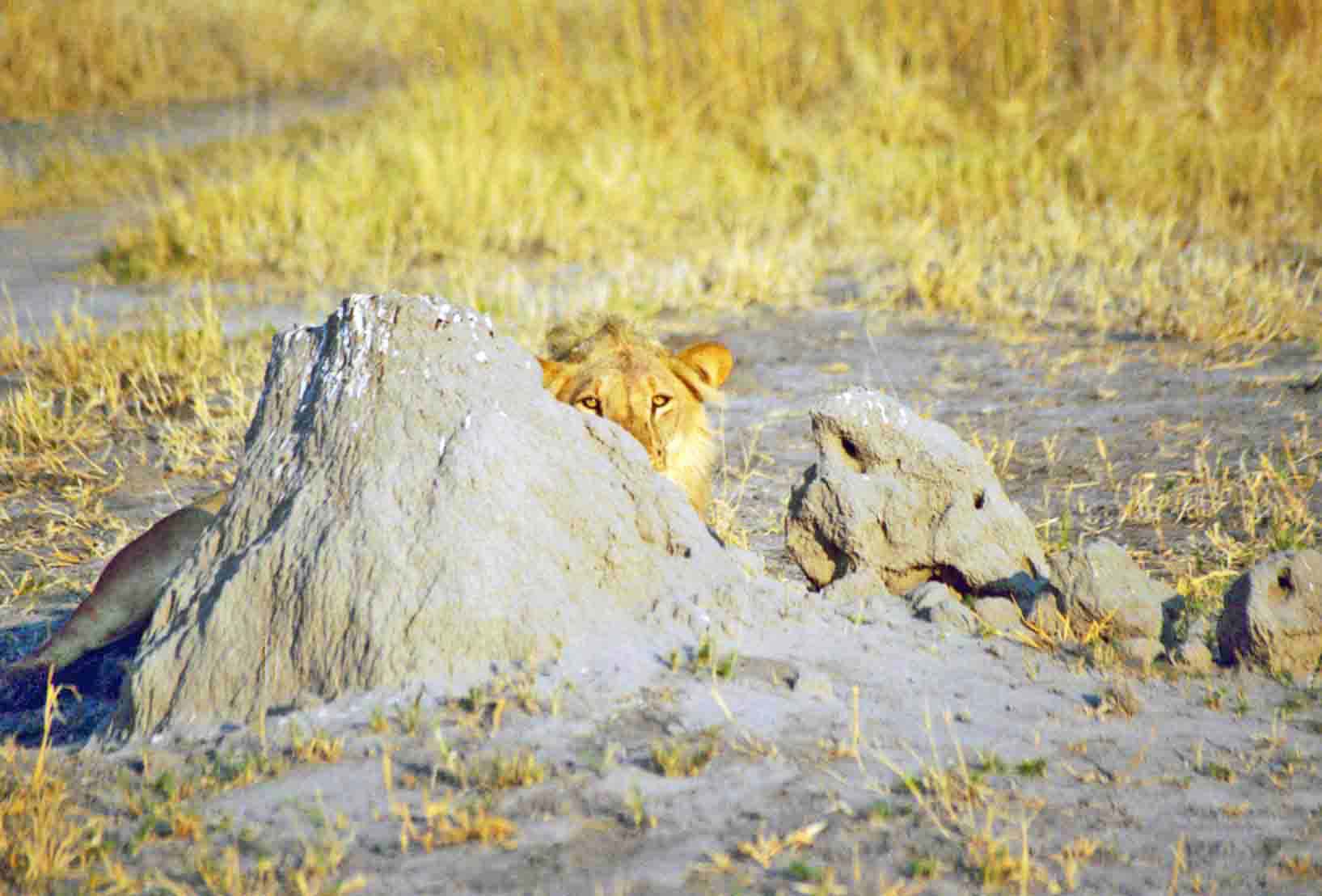
In support of World Lion Day: my favorite photograph of a lion, keeping one eye on us. Lions are increasingly under threat, mostly from habitat loss, which is a fancy way of saying that the human world is closing in upon them. Here is a link to some absolutely spectacular photos and important websites: World Lion Day
Here is my favorite photograph of a male lion, taken in the Khwai area of Botswana. I think he was hoping, as he hid behind an eroded termite mound, that we couldn’t see him. Of the five subspecies left in the wild, this male is a member of the Southwest African lion, (Panthera leo bleyenbergi), the same species as Cecil, the Zimbabwean lion whose death as created an international uproar. This subspecies, also known as the Katanga lion, is the largest of all lion types and can be found in Namibia, Angola, Zaire, and Zambia, as well as Botswana and Zimbabwe.
There are only 20,000 lions left in the wild. Of the eight original species known in the Holocene, the age of man, one is extinct, 2 are critically endangered, and one lives on in captivity only: the Addis Ababa lion. Of the five remaining species that make up most of their population, I’ve been privileged to observe three: the Masai lion in Kenya and Tanzania; the Southwest African lion in Botswana, Namibia, Zimbabwe and Zambia; and the Transvaal lion, found in and around Kruger National Park in South Africa. I’ll post a photos of them until World Lion Day.
This Masai lion has a wonderful mane, marking him as an older lion. Male Masai lions have a great range of mane types, from nonexistent to luxurious, from red to black. A Masai male lion grows up to 9 feet long. The Ghost and the Darkness, the famous lions who killed 35 railroad workers in 1848 were Tsavo lions, a maneless variation of the Masai lion with a reputation for aggressiveness.

 ABOUT ELEPHANTS