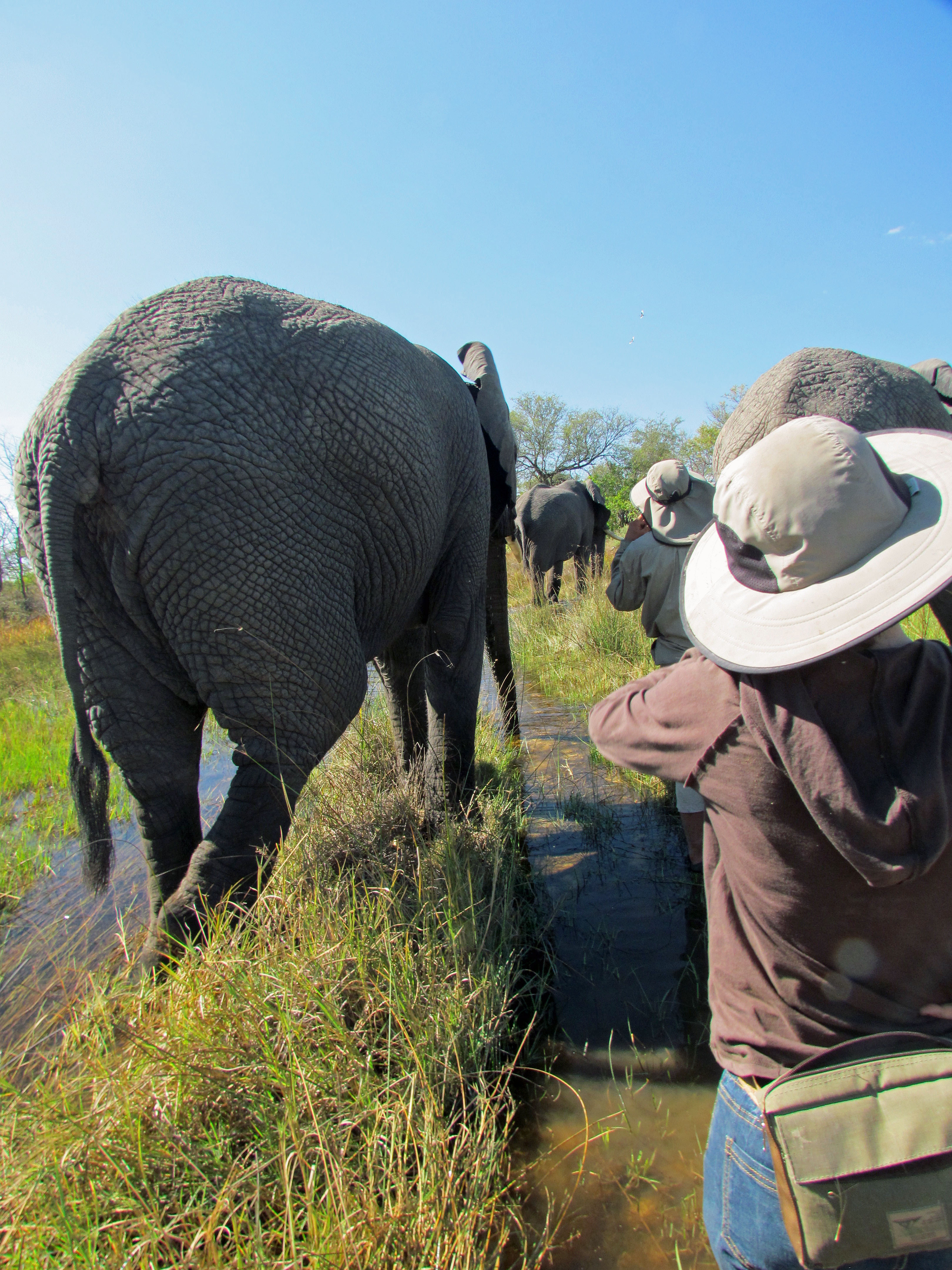
I’ve already leaned too far forward on my right foot, anticipating the left will follow. But the clog on that foot is mired in the Okavango muck, cemented in place, my balance irreversibly committed in the wrong direction.
What happens next is a slow-motion twist to my right, as I go down in thigh-high brown water and ooze, down into decayed leaf litter, down into a mat of decomposed anaerobic slime.
My right arm drops to cushion my fall and my left arm shoots up, holding my brand-new camera above my head – the camera purchased just for this trip to Africa.
I create primary and secondary waves as my hip and shoulder enter a backwater swamp of the Okavango. The waves push against a small clump of reeds. Elephant dung floats by. A brackish, decayed scent rises.
The sun hasn’t moved more than a tick in the blue Botswana sky.
Just before The Fall
I come to rest against the reeds – all of my right side invisibly encased in muck. But my left arm is dry, above the water, my camera clutched at the end of it like a trophy.
Sandi is already splashing in my direction. She tugs on my dry arm.
“Let me help you up,” she offers.
“No, just take the camera.”
She places its strap around her neck.
I roll against the reeds and use both hands to push myself upright. I reach down, and blindly find my shoe. I need both hands to pry it out of the muck.
“I think I’m going to have to go barefoot,” and flinch at a secondary thought. “I hope there aren’t any lead wood thorns.” Two-inches long, strong as steel, straight as nails – they’d go right through the bottom of my feet.
“I’ll go first,” Sandi says. Her sandals aren’t sticking in the ooze.
Oddly enough, the muck at the bottom of the swamp is soft as a pillow to my bare feet. It wraps around my ankles and squishes up between my toes. I place each foot carefully, not committing my weight until it’s safe to do so.
It takes forever to cross. Doug and the elephants patiently wait for us on the opposite side.
When we reach the far bank I put my clogs back on. Sandi hands me my camera.
“We’ll put your clothes in the washing machine tonight.”
“Washing machine?”
“We brought one into camp last year.”
“Really? How’d you do that?”
“On the back of the hay truck.”
I look down at my pants and shirt, both mottled by muck.
As the Air Botswana flight descended into Maun, I looked out the window and gasped. The Okavango floods had already reached the Thamalakane River on the outskirts of town! Ponds, lagoons, lakes and meandering channels filled the landscape to the horizon. The last time I visited, in 2007, Maun sat in the middle of a dusty desert. Now blue waters surrounded it, sparkling in the sunlight.
In the terminal stood a small woman with a permanent smile, bright brown eyes and a “Mack Air” sign. As Grace sorted scrums of passengers onto various flights out into the Delta she said, “Wait for me over there.” Throughout a confusion of bags and jetlagged tourists, she never lost her smile.
I followed her to the Mack Air offices across the street from the terminal. “Tea?” she queried. Over the next several hours the office staff must have offered tea at least a dozen times – unfailingly polite through an amazing amount of chaos. One of their charter aircraft had lost radio contact and they were sending messages every plane in the air over the Delta, hoping for a visual sighting. Finally everyone heaved a huge sigh of relief when one of the ground crew reported that the airplane just landed in Maun. But the relief was only temporary – the aircraft’s radio couldn’t be fixed.
Now the remaining available aircraft had to be scrambled into new flights. “Tea?” “No, thank you.” One of Mack Air’s pilots wandered in. “I can take the 206.” And off he went to pick up tourists at one of the camps. “Two airstrips flooded overnight,” one of the office staff informed me. “Tea?” “No, thank you.” Grace smiled.
Another pilot wandered in, conferred with the office manager in a low voice, and wandered out. “Tea?” “No, thank you.” Computer screens flooded with revised schedules. The radio carried constant conversations between the office and pilots scattered over the Delta. The office staff leaned into their screens, several chewing gum in that constant motion that concentration brings to jaw movement. “Cheryl Merrill?” asked the receptionist, “Where is she?”
All eyes, except hers swiveled toward me. “Oh,” she said, following their looks, her face flushing into a luminous red-brown. She giggled into her hands as I waved to her. “Don’t worry, we’ll find you a flight,” Grace said. “It will take a while. Tea?”
I wandered over to the wall with pilot pictures. Mack Air is an independent charter company based in Maun, ferrying passengers and freight all over the Delta. The profiles of their eighteen pilots pretty much covered one wall. Seven are originally from South Africa, three from Botswana, and the rest from countries as diverse as New Zealand and Mauritius. One photograph stood out: Hazel Esitile, who began flying for Mack Air in February of 2011. She’s quoted as saying, “What a man can do, a woman can do too!” I secretly began to hope Hazel will be my pilot.
But it was Paul, choosing bush flying “as my mid-life crisis,” who escorted me out to a Cessna 210 Centurion. Trying for some chatty small talk, I remarked, “My husband used to own a 172.” Paul squinted at me. “Hate those. Had to train in them. No power.” He opened the cabin door. “Want to sit up front?”
“Of course!”
I crawled over the pilot’s seat and buckled into the “copilot’s” seat, which is simply another passenger spot in small aircraft.
“It’s a little bumpy out there today,” Paul said. “Did they tell you we’re flying to Gunn’s Camp?”
“No,” I said.
“They’re working on Stanley’s airstrip. Somebody will pick you up.”
“Okay,” I said.
Small charter aircraft fly low and slow over the Delta – a perfect vantage point to inspect the current Okavango Flood. In 2011, the Okavango reached record levels, pushed by increased rain in both the Delta and Angola (headwaters of the Okavango system) and large amounts of residual ground water from the 2009 and 2010 floods. The “dry” cycle of the Delta lasted between 1985 and 2005; now it is assumed that the “wet” cycle will last another ten to twelve years. Where extensive game drives were once possible, now boats take their place. I marveled at how much land was underwater.
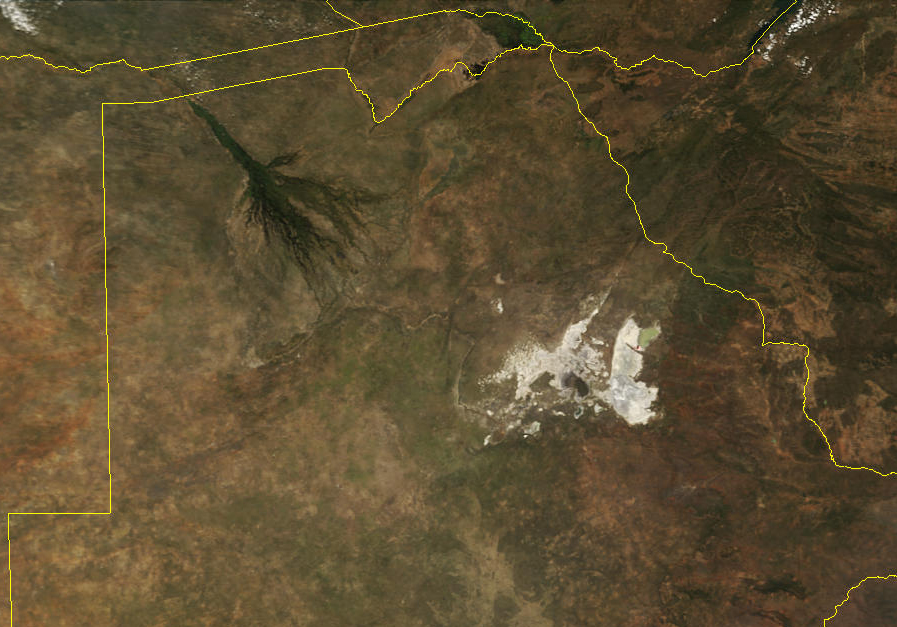
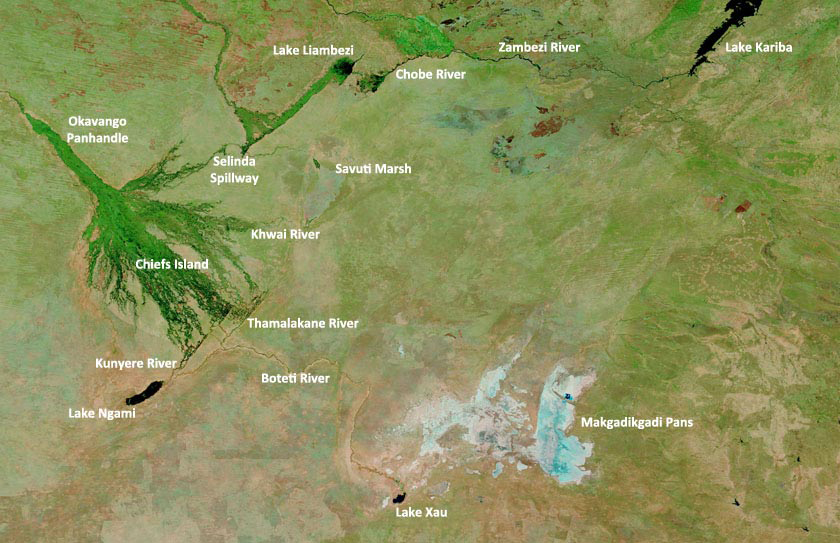
The difference from space:
A dry year in the Delta
A wet year.
For the first time in 29 years, the Savuti Channel was flooded, the Savuti Marsh swelled with birds and water seeped south into the desert pans.
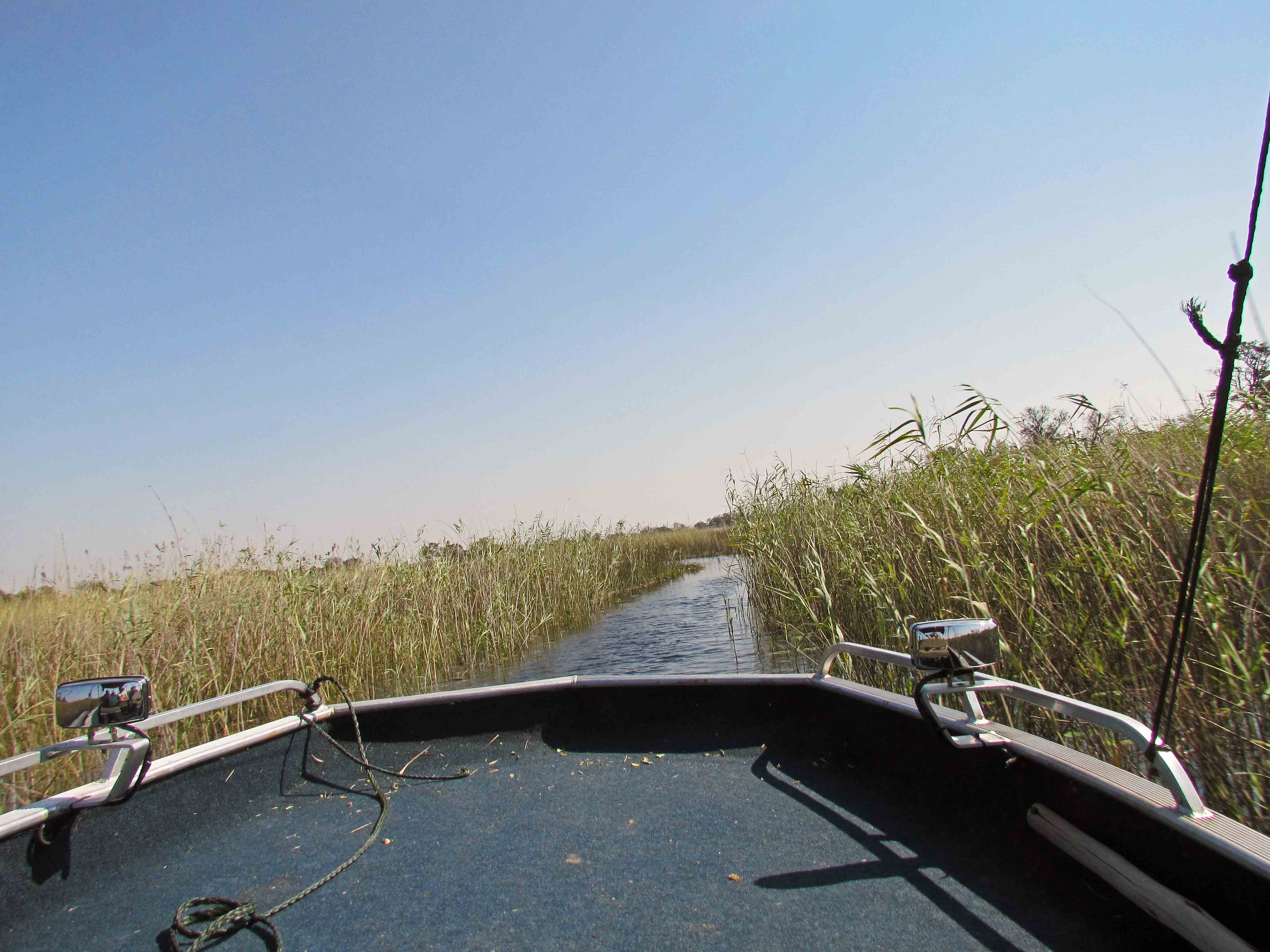
And so, rather than a 15-minute drive to Stanley’s from their airport, I took an hour-long trip down the Boro River and into meandering side channels that would have me instantly lost.
Reflected in two mirrors as we pushed through a side channel.
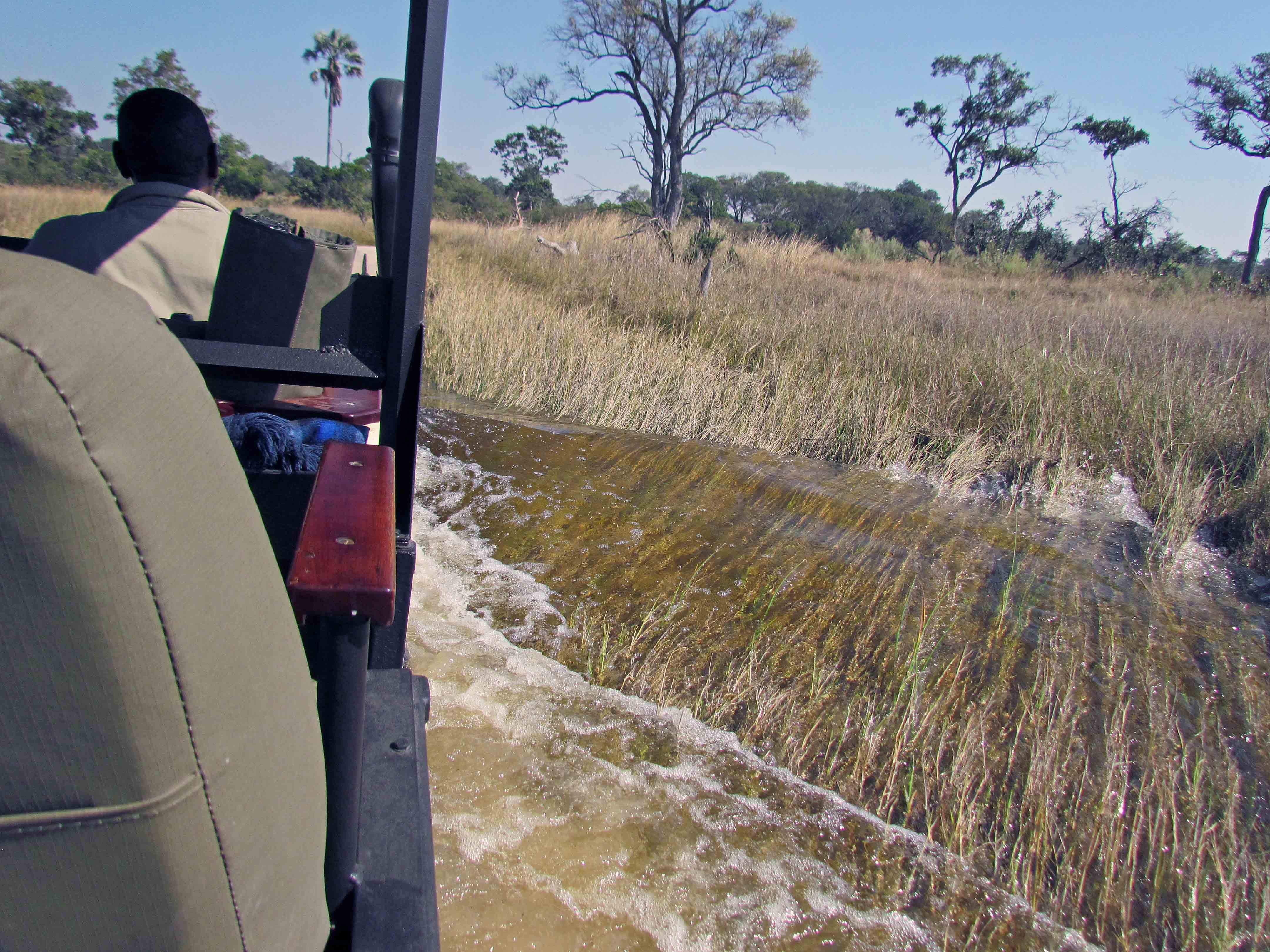
And, because all of Stanley’s vehicles were out on afternoon game drives, one vehicle at Baine’s (Stanley’s sister camp) was commandeered to transport me at Doug and Sandi’s place. The flood had marooned the Groves’s vehicle in Maun.
We forded rivers that were once roads.
Making waves
Sandi met me at their kitchen shelter. “Doug and the Trio are headed out to forage. Want to join us or settle in?”
Are you kidding? Eight hours after boarding an aircraft in Johannesburg, I was transported to this:
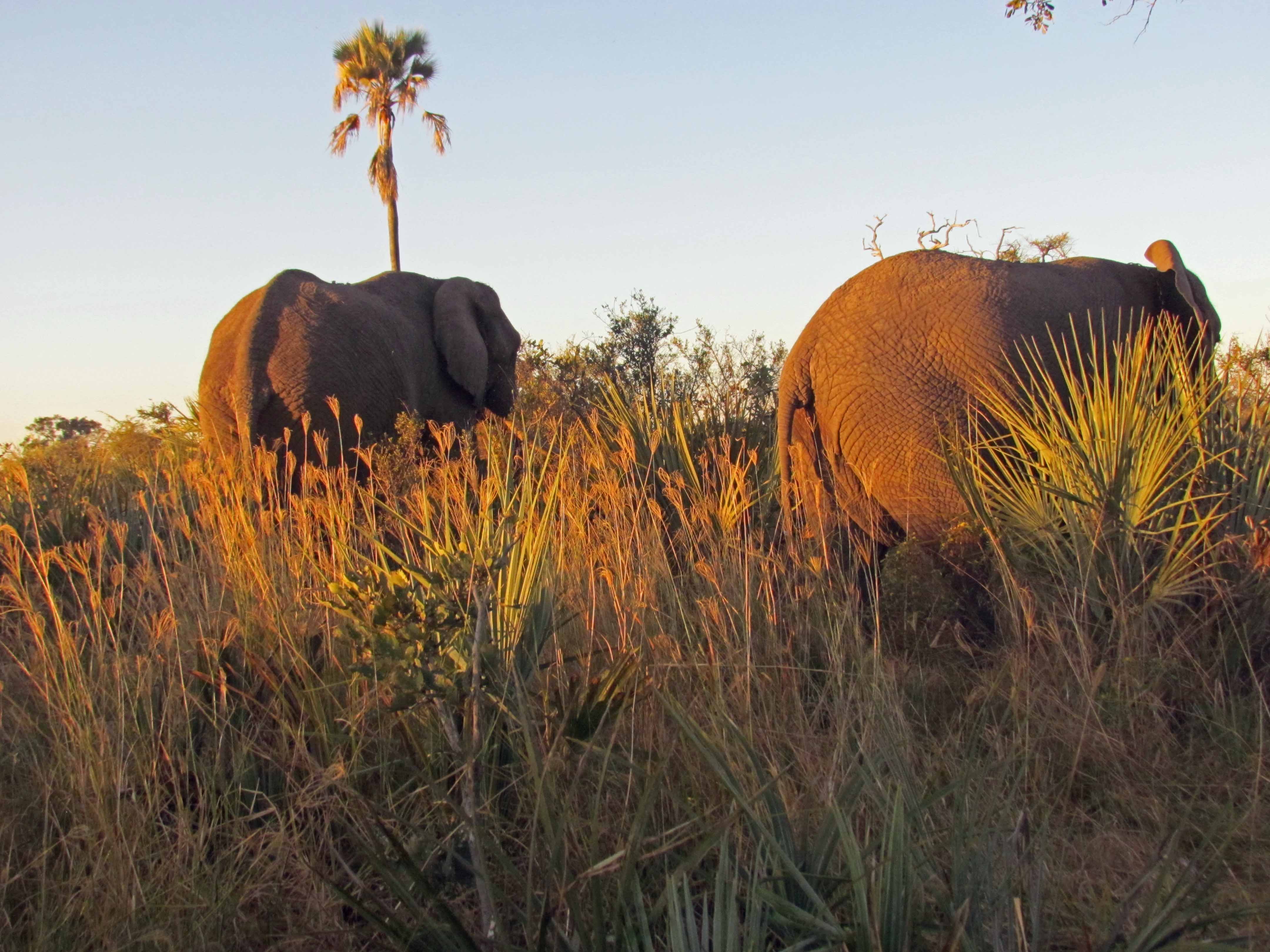
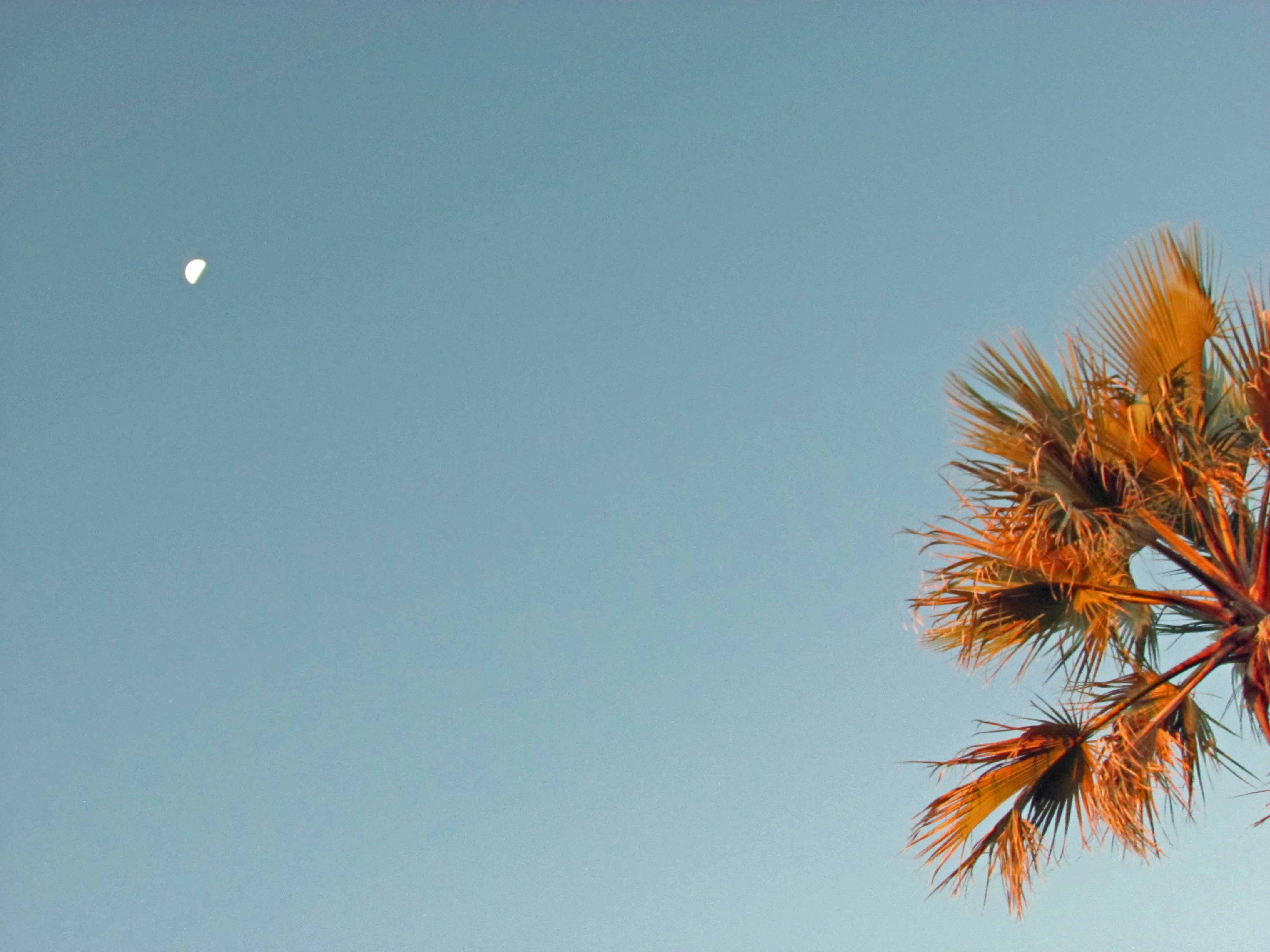
Sundown with Jabu and ThembiHalf moon at sundown
And several hours later, after dark, we walked back under a half moon. I had forgotten my flashlight, but I could still follow three huge silhouettes against the stars. I was back in Africa!
PS: The NASA images above were taken by MODIS (or Moderate Resolution Imaging Spectroradiometer) – a key instrument aboard the Terra and Aqua satellites. According to NASA, “Terra’s orbit around the Earth passes from north to south across the equator in the morning, while Aqua passes south to north over the equator in the afternoon. Their orbits view the entire Earth’s surface every 1 to 2 days. The data they gather will hopefully improve the understanding of global dynamics and processes occurring on the land, in the oceans, and in the lower atmosphere. MODIS plays a vital role in the development of global Earth models able to predict global change accurately enough to assist policy makers to make sound decisions concerning the protection of our environment.” (Fingers crossed that they do.)
Adventum Magazine has just published my essay about tracking lions in South Africa! You can read it digitally at: http://www.adventummagazine.com/issue3igital.html or follow the link on the side of this page. (Spoiler alert: we found them!)
So many tales to tell: (1) the flooded Okavango Delta, water where there was sand last time I visited; (2) walking with elephants under starlight and a half moon (without a flashlight); (3) hyenas in the kitchen; (4) the closest I’ve ever gotten to a snake (!); (5) a leopard for my friend’s birthday present; (5) lions kill a baby hippo; (6) basic tents and luxurious chalets; (7) what not to do if you’re self-driving through the Moremi Game Reserve (hint: DO NOT rely on your GPS); (8) wild dogs, wild dogs and more wild dogs; (9) the rarest giraffes in the world; (10) hippos, hippos and more hippos; (11) a leopard hunts a male impala; (12) an absolutely wonderful stay with Sandi, Doug, Jabu, Morula and Thembi – and many, many more. Stay tuned!
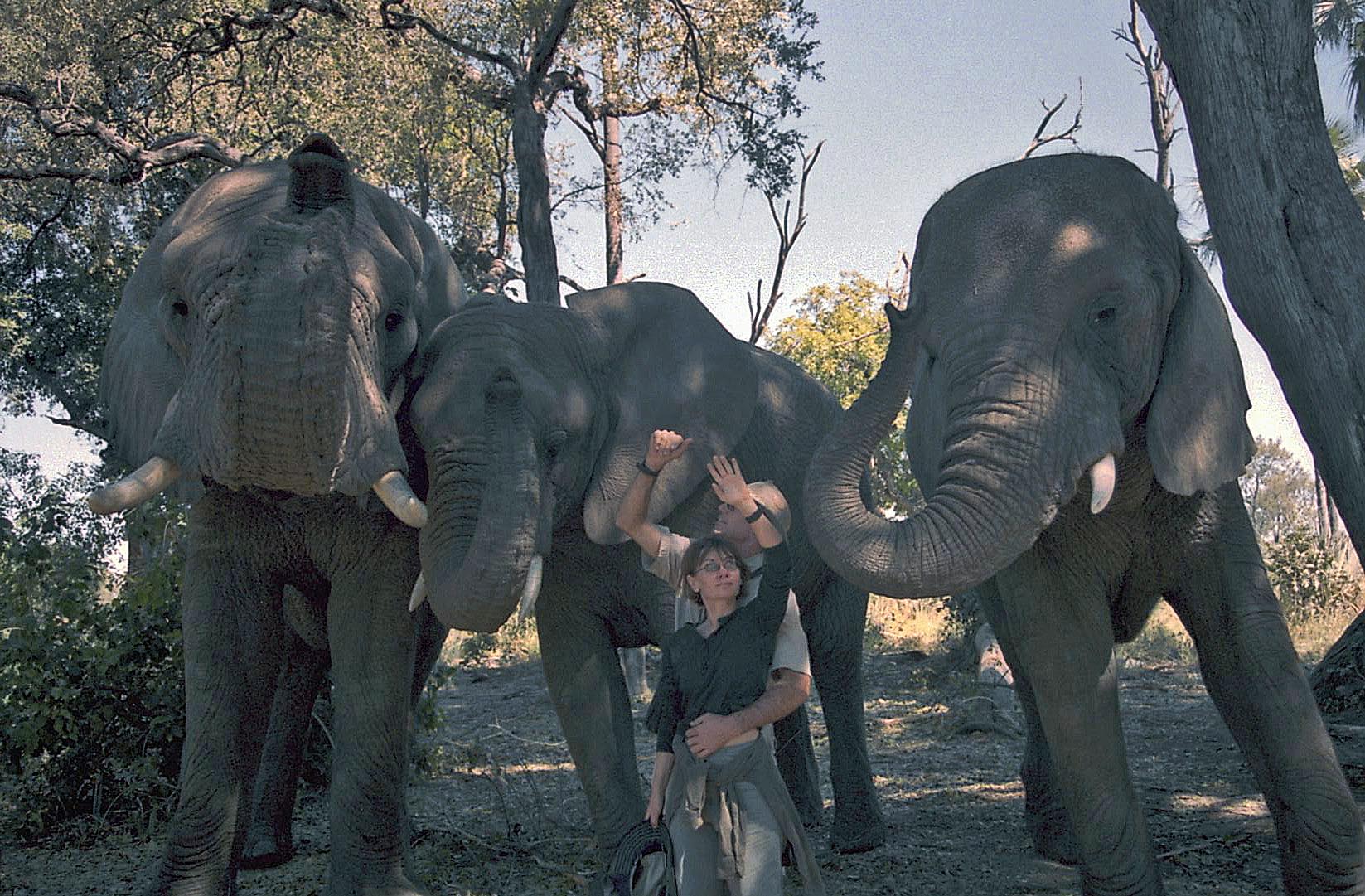
In 2007, this was my last glimpse of Doug and Sandi, and their three incredible elephants. Tomorrow I get on an airplane and begin a long two-day journey to return to the Okavango Delta in Botswana, to turn from “Goodbye,” to “Hello.”
Whoosh-thwack . . . Whoosh-thwack . . .Whoosh-thwack. . . . As Morula’s ears hit her shoulder, they sound like heavy canvas sails snapping in a high wind.
Insects sizzle in the underbrush. A bleating warbler cries out Help-me, Help-me, Help-me, Help-me! The trickling call of a coucal drops like large beads into an empty wooden bucket: Doo-doo-doo-doo-doo-doo . . . doo. . . doo . . . doo. . Francolins scatter into the underbrush, a tiny mob of cackling maniacs.
Standing on a termite mound, face-to-trunk with an elephant, I place the palm of my hand against her fluttering forehead, a forehead as cool and rough as tree bark. Morula is burbling, a contented rumble that resonates like water gurgling down a hollow pipe.
She is also making sounds I can feel, but not hear. Right at the top of her trunk, where her bulging nasal passage enters her skull, her skin pulses beneath my hand, vibrations that reverberate in my chest cavity, drum against my heart. Muscular ground swells of sounds roll full and luxuriously out in the bush, bumping into hippos, giraffes, zebras, lions, hyenas, birds, snakes and tsetse flies.
But it is only elephants who raise their heads and listen.
Every desert, river, forest or sea on earth has a mix of sounds biological in origin – birds, mammals, fish – mingled with non-biological sounds – wind, rain, waves, or the blanketing silence of snow. The symphony of a place is dependent upon night, day, weather, time of year and the creatures within it. John Muir always said he could tell exactly where he was in the Sierra Nevadas just by the pine needle music. Few of us are that familiar with our home ground.
Every animal’s voice has its own aural niche within its home ground. When an ecosystem is altered, when trees are cut, ponds drained, soils covered with concrete, and structures built, the orchestra of the land and its chorus of animal voices are silenced.
Wild sounds disappear as fast as habitats disappear.
Bernie Krause, an American bio-accoustician, notes that 25% of the North American natural soundscapes in his archives are now extinct. Habitats that no longer exist. Sounds we will never hear again. Silent summers, silent autumns, silent winters, silent springs.
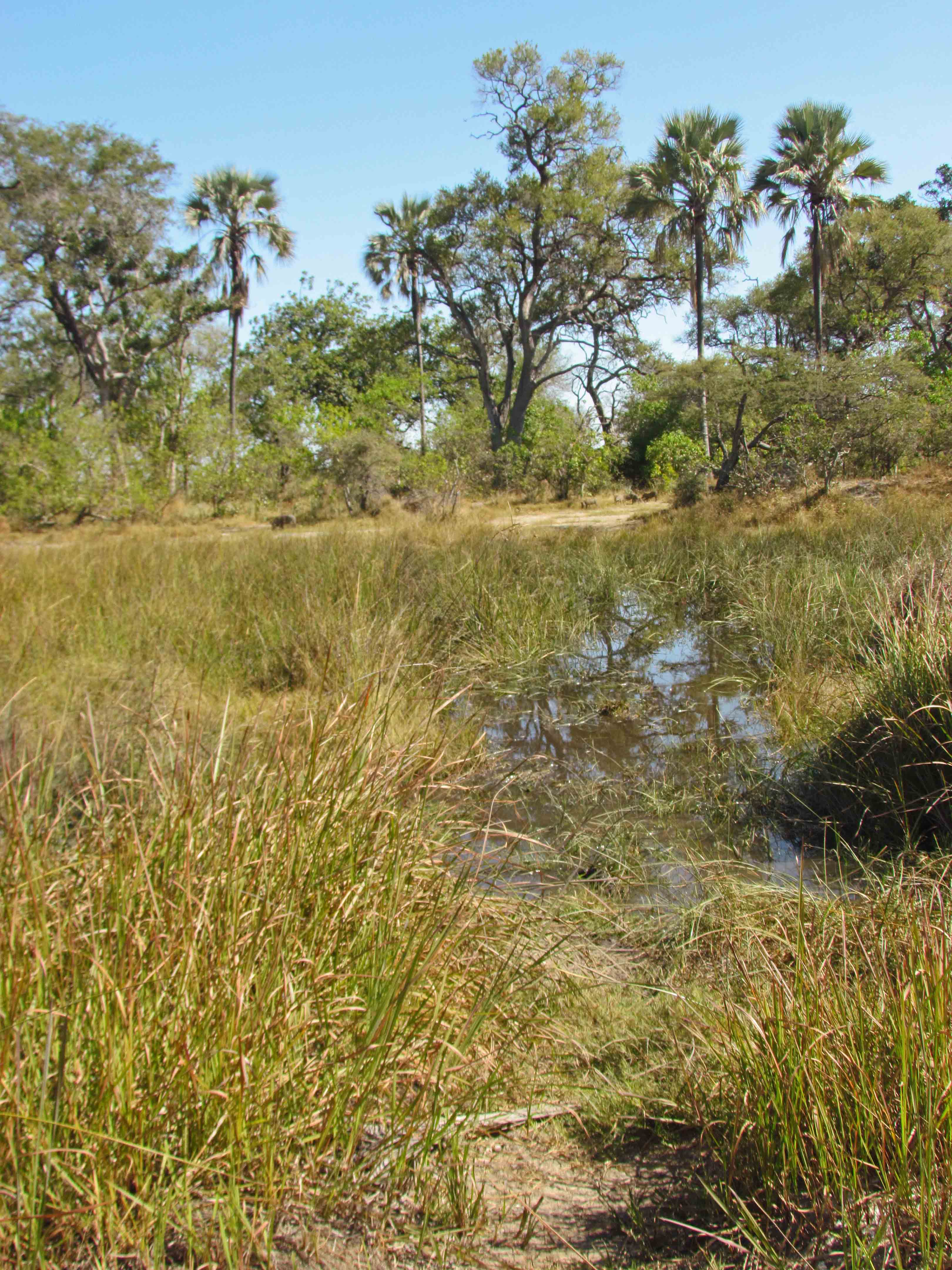
In this part of the Delta, in this season, the soundscape around me is filled with dry cracklings. With crickets who rasp their legs together and listen to each other with ears on their tibias. With rattling grass. With the scrape of our footsteps. With the buzz of small flies seeking moisture at the corners of my eyes.
Those sounds will soon be joined with new animal voices once the Okavango River floods into waiting channels. For Delta inhabitants, the river also serves as a unique measurement of time. Rumor has it, Doug tells me, the river is two weeks away.
When it arrives, the symphony of the Delta changes. The delicate tink-tink, tink-tink of reed frogs will join the rasp of crickets. Hippos will jostle for elbowroom, grunting and burbling like a band of drowning tubas. Wildebeest will question their daily survival from the jaws of lions with overlapped musings: Hmmmmh?/Hmmmh. Hmmmmh?/Hmmmh.
And as fields of grass submerge in the returning river, ground hornbills will stride to and fro in front of the water’s many tongues. Hornbills are satiny, Satan-y black birds, bigger than fattened geese, with inflated air sacs red as bleeding throats, and beaks like a pickaxes – executioners stalking mice and snakes in advance of the tide. Their tympanic calls sound like thumbs rubbed across a kettle drum: Hmmmmph . . . . . . hmph-hmph. Hmmmmph . . . . . . hmph-hmph.
And intersecting each sound, in each season, the quaking air of elephant calls.
Bernie Krause created a new word for the soundscapes of animal voices: “Biophony” – the combination of sounds which living organisms produce in their particular biome. And for each biome, evolutionary complexity reverberates in the music of that particular place. Millions of years condense into the current symphony I hear as I place my hand on an elephant’s forehead. Wind rustles leaves, birds teer, insects zzzzzz, a palm weevil drones by and the skin under my palm flutters on and on. Without the low bass tones of elephants, without their soft rumbling regards, the animal orchestra of the Delta would not be complete.
Morula plucks a branch from one of her favorite snacks, a bush-willow. She holds the stem in her teeth, wraps her trunk from right to left around the branch, and sheers off leaves, top-to-bottom with a single swipe. She drops the branch and transfers the leaves from the curl of her trunk into her mouth.
Morula is right-trunked, as I am right-handed, preferring to grab and wrap from the right. Thembi is also right-trunked, but Jabu’s a lefty.
One of the ways to determine an elephant’s dominant tendencies is to inspect the underside of its trunk for green stains on either the right side or the left. But before you do this, make sure you know the elephant and, more importantly, the elephant knows you.
Morula peels and discards branch after branch. Shredded bushes mark her path. She pauses next to a candle-pod acacia, easily recognizable by its upright seedpods. It reminds me of a giant leafy candelabrum, holding a hundred or more candles in ruffled tiers. Sharp curved thorns protect each pod. Morula strips the acacia of a branch, then puts it in her mouth and eats it, thorns, pods and all.
She sidles close to Doug and curls her trunk against her forehead.
“Those round bumps on her forehead might be an old skin infection,” Doug tells me, “but we really don’t know.”
Morula waves hello
A light breeze feathers the hair in her ears as she stands slightly sideways and nods the tipof her trunk in a tiny Hello. . . Ribbed muscles cross the underside of her trunk. Bristles stick out like the legs of a giant centipede.
There is no other living creature on this planet that has a trunk. If elephants were already extinct, which brave paleontologist would go out on a limb and reconstruct the trunk just from evidence of bony nostrils high on the skull? Who could imagine a nose dangling close to the ground where scents abound? A nose with the ability to pick up a single straw, rip a tree out by its roots, bench-press 600 pounds and untie your shoelaces without you ever noticing?
“Stand here,” Doug commands me.
I obey, my back to an elephant lineup.
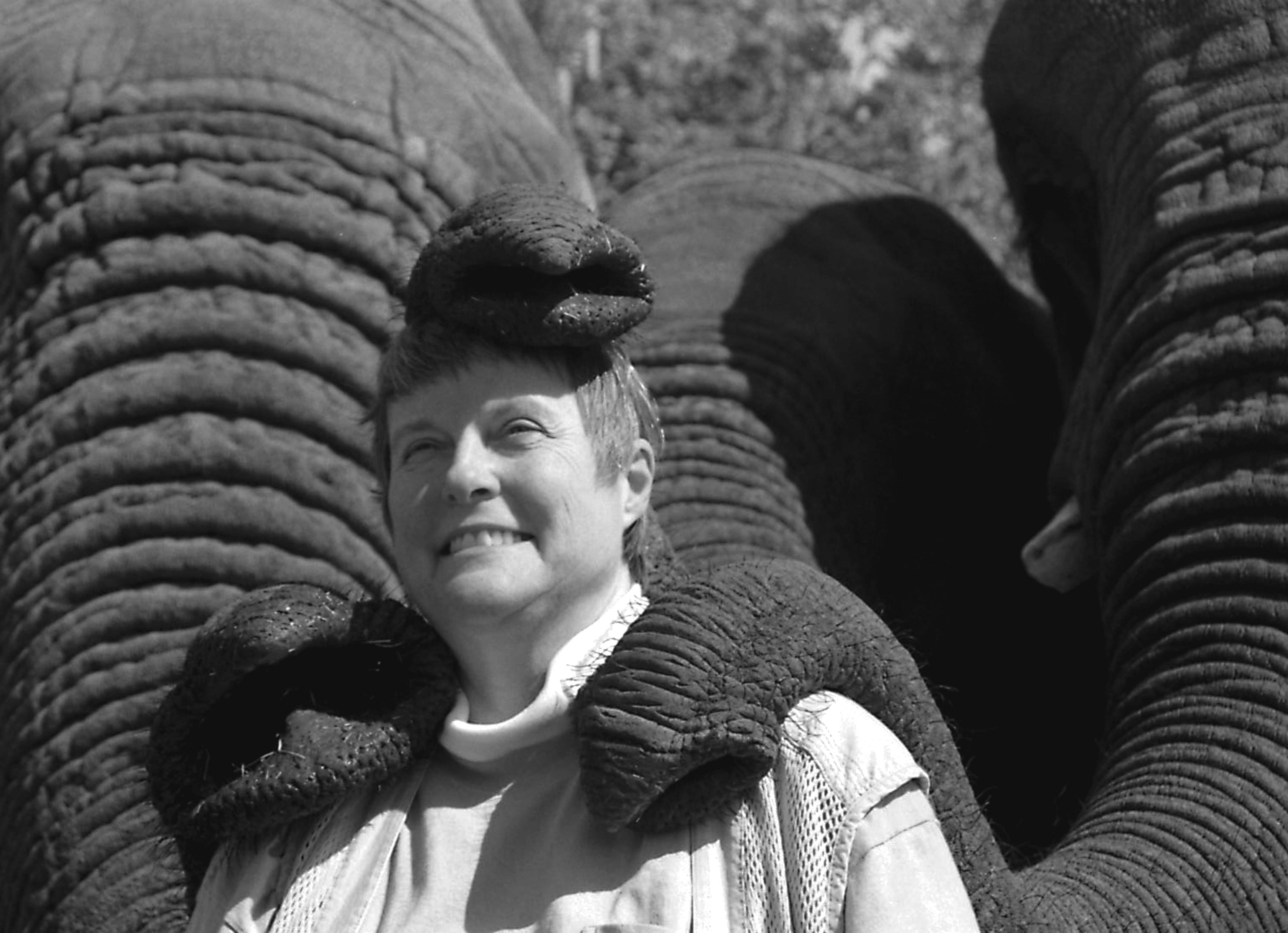
With a little guidance from Doug, Thembi gently places the tip of her trunk on top of my head. It feels like a big beanbag up there, but one that’s warm, wiggly, drooling and breathing.
As Thembi rubs nose slime into my hair, Doug places Jabu’s trunk tip on my right shoulder and then Morula’s on my left.
Jabu has trouble keeping his trunk balanced on such a narrow ledge. He constantly fidgets and pokes my cheek with his bristles. Morula’s trunk drapes over my shoulder like a slack hose with a dripping nozzle. Her runny nose continuously drains to clear out inhaled dust – the common condition of all elephant trunks.
When I look down and to the left, I have a close-up view of the two “fingers” on her trunk. Her top finger is more pointed than the one on the bottom. The shape of it reminds me of a hooded cobra. But perhaps that’s because I think of Morula’s trunk as thinner and “snakier” than Jabu’s spectacular snout.
Which is getting heavier by the moment. With the peripheral vision in my right eye, I see two nostrils dotted with grains of moist sand, nostrils more flesh-colored than gray. Each opening is nearly as wide as the “O” of my mouth.
All three trunk tips, I can attest, are not just sheer weights. They sniff, snorf, squirm, wiggle, inhale and exhale. They create an atmosphere of elephant breath around my head.
Doug lowers my camera and pronounces, “Allll-right.”
The weights disappear. For a few steps I am oddly light, as if walking on the surface of the moon.
There is an elsewhere, somewhere, but it’s not a place I want to be right now.
There is nothing like him on earth. His head alone is more immense than an entire gorilla. Jabu is one hundred times larger than I am. His trunk is larger than I am. A single leg is larger than I am. He fills my entire range of vision.
He reaches out with his trunk and rests it on the ground in front of my boots. The tip of it lifts, opens, inhales my scent.
Jabu & Sandi
Do you recognize her, Jabu?” Sandi asks him. Gently he swings his trunk to tap lightly against Sandi’s shoulder bag.
What’s in there?” I ask.
Sandi shows me a little mound of pellets cupped in her hand. “Pressed alfalfa, wheat bran, salt, ground corn and sunflower hulls.” Elephant candy, immediately vacuumed into Jabu’s trunk and transferred to his mouth.
Jabu turns his head toward me. And You?
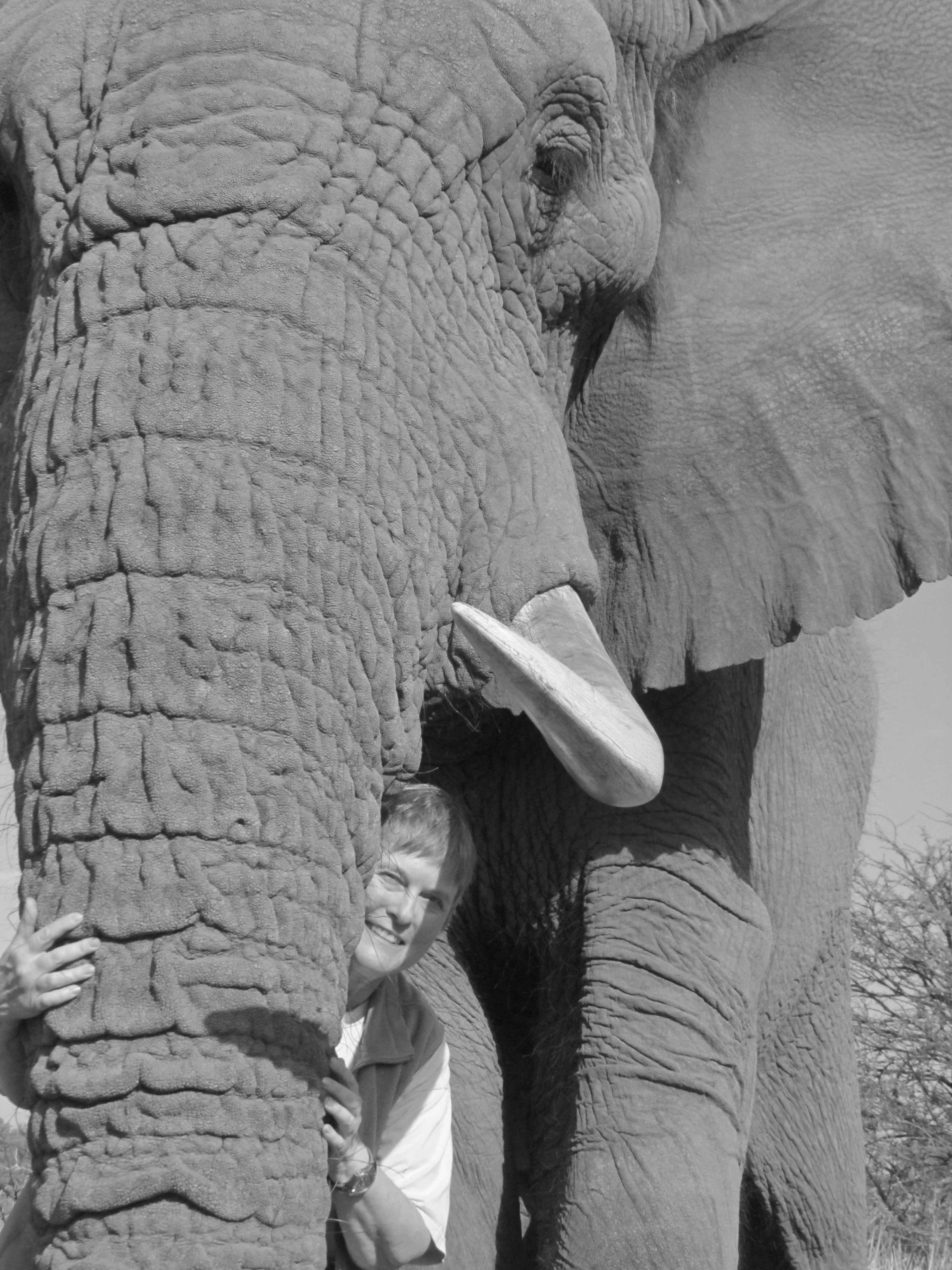
I hold out empty hands. His trunk hovers over them for less than a second and then drops down to rest near my feet. As I run my fingers along his warm tusk he snorts out a huge exhale, CHUFFFFFffffffff.





 ABOUT ELEPHANTS