Posted in Africa, Lions, Nature, Nonfiction, Photography, Travel, Writing

The King of Beasts

No other creatures of the savannah sleep as deeply or as soundly as lions, but after all, lions are the main reason for not sleeping soundly, so this is not surprising. – Elizabeth Marshall Thomas, The Old Way


We’re in a diesel Land Rover, a lovely old relic of earlier safari days thirty, maybe even forty, years ago. It shudders loudly when we stop. Yet they don’t wake up.

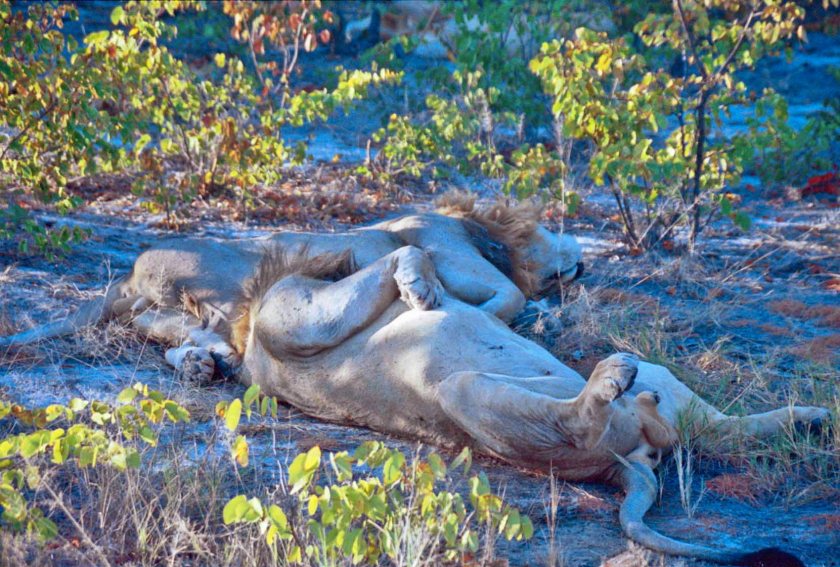
Two male lions sprawl in a cool swath of sand shaded by a thick clump of mopane. Blotches of pale blue rest upon tawny bodies like cloud shadows. It’s late afternoon and the sun is softening into that round light that blurs the edges of things.

After our ears clear of the clatter from the Land Rover, the wary silence whispers in a leaf twitch, in the movement of the sun across the sky. It’s the kind of silence that follows a lion’s roar. Even the birds are hiding.

The lions sleep on their sides. They haven’t eaten lately; their loose hides wrinkle against the ground. Without opening his eyes, the closest rolls onto his back. A small spot of sunlight outlines his high ribcage, deepens his navel.

Odd to think of him as a placental mammal, like humans. Odd to think of our inheritance from the Old Days, when we were afoot with cats. We were armed then with spears and rocks and our ability to make ourselves seem larger than we were, brandishing blazing torches, standing upright together, throwing and screaming.

Lions rarely sleep at night. It is the time of greatest vulnerability for most, and it would be so for us, too, if we were alone, without fire or companionship. But now we are encaged in the old Land Rover, gazing down without fear at two lions asleep on the blue-dappled sand.

There is something else watching. Lying deep in the mopane, camouflaged by leaves, a lioness stares at us. Her eyes are unwavering, ringed in black, with a white patch under each one. Long minutes later she loses interest in us and yawns, revealing the black edges of her gums, a baby-pink tongue, sharp white fangs, and one tooth broken. She looks over at the males.

photograph by Cheryl Merrill

They sleep on. The closest male has the abandoned flung body of a napping child. No, not a child. Not with hard-muscled shoulders and those ripping claws.

Between splayed legs his balls droop in their bags. We notice a tick crawling across one of them, wild creature upon wild creature. Small attacking large. As the tick tickles his scrotum, the tip of the lion’s penis emerges from its furred sheath, begins to drip. His right hind paw lifts and twitches.

Now we know his dreams.
photograph by Cheryl Merrill
Posted in Africa, Birds, Nature, Photography, Travel

A Surf of Birds

Red-billed Queleas

An Excerpt from my book:

On the far side of a large swath of golden grass the air shimmers, full of birds. As if by some sort of avian telepathy, Red-billed queleas rise and fall in curling waves, with wing-beats that sound like distant surf. Wave after wave washes across the clearing in front of us. It’s impossible to distinguish individual birds among the swell and tumble. Dust rises, perfumed by millions of feathers, hundreds of birds, each bird no bigger than my thumb. The flock settles into a tree. The branches of the tree droop as if suddenly laden with snow, then spring back up as the birds roll on.

Posted in Africa, Elephants, Nature, Photography, Travel, Writing

Larger than Life


Here are the first few pages of my manuscript, Larger than Life: Eye to Eye with Elephants.  Having read this much, would you go on reading the rest of the book?  I’d love to have feedback.  Thanks!


photograph by Cheryl Merrill


There is nothing like him on earth. His head alone is more immense than an entire gorilla.

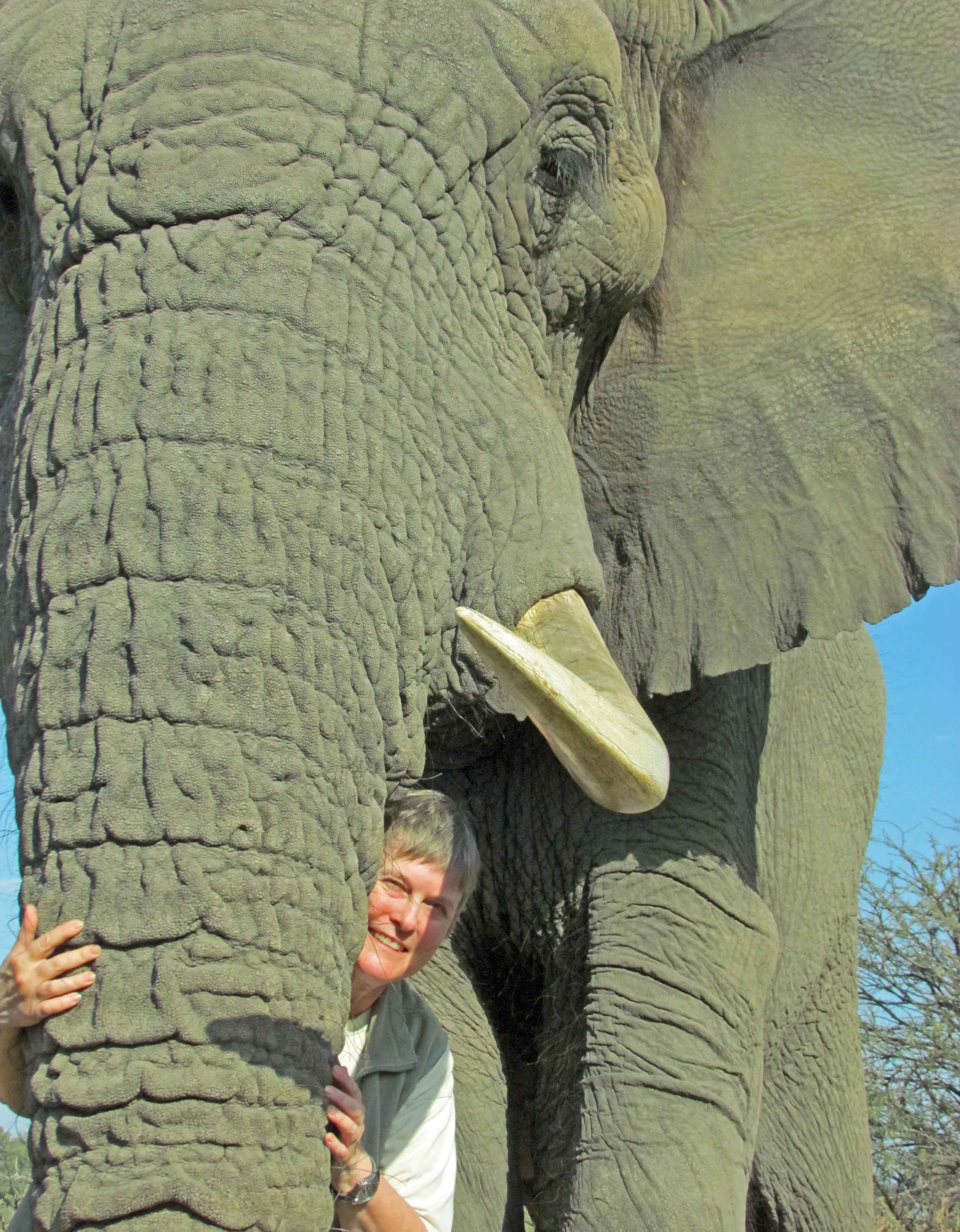
Jabu is one hundred times larger than I am. His trunk is larger than I am. A single leg is larger than I am.

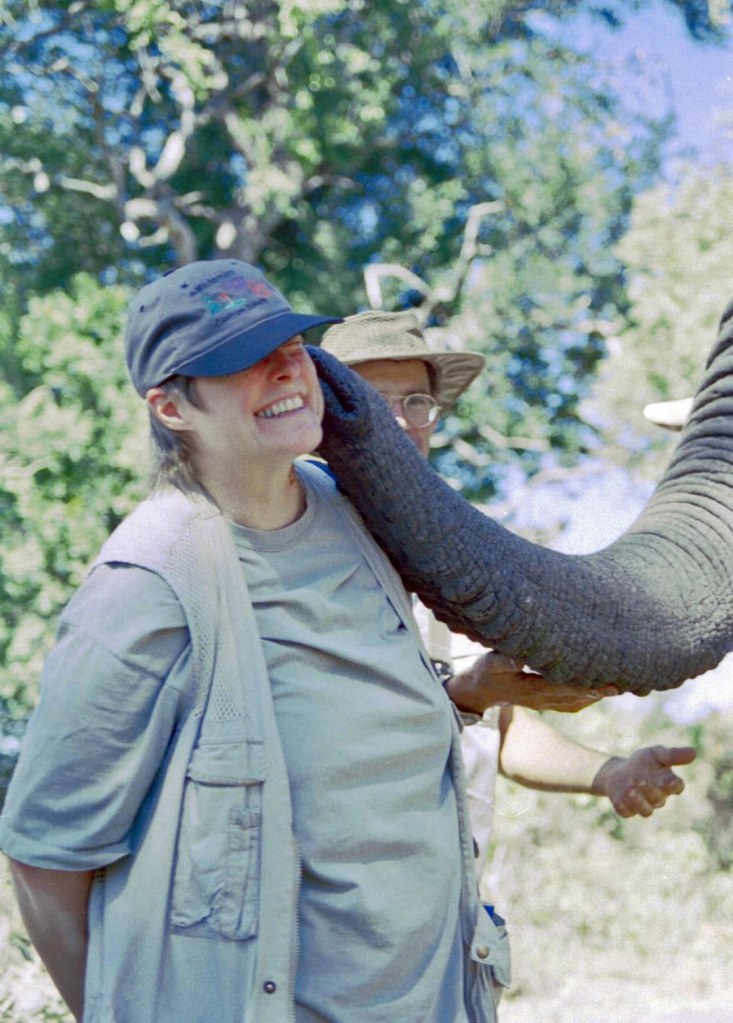
He rests his trunk on the ground and the tip of it lifts, opens, inhales my scent. I reach out and run my fingers along his warm tusk.

Do you recognize me, Jabu, do you?

  *   *   *   *   *

The pilot lets me sit up front.  As his clattering Cessna lifts straight into the sun, we pass a line of small aircraft and a block-and-brick terminal only slightly larger than the Air Botswana 727 parked next to it.  We leave behind a flattened land where the tallest structure is a water tower, where the olive-green scrub spreads as far as can be seen, and where footsteps have no echoes in a country mantled by sand.

We gain altitude and Maun slides under us.  The last town before venturing into Botswana’s Okavango Delta, Maun is an odd frontier mix of trading companies, outfitters, curio shops, supermarkets, cattle in the streets, and an airstrip long enough for daily international flights.

We fly higher.  Haphazard, barely paved roads meander to round stockades – bomas, fenced by thornbush.  Each boma contains a hut plastered with mud and roofed with straw, or a small square cinderblock covered by rusty corrugated metal.  Only a few corral a cow or a goat.  Behind us the last buildings disappear into a curtain of shimmering haze.  Maun melts into the desert.

The shadow of our Cessna passes over thin dirt tracks, which lose their way and vanish.  A waterhole appears, an orphan left behind by last year’s flood.  Another comes into sight, and then another.  Etched into the sand by countless hooves, game trails wander through the dry landscape, headed to those life-giving pockets of water.  Few animals follow the trails in the heat of the glaring sun.  A small herd of zebra.  A single giraffe.

Suspended above what could be considered a great emptiness, I remember the map I studied a week ago.   Printed alongside the log of GPS coordinates for airstrips – some of them makeshift, many little used – I read another list of handy notations. “Tourist road, 4×4 required . . .Top road extremely sandy, takes very long.”  Eighty percent of Botswana is covered by sand, some of it a thousand feet deep, but the airstrip where we’ll land is barely above water.

Swollen by November rains, the Okavango River floods south from Angola, arrives in Botswana in May or June, fans out, and then stops when it bumps into a barrier of fault lines near Maun.  Landlocked, the river penetrates deeply into the Delta before it dies in the Kalahari sands.  Not a single drop reaches the sea.

As the river pushes south, it creates, in the midst of a vast desert, an oasis – a floodplain the size of Massachusetts containing an ark-full of animals.  Dependent upon the rainfall in Angola, the river swells or shrinks.  In the dry season, it leaves behind ponds no bigger than puddles, abandoned lagoons that shrink into brackish swamps, and waterholes reflecting a cornflower blue sky.

 Last week I reviewed the latest satellite photograph of the Delta – four skinny channels with several webs of water between them.  The river is beginning to flood.  The photograph reminded me of a duck’s giant footprint pressed into the sands of southern Africa.  I located my destination, a dry spot between two of the bird’s toes.

Twenty minutes after leaving Maun, the pilot pushes in the throttle and the Cessna’s clatter mutes.  We drop lower.  A thousand waterholes are a thousand mirrors signaling the sun.  Lower still, the mirrors turn back into waterholes, some of them connected  in long braids of water.

Right before we land on a strip of dirt, we glimpse a cheetah sprinting for cover.  With that single spotted blur, my life divides once again between home and Africa.

Posted in Africa, Elephants, Nature, Photography

Monuments

photograph by Cheryl Merrill

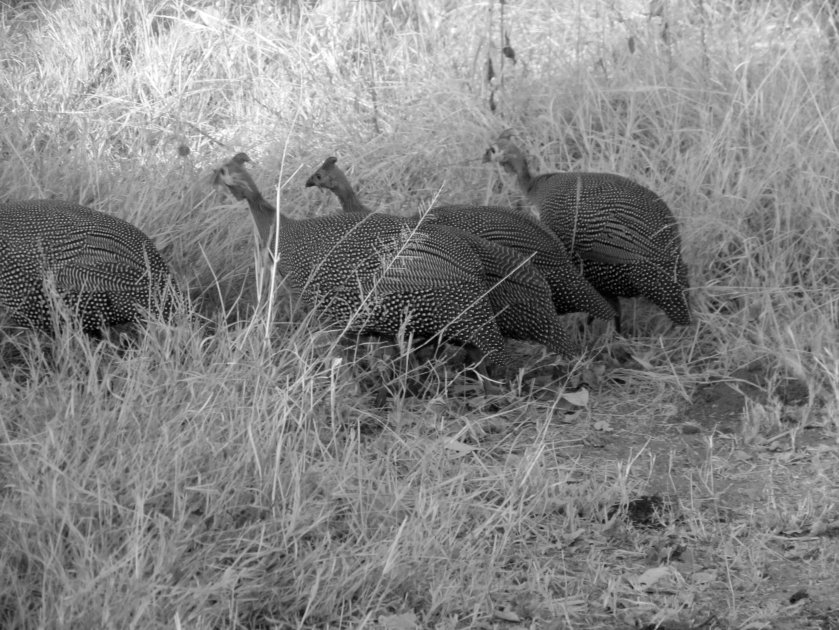
As we make our way down the two-rut road, a mob of Helmeted guineafowl runs ahead of us.  They dart from one side of the road to the other, a bunch of silly old biddies, with shrunken featherless heads, thick bodies covered in spotted dark gray plumage and large rumps that bounce when they run.  Blue jowls on their necks flap back and forth under their beaks.  They never once consider flying to get out of our path.

The guineafowl call excitedly to each other as we flush them: Keck, keck, keck, keck, keck, keck, KECK!!!!!!!  Eventually they dash to the side of the road and disappear into the bush.

Ignoring them, the elephant in front of us steadily treads down the right rut of the road.  His pace is unhurried, measured, constant.  A shoulder lifts, a leg straightens, accepts weight, and the foot splays out.  A back leg moves forward, toenails scraping sand, straightens, accepts weight, and the foot splays out.  A creature bigger than most monuments is on the move.

photograph by Cheryl Merrill
Posted in Africa, Elephants, Nature, Writing

Listen Live to Elephants, Again

photograph by Cheryl Merrill


If you missed it the first time, my radio interview will be broadcast again this evening, Tuesday, November 10th, from 10-11 p.m., P.S.T., United States.  Heres the live feed link: https://kptz.org

Posted in Africa, Elephants, Nature, Photography, Travel

Listen Live to Elephants!

Photograph by Cheryl Merrill


I’ll be speaking on our local radio station, KPTZ 91.9, on Friday, Nov. 6th, at 1:30 p.m. Pacific Standard Time, U.S. and answering questions about all things elephant.  For my friends all over the world, you can live-stream by clicking on the link below, and send in email questions.  Plus we’ll be broadcasting examples of elephant sounds.  See you then!

You can click here to listen!

Listen Live

Posted in Africa, Nature, Nonfiction, Photography, Travel

Symbiosis

photograph by Cheryl Merrill


For most of the morning a group of female giraffes has followed closely behind us. Whenever we stop, they stop, too, and the spotted derricks of their necks swivel in all directions to get a better look at us. At the end of each neck, a head is cocked sideways: the universal body language that says, “Huh?”

As the giraffes become more relaxed in our presence, they feed more closely and don’t look up at us quite as often.

I stop and take a photograph, of a graceful giraffe with an oxpecker on her neck, as she bends down to browse.

Red-billed oxpeckers use their bills to comb through the fur of large mammals both wild and domestic for ticks and bloodsucking flies, clinging to their hosts with sharp claws. They also feed on earwax and dandruff, and have been observed opening small wounds, as well as enhancing existing wounds, in order to feed on blood. Oxpecker courtship and copulation occurs on their hosts while they ride along, and they cushion their nests with hair from their host.

Living together in the animal kingdom.

Posted in Africa, Elephants, Nature, Nonfiction, Photography

What If?


photograph by Cheryl Merrill

As I walk to my tent at the edge of camp, my vision is elemental, full of shapes without fine details. Shifting slabs of moon-glow keep rearranging trees as if they are pieces on a giant pearled chessboard, their trunks whitewashed the color of ash.

I enter my tent, zip it shut, and switch on the lamp. The electricity comes from batteries charged by solar panels on the other side of camp, carried by a line buried several inches below the sand. Not long after, I turn off the light and crawl into bed.

I roll on my back and blindly stare at the black canvas ceiling of my tent, looking back at the bright moments of the day. But then an unexpected memory darkens the darkness.

In 1996, on my first trip to Africa, I was in a carload of tourists rounding a corner on a sandy road in an area of Zimbabwe where elephants were recently massacred for their tusks. We rounded the corner and stopped – face-to-face with a huge matriarch.

Richly repulsive, an unnatural, confined scent rose from us – odors of food on our clothes and in our hair; flowers washed in alcohol dabbed behind our ears; dead skins around our waists and on our feet; grease, oil and exhaust from our vehicle.

With her trunk shaped into a “J,” the elephant sampled the waves of scent emanating from us, and then tossed our smell away with an emphatic flick. Unnerved by our overpowering human stench, a miasma with a deadly history, she turned and fled, while the half-shadow of dust that marked her exit collapsed to the ground.

The air around me tightens. Canvas walls crowd in, closer, and then closer.

What if our days were measured in scents rather than minutes? What if we could tell the difference between a friend and a murderer with just one sniff?


Posted in Africa, Elephants, Nature, Nonfiction, Photography

An Afternoon Nap

An excerpt from my book, Larger than Life: Living in the Shadows of Elephants

My eyes tired from a day spent looking into the sun,  I drowsed in a Land Rover beside a waterhole in Chobe National Park. Only a few yards from our vehicle, a single-cylinder pump drew from the water table beneath the sands and sent spurts through a pipe to a square concrete trough. The bachelor elephants of Savuti congregated around the trough as they waited for spring rains and the return of female breeding herds.

The steady sound of the pump, chugga-sputter, chugga-sputter, chugga-sputter, lulled my eyes closed. They opened, closed, opened half-lidded, closed again.

“Here he comes,” someone whispered and my eyes flicked open as a huge bull strolled past. I picked up my camera.

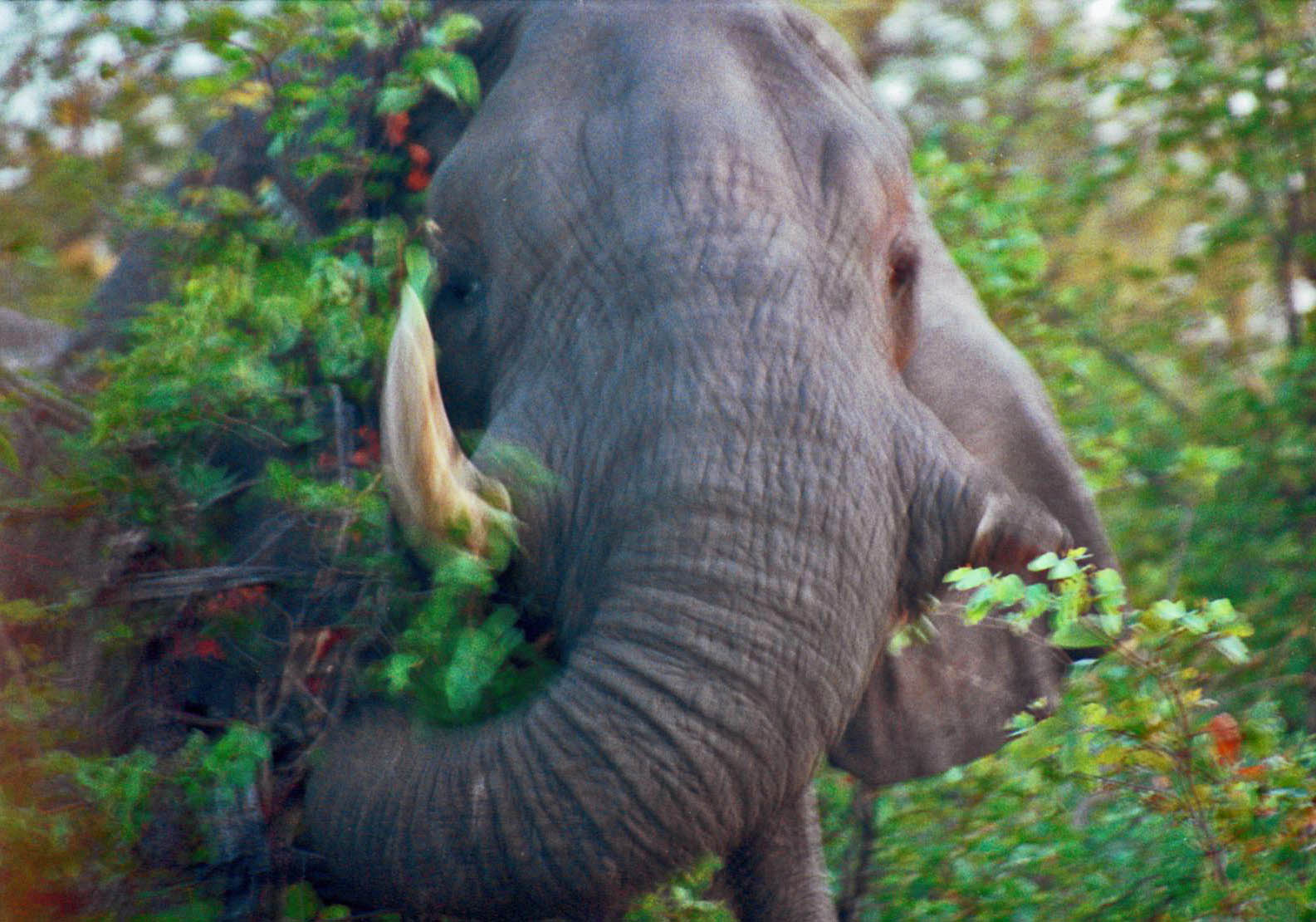
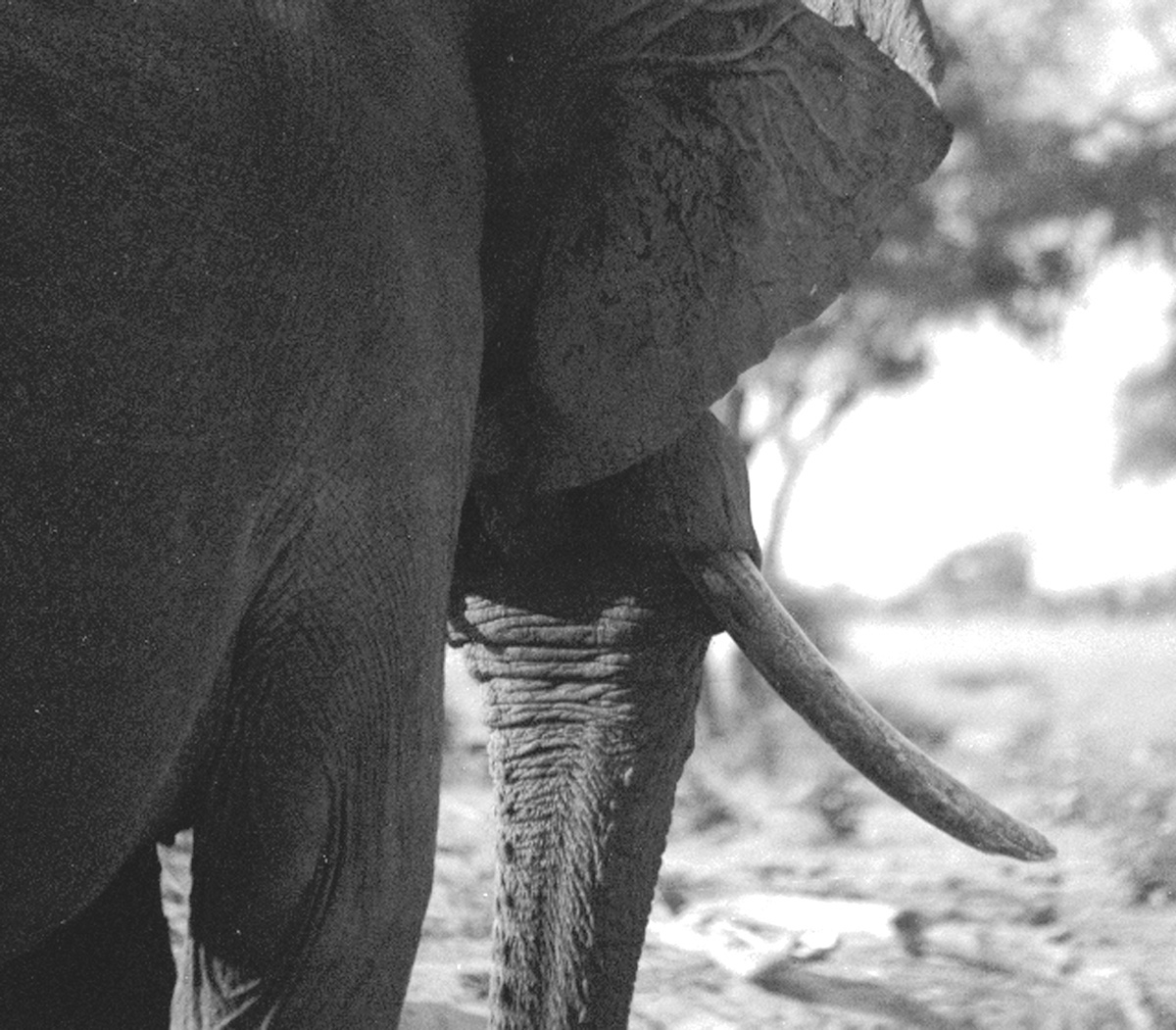
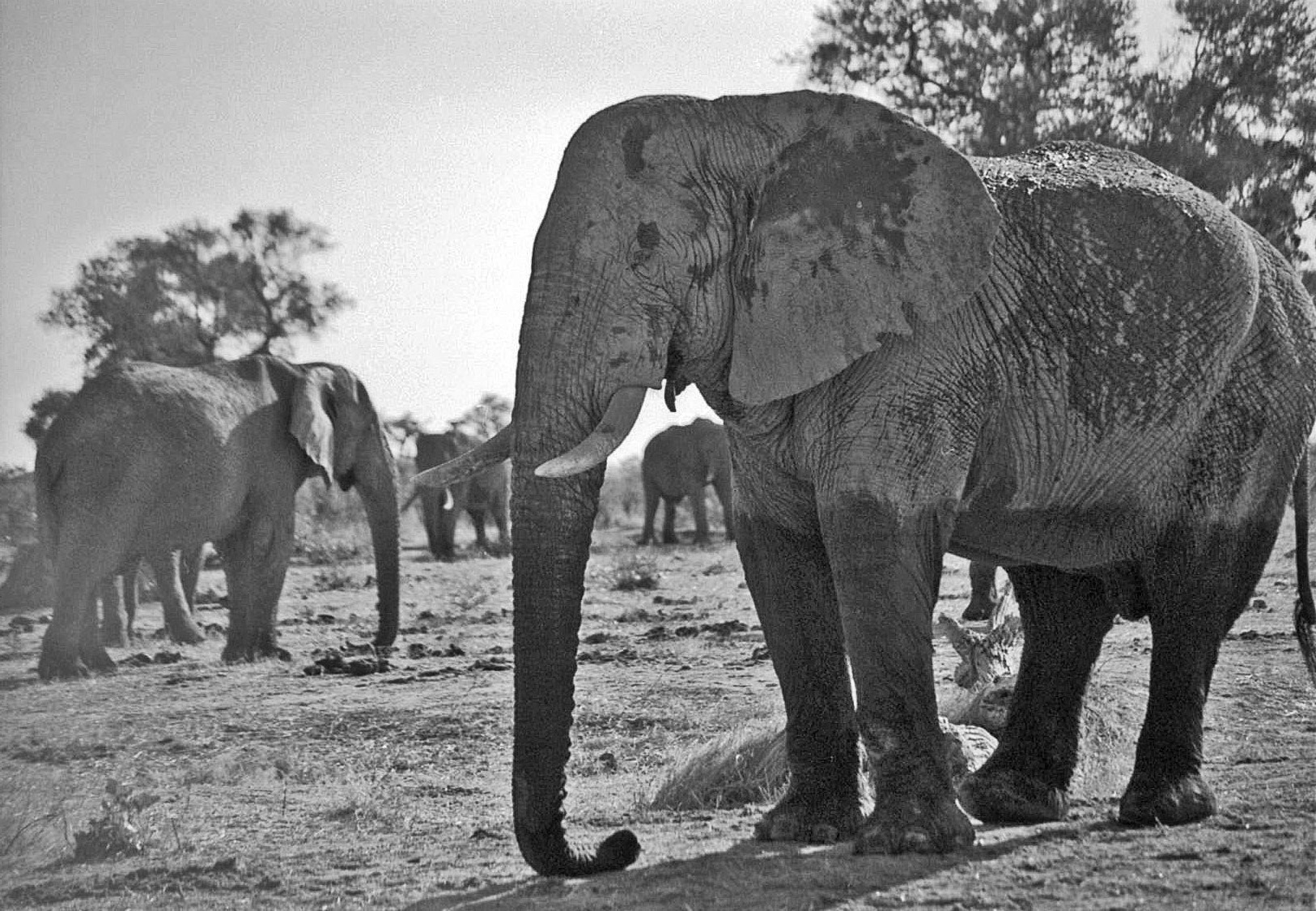
His enormous tusk splayed out almost sideways. I focused on his great head, nodding downward with each step, as he trudged past. A thirsty pilgrim in a parched land, his trek to water was nearly finished. The clicking and whirring of our cameras didn’t alter his gait.

Savuti male b&w
photograph by Cheryl Merrill


Through the viewfinder I marveled at his tusk. It was easily four feet long, stained and chipped on its end. Because of the growth pattern of his tusks – out, rather than down and up – he seemed a much wider elephant than he really was.

Mid-drink, he curled his trunk into his mouth; head tilted back, eyes closed. Extending his trunk into the waterhole, he blew bubbles before curling his trunk again and again to hose several gallons at a time down his throat. With each swallow went samplings from all the animals that drank here – zebra, wildebeest, warthog, ostrich, hyena and the occasional furtive flavor of lion.

I tried to imagine the bouquet garni of the waterhole and how its myriad fragrances might seep into the crevices of an elephant’s mind, form pools of scent they recognize, year after year, the liquid memory of Africa. Perhaps that old bull was memorizing the stories in that trough, paragraphs of taste and smell, twists of plot and character and fate.

He retraced his steps to where we were parked, and stopped close by. His skin was the color of seasoned cast iron. The waterline on his body rose just past his belly. Spatters of mud stained his ears and back.

Ellie asleep b&w
photograph by Cheryl Merrill


After several long minutes, his eyelids drooped and his mouth slackened. Under the hot sun he fell asleep, lulled perhaps by the narcotic of a long, slow drink. The tip of his trunk coiled like a magic rope on the ground. He slept with his weight on three legs, resting a hind leg, occasionally rocking back on it as if he dreamed of his trek. Drool from his trunk slowly seeped into the sand.

I matched my breathing with his, and drowsed once again, sedated by the sun.

The giant beside us rumbled soft snores in his sleep. Other elephants shuffled by quietly on their way to and from the waterhole, as if they didn’t want to wake us.

Posted in Africa, Nature, Photography, Travel

Waking up in Africa

photograph by Cheryl Merrill


An excerpt from my book: Larger than Life, Living in the Shadows of Elephants

We wake up together, the birds and I.  The sound of rustling tissue paper surrounds my tent – footfalls of francolins crushing bits of dry leaves.  Small as quail and stooped as old men, the birds flip leaf litter with their beaks, searching for beetles, cackling to themselves.

I stretch stiff muscles – amazed I slept at all.  During the night the roar of a lion woke me several times as he passed by.  I learned on my first trip to Africa that contrary to myth, and even though they roared with great regularity each night, lions really don’t consider tents as flimsy wraps for tasty humans.  Now all I hear are foraging birds.

I pull on a sweater, unzip the tent flaps, and take a single step outside.   Alarmed, the francolins squawk loudly and scatter into the bush.  I inhale deeply.  The crisp air carries just a hint of sage and smoke, along with the slight scent of a dusty barnyard.  On my way to the kitchen shelter, leaves crackle underfoot.

The sun rises  – radiating spokes on her crown like the Statue of Liberty – rises into an immense lemon sky that almost turns green before it turns blue.  Next to the shelter bare, wood-muscular branches on the Jackalberry tree blaze with light.